The Sharecropper's Granddaughter Who Talked NASA Into the Future: How Mae Jemison Rewrote What a Scientist Could Look Like

Roots in Alabama Red Clay
The cotton fields of Alabama were in Mae Jemison's blood, even though she never worked them. Her grandmother had spent decades bent over those same plants, picking under the merciless Southern sun, dreaming of possibilities she could barely imagine. When Jemison's parents moved north to Chicago in search of better opportunities, they carried those dreams with them—and the iron determination that sharecropping had forged in their family.
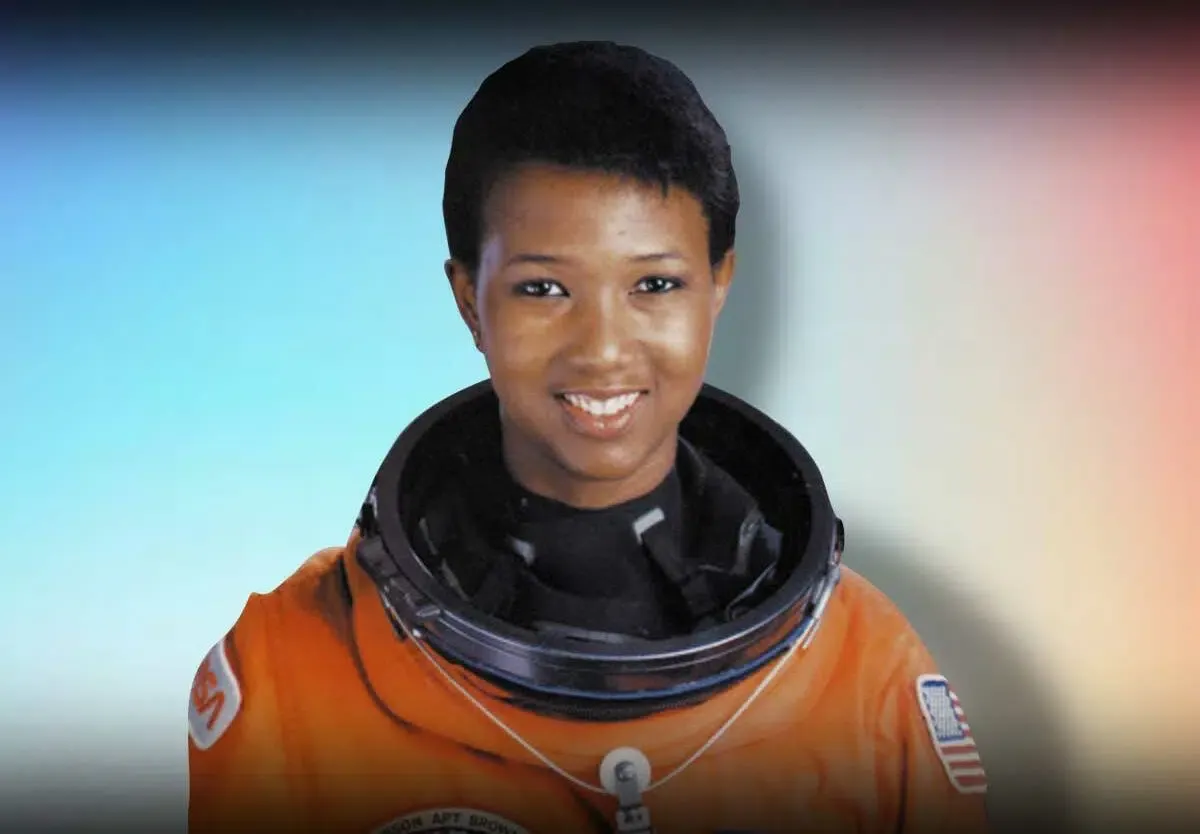 Photo: Mae Jemison, via nationaltoday.com
In the cramped apartment on Chicago's South Side where Mae grew up, education wasn't just encouraged—it was treated like oxygen. Her mother, a teacher, filled their home with books and questions. Her father, a maintenance worker, showed her that fixing things required both patience and precision. But it was her grandmother's stories that taught Mae the most important lesson: that the world's limitations on her possibilities were suggestions, not laws.
The Girl Who Wouldn't Choose
By age twelve, Mae had decided she wanted to be a scientist. Not just any scientist—she wanted to study space, medicine, and dance, all at the same time. Adults kept telling her to pick one, that successful people specialized. Mae looked at them like they were speaking a foreign language.
At Morgan Park High School, she threw herself into everything: advanced placement chemistry, African dance classes, student government, and Russian language studies. Teachers praised her versatility but worried about her focus. Guidance counselors suggested she be "realistic" about her goals. Mae heard them out politely, then ignored them completely.
When she applied to colleges, she wrote essays about wanting to be a doctor and an astronaut and a dancer. Admissions officers probably thought she was confused. Mae knew exactly what she was doing—she was refusing to let other people's limited imaginations define her future.
Stanford and the Art of Persistence
At Stanford University, Mae encountered the full force of institutional expectations. The pre-med track was designed for students who looked and thought a certain way, and Mae was definitely not that. She was one of the few Black students in her classes, often the only woman in her engineering courses, and definitely the only person who spent Friday nights at dance rehearsals and Saturday mornings in the chemistry lab.
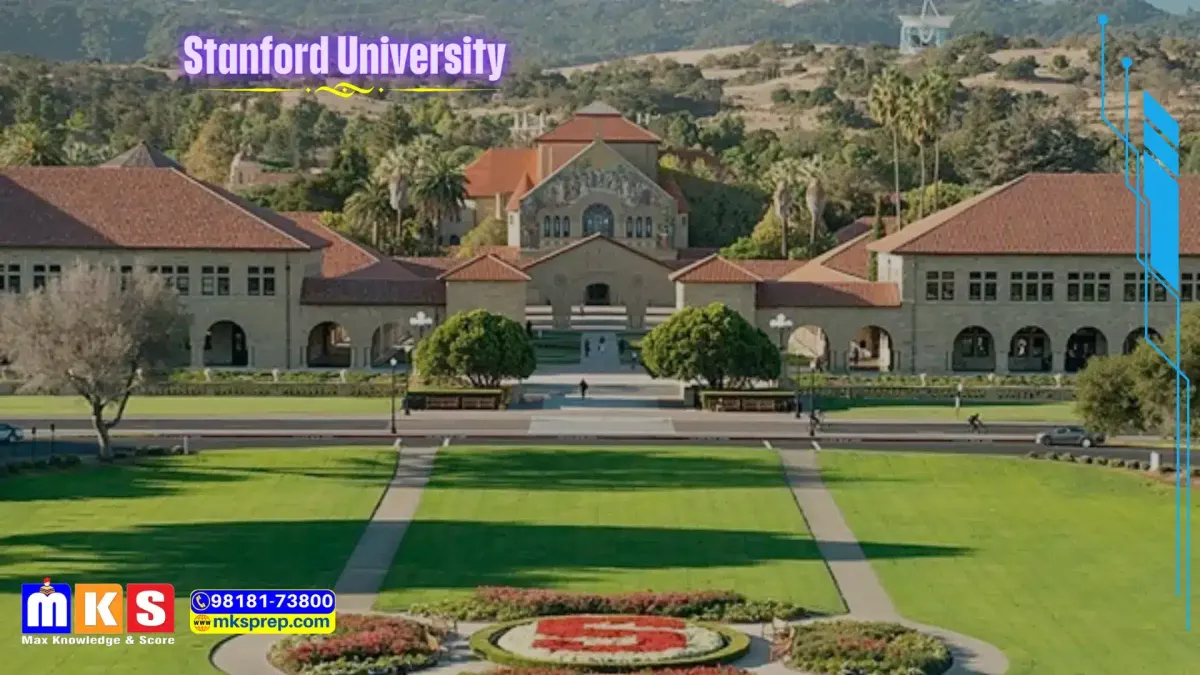 Photo: Stanford University, via mksprep.com
Professors questioned whether she was "serious" about science. Study groups formed without her. Lab partners assumed she needed extra help. Mae responded by outworking everyone around her, graduating with degrees in chemical engineering and African studies while maintaining her dance training and learning Swahili on the side.
The message was clear: if the system wouldn't make room for all of her interests, she'd expand the system.
Medical School and the Moonshot Plan
At Cornell Medical School, Mae finally found her rhythm. Medicine, she discovered, was just another kind of engineering—fixing broken systems in the human body. She excelled in her studies while continuing to dance professionally and volunteer in refugee camps during her breaks.
But even as she mastered the art of healing, Mae kept one eye on the stars. NASA had announced they were accepting applications for a new class of astronauts, and for the first time, they were actively recruiting women and minorities. Mae looked at the qualifications—advanced degree in science or engineering, physical fitness, ability to work under pressure—and realized she was building exactly the resume they wanted.
Her professors thought she was getting distracted from medicine. Mae thought she was preparing for the biggest job interview of her life.
The Peace Corps Detour
After medical school, instead of heading straight to a residency program, Mae made a decision that baffled her mentors: she joined the Peace Corps. For two and a half years, she worked as a medical officer in Sierra Leone and Liberia, treating everything from malaria to broken bones with limited resources and unlimited creativity.
The experience taught her something no textbook could: how to solve problems when the usual solutions weren't available. In West Africa, Mae learned to jury-rig medical equipment, train local health workers, and adapt Western medical practices to local conditions. She also wrote research proposals for space medicine experiments and kept detailed notes on how the human body adapted to challenging environments.
What looked like a career detour was actually graduate-level training for space exploration.
Rejection and Reinvention
In 1985, Mae submitted her application to NASA's astronaut program. She made it through multiple rounds of interviews and physical tests before receiving the letter that crushed her dreams: rejected. The Challenger disaster had temporarily halted the program, but Mae suspected there were other reasons for her rejection.
Instead of giving up, she did what her grandmother had taught her: she got back to work. Mae completed her residency in family practice, started her own medical practice, and began developing computer programs for healthcare in developing countries. She also kept dancing, studying space medicine, and learning new languages.
When NASA reopened applications in 1987, Mae was ready. This time, she wasn't just a promising candidate—she was an accomplished physician with international experience, technical skills, and a track record of innovation under pressure.
The Phone Call That Changed Everything
On June 4, 1987, Mae was working in her medical office when the phone rang. The voice on the other end was calm and professional: "Dr. Jemison, this is NASA. We'd like to offer you a position in our astronaut program."
Mae had dreamed of this moment for years, but when it finally arrived, she felt surprisingly calm. She had never doubted it would happen—the only question had been when.
She became the first Black woman selected for the astronaut corps, but Mae refused to let that distinction define her entire identity. She was a mission specialist, trained for space experiments in life sciences and materials processing. Her race and gender were facts about her, not her primary qualifications.
Eight Days That Lasted Forever
On September 12, 1992, Mae Jemison launched into space aboard the Space Shuttle Endeavour. During her eight days in orbit, she conducted experiments on bone cells, frog embryos, and crystal formation. She also carried a small statue from West Africa and a photo of Bessie Coleman, the first Black woman pilot.
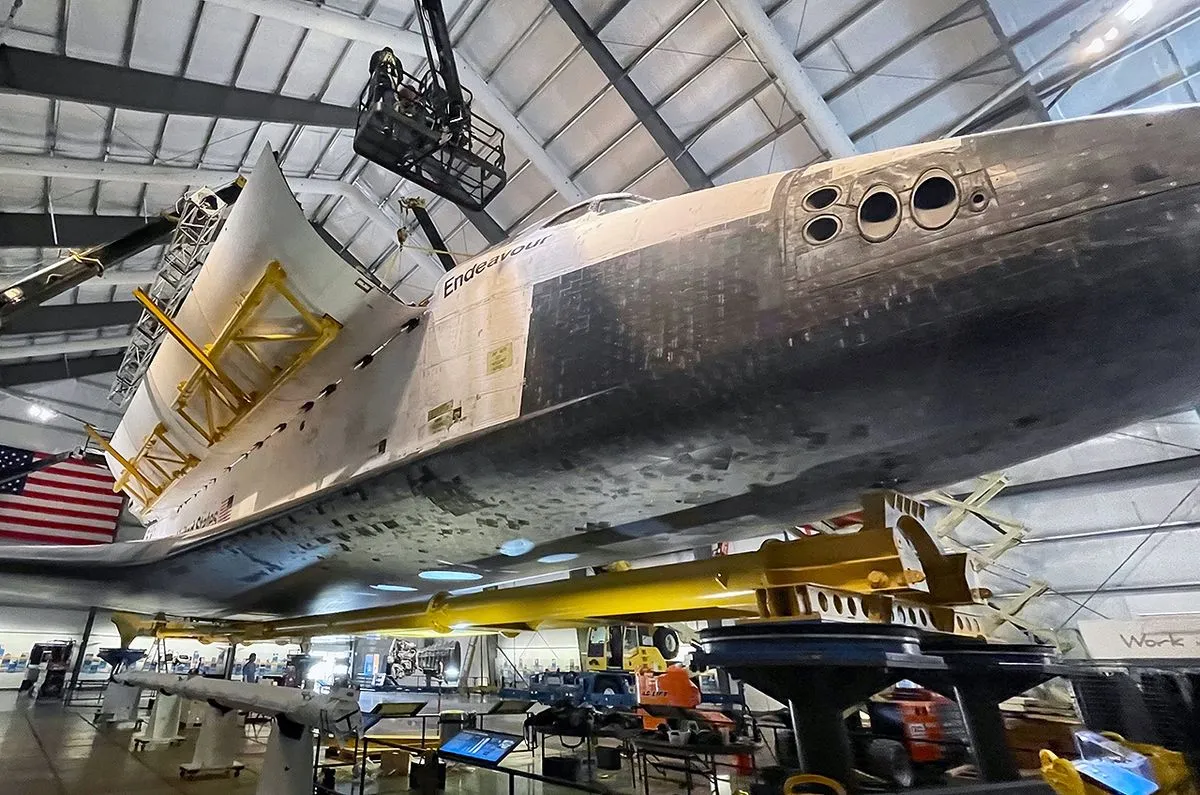 Photo: Space Shuttle Endeavour, via cdn.mos.cms.futurecdn.net
But perhaps most importantly, she proved that space exploration was big enough for everyone. Mae didn't try to fit the traditional astronaut mold—she expanded it. She showed young people around the world that they could pursue their dreams without abandoning their identities.
Beyond the Stars
After leaving NASA in 1993, Mae could have coasted on her historic achievement. Instead, she founded her own technology company, became a professor, wrote children's books, and launched programs to increase science literacy in developing countries. She also kept dancing.
Mae Jemison's real achievement wasn't just reaching space—it was showing that excellence doesn't require conformity. The sharecropper's granddaughter who refused to choose between her passions proved that the future belongs to people who can imagine it differently.
Her legacy isn't just in the history books or the space museums. It's in every young person who looks at the world's limitations and decides to rewrite them instead.