Adrift and Awake: The Castaway Who Charted the Sea's Secret Highways
The Last Good Day
Captain Thomas Hartwell had sailed the Atlantic for twenty-three years when the merchant vessel Prosperity left Boston Harbor on September 15, 1847. The cargo hold was packed with manufactured goods bound for Liverpool, and the weather looked promising for what should have been a routine three-week crossing.
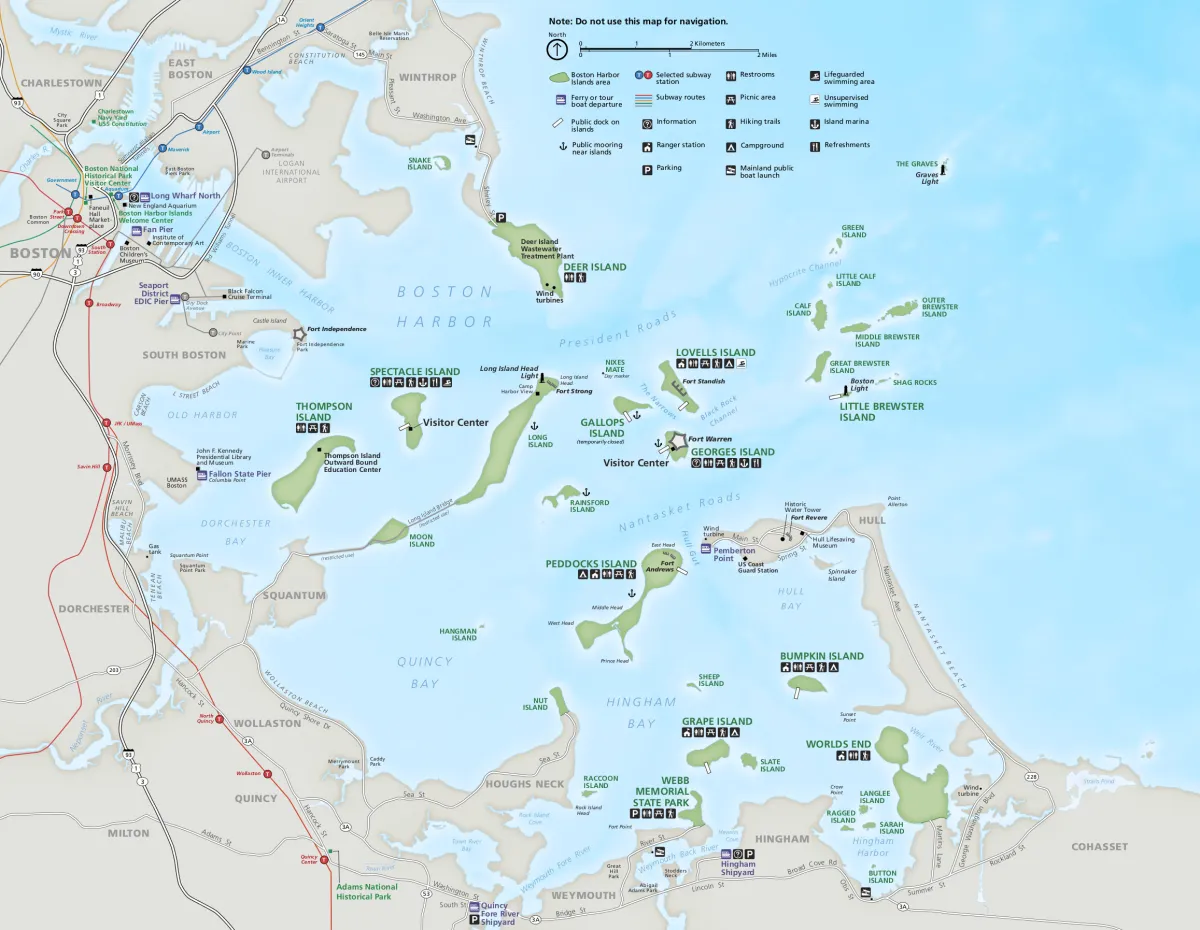 Photo: Boston Harbor, via npmaps.com
 Photo: Captain Thomas Hartwell, via www.chess.com
Hartwell was no stranger to rough seas, but he had never encountered anything like the hurricane that struck on their eighth day out. The storm seemed to come from everywhere at once—a wall of wind and water that turned the 180-foot ship into driftwood in a matter of hours.
When the Prosperity finally broke apart, Hartwell found himself clinging to a section of the ship's deck alongside three other survivors. Within forty-eight hours, he was alone.
"I should have died that first week," Hartwell later wrote in the journal that would make him famous. "By all rights, the sea should have claimed me like it claimed the others. But something kept me going—maybe stubbornness, maybe curiosity. I started to notice things."
The Floating Laboratory
What began as simple survival observations gradually evolved into something more systematic. Hartwell noticed that his makeshift raft seemed to follow predictable patterns of movement, even when there was no wind to explain the direction. He began tracking these movements, using the position of the sun and stars to estimate his location and speed.
"The water moves like rivers," he wrote in his journal, using charcoal from the burned remnants of the ship's galley. "But rivers that flow in circles, and rivers that have rivers inside them. There's a logic to it, but it's not the logic of land."
Using torn fabric from his clothes, Hartwell created makeshift instruments to measure water temperature and track floating debris. He observed how different types of seaweed clustered in distinct areas, how the color of the water changed in subtle gradations, and how schools of fish seemed to follow invisible highways through the ocean.
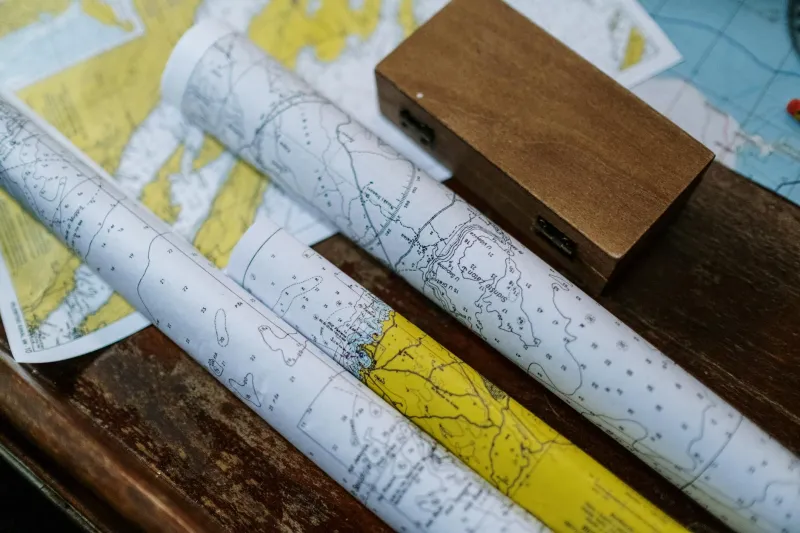
Most remarkably, he began to map these observations, creating crude but accurate charts of the ocean currents that were carrying him across the Atlantic.
The Dance of Desperation
As days turned to weeks, Hartwell's observations became more sophisticated. He noticed that the ocean's movements followed patterns that changed with the weather, the season, and even the time of day. He documented temperature variations, tracked the movement of floating objects, and began to understand that the ocean was not a uniform body of water but a complex system of interconnected currents.
"I realized that I wasn't just drifting," he wrote. "I was traveling on roads that had been there long before ships, long before men. The whales knew these roads. The fish knew them. I was just the first person foolish enough to try to draw a map."
Hartwell's survival depended on reading these patterns correctly. When he spotted a change in water color that indicated a warm current, he could predict where he might find fish. When he noticed debris flowing in a particular direction, he could position himself to catch rainwater more effectively.
After two months at sea, his observations had become so precise that he could predict his approximate position based purely on the characteristics of the water around him.
Rescue and Recognition
On November 18, 1847—sixty-four days after the Prosperity sank—Hartwell was spotted by a Portuguese fishing vessel off the coast of the Azores. By all medical logic, he should have been dead. Instead, he was weak but alert, and clutching a waterproof pouch containing nearly a hundred pages of detailed oceanographic observations.
The Portuguese fishermen were amazed not just by Hartwell's survival, but by the accuracy of his position estimates. Using only improvised instruments and careful observation, he had tracked his journey across more than 2,000 miles of ocean with remarkable precision.
When Hartwell finally returned to Boston in early 1848, his story attracted the attention of scientists at Harvard University. Professor William Morris, who had been studying ocean temperatures for the U.S. Navy, was particularly intrigued by Hartwell's detailed observations of current patterns.
"This man has observed phenomena that we have only theorized about," Morris wrote to the Navy Department. "His charts, crude as they may appear, contain information that could revolutionize our understanding of ocean navigation."
The Current Revolution
Working with Morris and other scientists, Hartwell spent the next several years refining his observations and creating detailed charts of Atlantic current patterns. His work revealed that the ocean was far more complex and predictable than anyone had previously understood.
The implications for shipping were enormous. By understanding current patterns, ships could reduce their crossing times by days or even weeks. More importantly, they could avoid dangerous areas where conflicting currents created hazardous conditions.
Hartwell's charts were initially met with skepticism from experienced sea captains, who had relied on traditional navigation methods for generations. But as more ships began using his current maps, the results spoke for themselves. Average crossing times decreased, and the number of ships lost to "mysterious" disappearances dropped significantly.
"Captain Hartwell has given us a new way to see the ocean," wrote Captain James Morrison, whose merchant fleet was among the first to adopt the new navigation methods. "What we thought was empty water is actually full of invisible rivers. Once you learn to read them, the sea becomes a highway instead of a wilderness."
The Mapmaker's Legacy
By the 1850s, Hartwell's current charts had become standard equipment on most transatlantic vessels. The U.S. Navy commissioned him to conduct additional research, and he spent several years aboard naval vessels, refining his understanding of ocean circulation patterns.
His work laid the foundation for modern oceanography and meteorology. The current patterns he mapped during his desperate weeks adrift would later help scientists understand global weather systems, marine ecosystems, and climate patterns.
"I never set out to be a scientist," Hartwell reflected in an 1865 interview. "I was just trying to stay alive. But maybe that's what science really is—paying attention to the world around you when everything depends on getting it right."
Hartwell died in 1878, but his charts remained in use well into the age of steam power. Even today, modern oceanographers studying satellite data of current patterns find that Hartwell's hand-drawn maps, created with nothing but desperate observation and improvised instruments, were remarkably accurate.
Rivers in the Sea
The story of Thomas Hartwell reminds us that some of humanity's greatest discoveries have emerged from its darkest moments. Alone on the vast Atlantic, facing almost certain death, he chose to observe rather than despair. His careful attention to the patterns around him not only saved his life but eventually saved thousands of others.
In an age when GPS and satellite navigation have made ocean travel routine, it's easy to forget how mysterious and dangerous the sea once was. Hartwell's achievement was not just surviving his ordeal, but transforming that survival into knowledge that would benefit generations of sailors who followed in his wake.
Sometimes the most profound insights come not from laboratories or universities, but from the raw human need to understand the world well enough to survive it. In Hartwell's case, sixty-four days of desperate observation opened up an entirely new understanding of how our planet's waters move—proving that even in our most helpless moments, curiosity and careful attention can chart a course toward discovery.