Code Breaker in a Segregated World: The Alabama Seamstress Who Calculated NASA's Path to Saturn

The Girl Who Refused to Accept No
In 1940s Birmingham, Alabama, the rules were simple and brutal. Black children attended separate schools with hand-me-down textbooks. Black women cleaned white families' houses or worked in cotton mills. And Black mathematicians? They simply didn't exist, according to the people who made such decisions.
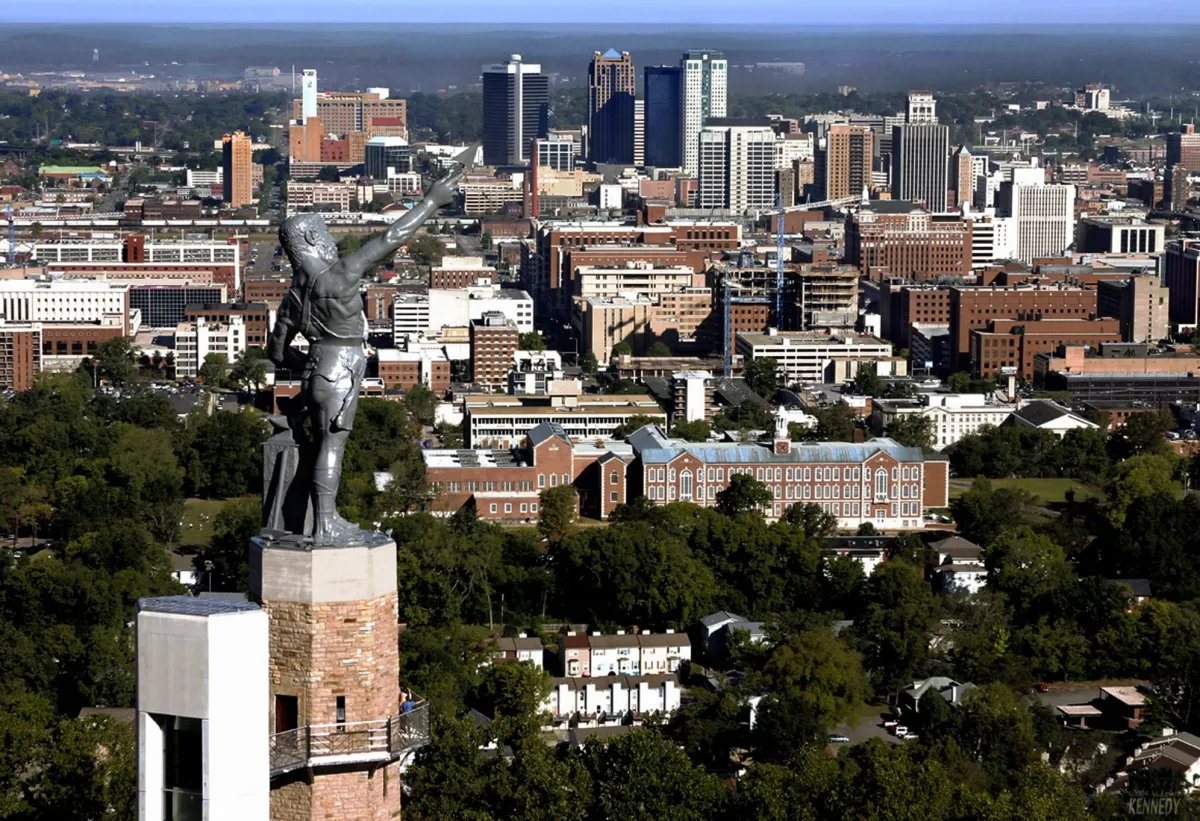 Photo: Birmingham, Alabama, via encyclopediaofalabama.org
Annie Easley never got that memo.
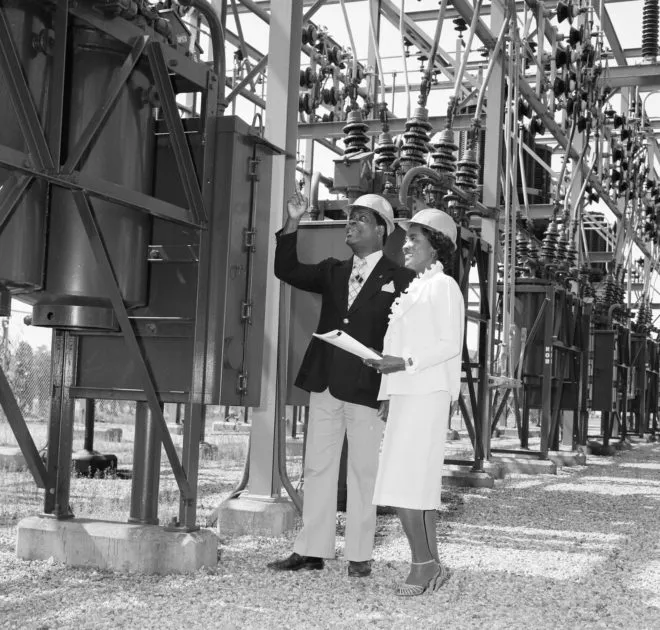 Photo: Annie Easley, via kingkong-mag.com
Born in Birmingham in 1933, Easley grew up in a world that had already decided her limitations before she could walk. Her mother, a single parent working as a domestic servant, had different ideas. "You can be anything you want to be," she told her daughter, "but you'll have to work twice as hard to get it."
Easley took that advice literally. While her classmates played after school, she was in the library, devouring every mathematics and science book she could find. When her high school didn't offer advanced calculus, she taught it to herself. When guidance counselors steered her toward "appropriate" careers in teaching or nursing, she politely ignored them and kept studying.
By the time she graduated valedictorian of her high school class, Easley had made a decision that would have seemed impossible to anyone who knew the rules of Jim Crow Alabama: she was going to be a mathematician.
Walking Through Doors That Weren't Supposed to Open
In 1955, Easley read a newspaper article that would change her life. The National Advisory Committee for Aeronautics (NACA), the precursor to NASA, was hiring mathematicians to work on complex calculations for the emerging space program. The article didn't mention race or gender requirements, so Easley decided to apply.
She walked into the NACA office in Cleveland, Ohio, with nothing more than a college degree in mathematics and an unshakeable belief in her own abilities. The hiring manager, clearly surprised to see a young Black woman applying for a position as a "human computer," tried to discourage her. The work was highly technical, he explained. The calculations were incredibly complex. Perhaps she'd be more comfortable in a clerical position?
Easley's response was characteristically direct: "Why don't you give me the test and let me show you what I can do?"
She scored higher than most of the white male candidates.
Computing the Impossible
Easley's early years at NACA were spent doing calculations by hand that would make modern engineers reach for supercomputers. She computed trajectories for early satellite missions, analyzed wind tunnel data, and solved differential equations that helped engineers understand how aircraft behaved in flight. Her work was precise, innovative, and absolutely essential—though her name rarely appeared on the research papers that resulted from it.
When NACA became NASA in 1958, Easley transitioned seamlessly into the space age. She learned to program some of the earliest computers, writing code in languages like FORTRAN and SOAP that helped NASA track satellites and plan moon missions. While astronauts like John Glenn got the headlines, mathematicians like Easley did the calculations that kept them alive.
But Easley's most groundbreaking work was still ahead of her.
The Battery Revolution Hidden in Plain Sight
In the 1970s, as gas lines stretched around city blocks and Americans began questioning their dependence on foreign oil, Easley was quietly working on technology that seemed like science fiction: hybrid electric vehicles. Her research into battery storage systems and energy conversion laid the groundwork for cars that could run on both gasoline and electricity—a concept so far ahead of its time that most people couldn't imagine why anyone would want such a thing.
Easley's battery research wasn't just theoretical. She developed mathematical models that predicted how different battery configurations would perform under various conditions. She analyzed charge cycles, temperature variations, and power output curves with the same precision she had once applied to satellite trajectories. Her work helped NASA understand how to power spacecraft during long missions, but it also created the foundation for the hybrid cars that would transform the automotive industry decades later.
When Toyota released the Prius in 1997, few people knew that some of the fundamental research behind its battery technology had been pioneered by a woman who had started her career as a human computer in the 1950s.
Reaching for Saturn
Easley's most visible contribution to space exploration came through her work on the Cassini mission to Saturn. Launched in 1997, Cassini was one of the most ambitious space missions ever attempted, requiring the spacecraft to travel nearly seven years through the solar system before entering orbit around the ringed planet.
The mathematical challenges were staggering. Engineers needed to calculate precise trajectories that would allow Cassini to use the gravitational pull of Venus, Earth, and Jupiter to gain speed—a technique called gravity assist that required split-second timing and millimeter precision. They needed to design power systems that could function reliably for decades in the harsh environment of space.
Easley's expertise in energy systems and trajectory calculations made her an invaluable member of the Cassini team. She helped design the power management systems that kept the spacecraft functioning during its epic journey, and her mathematical models contributed to the navigation calculations that guided Cassini through its complex path to Saturn.
When Cassini finally reached Saturn in 2004 and began sending back stunning images of the planet's rings and moons, Easley was one of the unsung heroes who had made the mission possible.
The Quiet Revolutionary
Easley retired from NASA in 1989, after 34 years of service that had spanned the entire space age. She had worked on everything from the earliest satellite programs to the Space Shuttle, from hybrid vehicle research to interplanetary missions. Her contributions to mathematics, engineering, and space exploration were immense, though they were rarely acknowledged during her lifetime.
Part of the invisibility was intentional. In an era when Black women faced discrimination at every turn, Easley had learned that the best way to advance was to let her work speak for itself. She published papers under her initials rather than her full name. She avoided publicity and focused on results. She knew that drawing attention to herself as a Black woman in a white male profession might limit her opportunities, so she chose to be judged by her mathematics rather than her identity.
But Easley's quiet approach didn't mean she was passive about discrimination. She filed complaints when she was passed over for promotions. She mentored young women and minorities who followed in her footsteps. And she never stopped pushing for recognition of the contributions that women and minorities had made to the space program.
The Legacy of Refusing Limits
Annie Easley died in 2011, at age 78. In her final years, she had finally begun receiving recognition for her groundbreaking work. NASA honored her contributions to the space program. The automotive industry acknowledged her role in developing hybrid vehicle technology. Young mathematicians and engineers learned her story and drew inspiration from her refusal to accept the limitations others tried to impose on her.
Today, every time a hybrid car starts its engine, every time a spacecraft successfully navigates to a distant planet, every time a young woman enters a STEM field that was once closed to people like her, Annie Easley's legacy lives on. She proved that extraordinary achievements don't require extraordinary beginnings—just extraordinary determination to rise above whatever circumstances try to hold you back.
Sometimes the most important revolutions happen quietly, one calculation at a time. Sometimes the people who change the world are the ones who simply refuse to accept that the world can't be changed. And sometimes, a seamstress's daughter from segregated Alabama can reach all the way to Saturn.