History's Accidental Heroes: When Regular Jobs Became Revolutionary Moments
The Telegraph Operator Who Intercepted Destiny
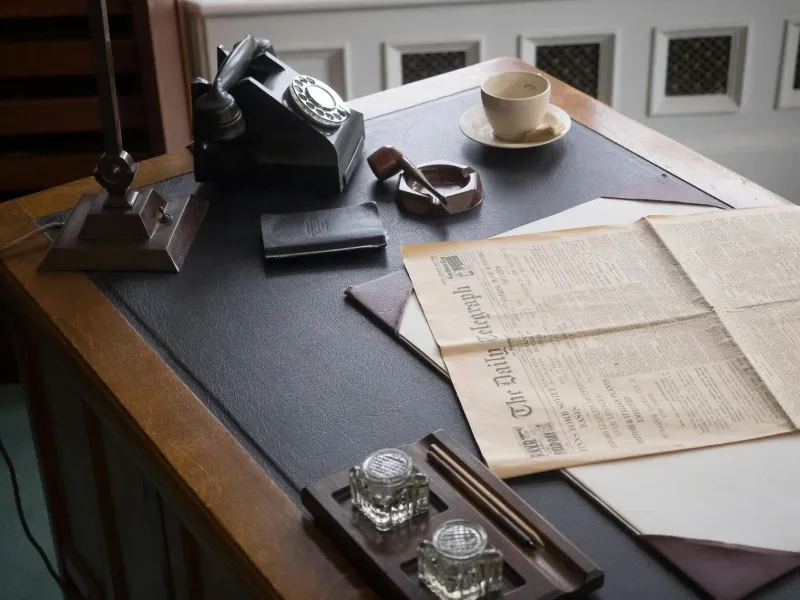
David Homer Bates was just trying to pay the bills when he took a job as a telegraph operator in Washington D.C. in 1861. The position seemed straightforward: receive messages, decode them, pass them along. But when the Civil War erupted, Bates found himself manning the telegraph office in the War Department, becoming the invisible link between Abraham Lincoln and his generals.
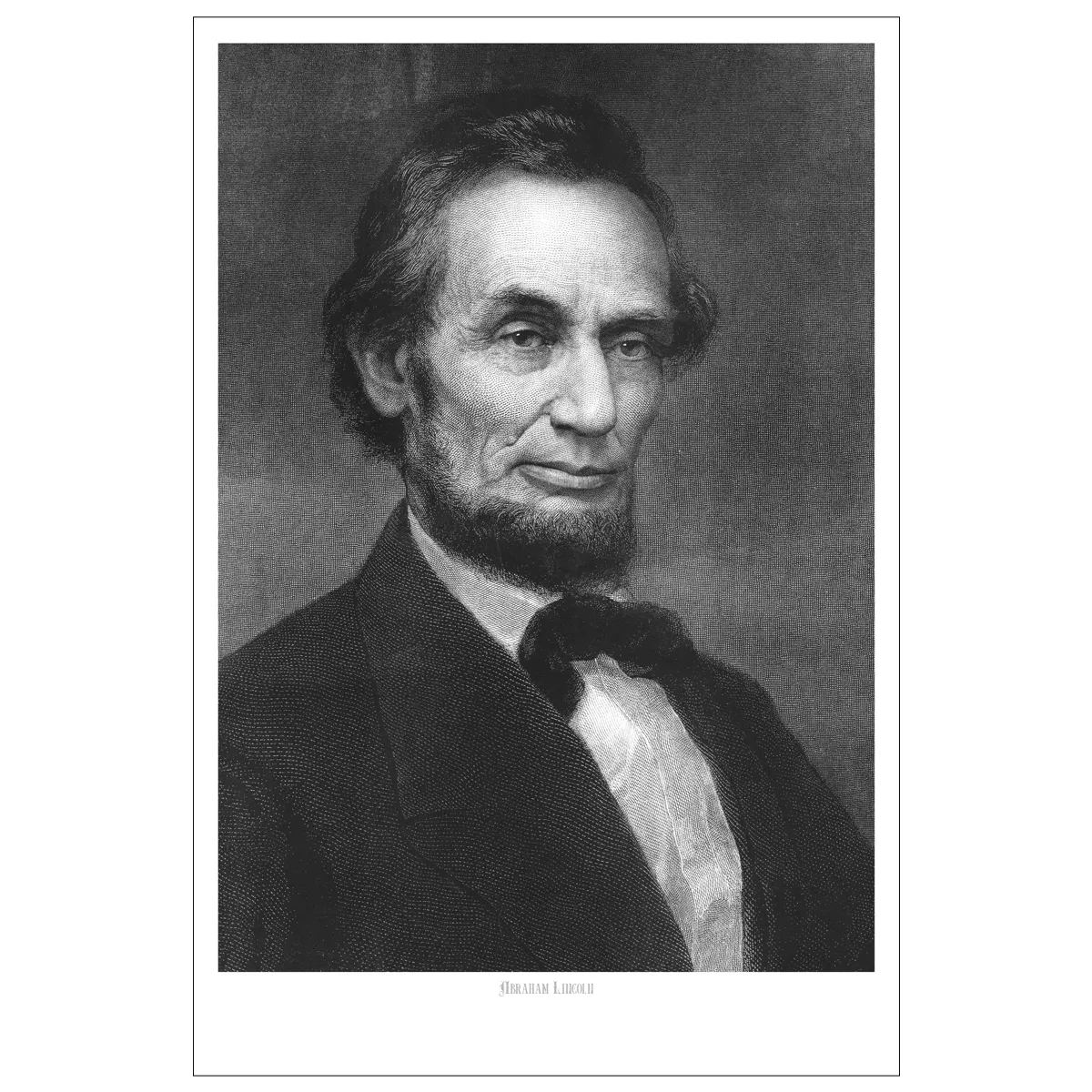 Photo: Abraham Lincoln, via patrioticfineartprints.com
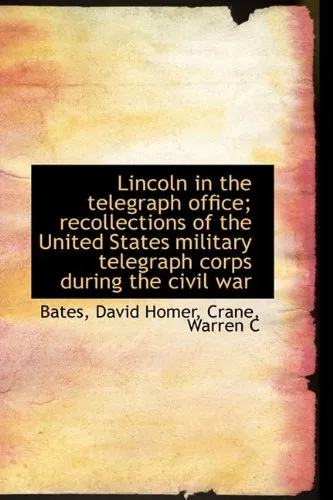 Photo: David Homer Bates, via m.media-amazon.com
What made Bates extraordinary wasn't his technical skill—it was his curiosity about the messages flowing through his station. While other operators simply transcribed and forwarded, Bates began noticing patterns. He realized that Confederate forces were intercepting Union communications, and he started developing more sophisticated encoding methods.
His breakthrough came during the Peninsula Campaign of 1862. Bates noticed that Confederate responses seemed to anticipate Union movements with suspicious accuracy. Working through the night, he developed a new cipher system that used rotating keywords based on Shakespeare quotations—something educated Union officers would recognize but Confederate codebreakers wouldn't expect.
The impact was immediate. Union communications became secure just as the war entered its most critical phase. Bates had essentially given Lincoln and his commanders a secret weapon: the ability to coordinate strategy without fear of interception. His innovation helped turn the tide of several key battles, though his name appeared in no newspapers.
After the war, Bates wrote the definitive account of Lincoln's use of the telegraph, preserving crucial historical details that only someone in his position could have witnessed. The telegraph operator who started out just trying to make a living had accidentally become the guardian of presidential history.
The Postman Who Delivered Democracy
William Lewis never intended to become a civil rights pioneer. In 1943, he was simply a postal worker in Detroit, trying to support his family during wartime labor shortages. But when the post office assigned him to deliver mail in a previously all-white neighborhood, Lewis unknowingly stepped into a defining moment of American social change.
The white residents of the neighborhood organized to prevent Lewis from delivering their mail, arguing that Black postal workers violated their property values. What they didn't anticipate was Lewis's methodical approach to his job. Rather than backing down or seeking reassignment, he documented every incident of harassment, every attempt to block his route, every racial slur shouted at him.
Lewis understood something that his tormentors missed: the postal service was federal territory, subject to federal law, not local prejudices. He began working with NAACP lawyers, providing them with detailed records of how racial discrimination was interfering with federal mail delivery.
The case that emerged from Lewis's documentation became a landmark civil rights victory. Federal courts ruled that racial discrimination against postal workers was unconstitutional interference with federal operations. The decision created legal precedent that civil rights lawyers would use for decades to challenge segregation in other federally regulated industries.
Lewis continued delivering mail in that neighborhood for another twenty years, watching it gradually integrate as his legal victory opened doors for other Black federal workers. A man who just wanted to do his job had accidentally delivered a blow to institutional racism.
The School Janitor Who Unlocked the Future
Margaret Hamilton (not the actress) was working as a night janitor at MIT in 1958 when she stumbled across something that would change her life and, eventually, help change the world. While cleaning the computer laboratory, she became fascinated by the room-sized machines that students and professors left running overnight.
Hamilton began staying after her shift to watch the computers work, trying to understand what the blinking lights and whirring tapes actually meant. The graduate students initially treated her curiosity as amusing, but Hamilton's questions were surprisingly sophisticated. She wanted to know not just what the machines did, but how they could be made to do it better.
Her breakthrough came when she noticed that one of the computers kept crashing during a particular calculation sequence. While the programmers assumed it was a hardware problem, Hamilton suspected the issue was in the instructions being fed to the machine. She spent weeks studying the code, teaching herself programming concepts that weren't yet taught in formal courses.
When Hamilton finally approached the lead researcher with her analysis, he was skeptical until she demonstrated the error and proposed a solution. Her fix not only solved the immediate problem but revealed a fundamental flaw in how the team was approaching computer programming.
MIT offered Hamilton a position as a research assistant, launching a career that would eventually lead her to NASA, where she developed the software systems that guided the Apollo missions to the moon. The janitor who was curious about blinking lights became one of the founding mothers of software engineering.
The Traveling Salesman Who Sparked Innovation
Elijah McCoy was supposed to be selling sewing machines across the Midwest in the 1870s. But as he traveled by train from town to town, McCoy became obsessed with a problem that was slowing down every railroad in America: locomotives had to stop frequently for lubrication, making train travel inefficient and expensive.
McCoy's background gave him a unique perspective on the problem. Born to escaped slaves, he had managed to get an engineering education in Scotland, but racial discrimination prevented him from finding work as an engineer in America. The traveling sales job was supposed to be temporary, but it put him in the perfect position to observe railroad operations.
During his long train journeys, McCoy began sketching designs for an automatic lubrication system. He envisioned a device that could oil locomotive parts while the train was moving, eliminating the need for frequent stops. Railroad engineers he met were skeptical—if such a device were possible, wouldn't trained engineers have already invented it?
McCoy spent his own money developing prototypes, testing them during his travels. His breakthrough came when he realized that the solution wasn't just mechanical—it required understanding the specific pressures and temperatures that different locomotive parts experienced during operation. His sales job had given him access to more railroad equipment than most engineers ever saw.
The automatic lubricator that McCoy eventually patented revolutionized railroad efficiency. Trains could travel longer distances without stopping, dramatically reducing transportation costs. The phrase "the real McCoy" allegedly originated from railroad workers who insisted on McCoy's genuine lubricators rather than inferior imitations.
The Hospital Orderly Who Saved Millions
Mary Eliza Mahoney was working as a hospital orderly in Boston in 1878 when she noticed something that trained doctors and nurses were missing: patients were dying not from their original ailments, but from infections they caught in the hospital itself.
Mahoney's position as an orderly meant she cleaned rooms, changed linens, and disposed of waste—tasks that put her in direct contact with the conditions that spread disease. While doctors focused on diagnosis and treatment, Mahoney observed the entire ecosystem of hospital care.
Her insight came from pattern recognition that her daily routine made possible. She noticed that patients in certain rooms, treated by certain staff members, or exposed to particular procedures had much higher rates of post-operative infections. The correlation was invisible to people who didn't see the complete picture of patient care.
Mahoney began documenting her observations, creating detailed charts that tracked infection rates against various hospital practices. When she presented her findings to the chief of medicine, he initially dismissed them as the overactive imagination of an uneducated worker.
But Mahoney's data was undeniable. She had identified specific practices—from inadequate hand washing to contaminated instruments—that were spreading disease throughout the hospital. Her recommendations for improved sanitation procedures reduced infection rates by more than sixty percent within six months.
The success of Mahoney's innovations led to her admission to nursing school, making her one of the first African American professional nurses in the United States. Her work became a model for hospital sanitation practices nationwide, saving countless lives and establishing principles that remain fundamental to modern healthcare.
The Power of Position
These five individuals remind us that history's most important moments often happen not in boardrooms or laboratories, but in the everyday spaces where ordinary people do ordinary work. Their jobs gave them unique vantage points—access to information, proximity to problems, or opportunities to observe patterns that others missed.
What made them extraordinary wasn't their positions, but their willingness to look beyond their job descriptions. They saw problems that needed solving, patterns that needed understanding, or opportunities that needed seizing. Most importantly, they acted on what they saw, even when it meant stepping outside their assigned roles.
Their stories prove that innovation doesn't require advanced degrees or executive authority—it requires curiosity, persistence, and the courage to speak up when you see something that could be better. In a world that often celebrates obvious heroes, these accidental revolutionaries remind us that the most important changes often come from the most unexpected places.