Starlight and Newspaper Routes: The Missouri Farm Boy Who Charted Heaven From His Backyard
When the Universe Called Collect
At 4:30 every morning, Chester Lee Abrams would load his bicycle with newspapers and pedal through the empty streets of Hannibal, Missouri, delivering the morning edition to subscribers who were still asleep. By 1934, when Chester was sixteen, the Great Depression had made his paper route essential income for a family struggling to keep their small farm afloat.
But Chester had a secret that made those pre-dawn rides bearable: while most of his customers slept, he was studying the greatest show in the universe, playing out above his head every clear night.
The boy who would never earn a high school diploma was about to become one of America's most reliable amateur astronomers, contributing star position corrections that Harvard Observatory would use for the next thirty years.
The Library That Changed Everything
Chester's astronomical education began in the most unlikely place: the Hannibal Public Library's discard pile. When the library updated its science collection in 1932, fourteen-year-old Chester rescued an 1898 edition of "Popular Astronomy" that was headed for the trash.
The book was outdated by professional standards, but it contained something invaluable: detailed star charts and instructions for making astronomical observations with simple equipment. Chester studied those pages by candlelight in the family's farmhouse, memorizing constellations and learning to calculate celestial coordinates.
"I read that book until it fell apart," Abrams later wrote in a letter to the Astronomical Society of the Pacific. "Then I taped it back together and read it some more."
When the local high school couldn't accommodate his family's need for farm labor, Chester made a choice that would have seemed foolish to most people: he dropped out to work full-time but continued his astronomical studies on his own.
Building a Telescope from Scraps
Professional telescopes cost more than Chester's family made in a year, so he decided to build his own. Using instructions from library books and mail-order catalogs, he began collecting materials: a discarded camera lens from the local photography shop, mirror blanks ground from broken bottles, and metal tubing salvaged from a torn-down barn.
The project took three years. Chester would work on the telescope during winter evenings when farm chores were lighter, carefully grinding and polishing lenses by hand. He built the mounting system from spare tractor parts, creating a mechanism that could track stars as they moved across the sky.
When he finally achieved "first light" in 1937 — the moment when his homemade telescope revealed celestial objects invisible to the naked eye — Chester felt like he had built a bridge between his small Missouri farm and the infinite cosmos.
The Correspondence That Built a Career
Chester's transformation from curious farm boy to respected amateur astronomer began with a letter to Harvard College Observatory in 1938. He had been using his telescope to verify star positions listed in the official catalogs and had noticed several discrepancies.
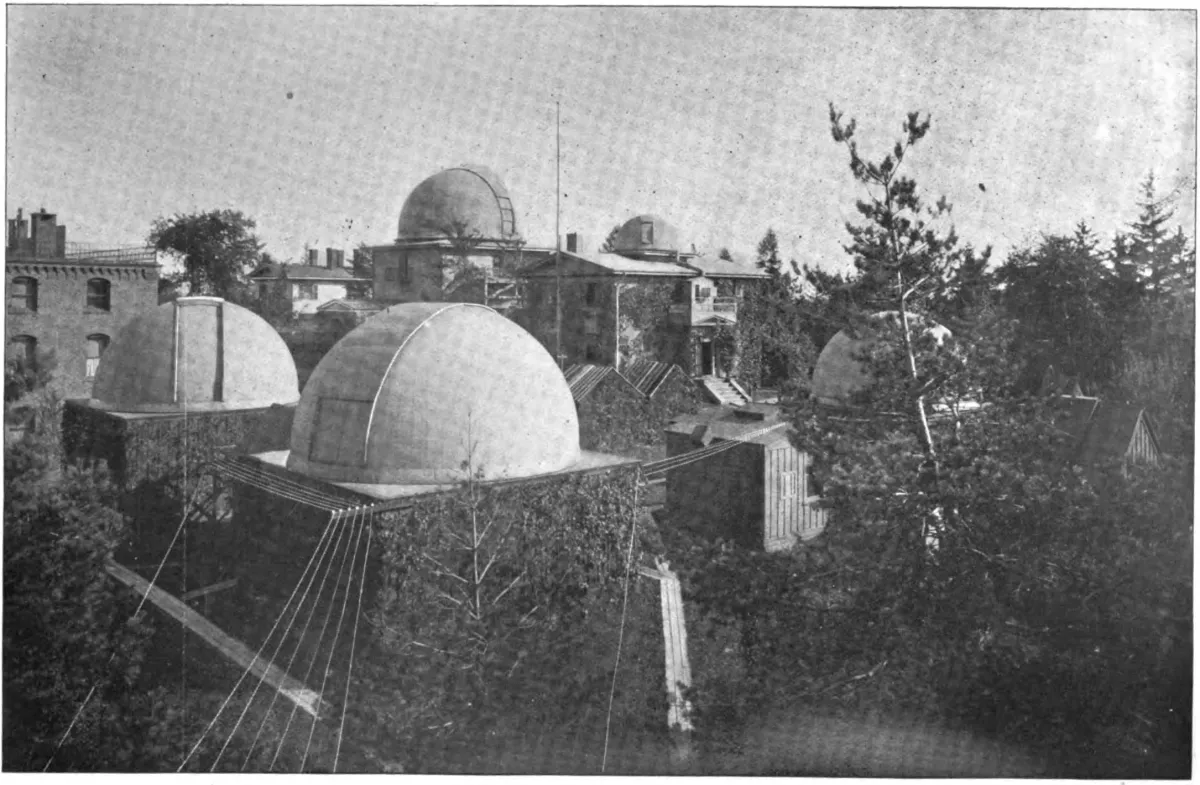 Photo: Harvard College Observatory, via hea-www.harvard.edu
"I believe there may be errors in the coordinates for several stars in the constellation Cygnus," Chester wrote, carefully including his observations and calculations. "I apologize if I am mistaken, but thought you should know."
The letter landed on the desk of Dr. Harlow Shapley, Harvard's director and one of America's most distinguished astronomers. Shapley's initial reaction was skeptical — amateur astronomers frequently reported "discoveries" that turned out to be observational errors.
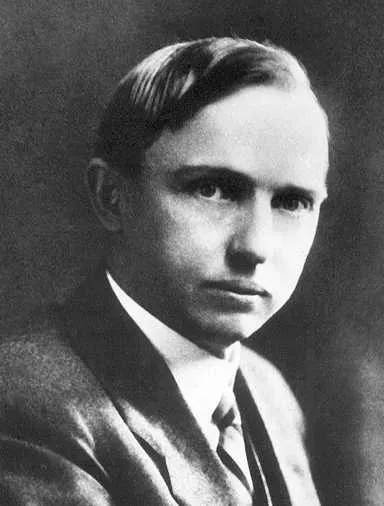 Photo: Dr. Harlow Shapley, via phys-astro.sonoma.edu
But when Shapley checked Chester's calculations against Harvard's own records, he found something remarkable: the farm boy from Missouri was right. Three star positions in the standard catalog were indeed incorrect, and Chester's observations were more accurate than the professional measurements they replaced.
The Network of Backyard Scientists
Shapley's response letter changed Chester's life. The Harvard director didn't just acknowledge Chester's corrections — he invited him to join a network of amateur astronomers who contributed regular observations to professional research projects.
Suddenly, Chester found himself corresponding with astronomers across the country, comparing notes with retired professors and wealthy hobbyists who owned expensive equipment. What united them wasn't credentials or equipment, but a shared passion for precision and discovery.
Chester's specialty became variable stars — celestial objects that change brightness over time. These stars provided crucial data about stellar evolution, but monitoring them required consistent, long-term observations that professional astronomers often couldn't maintain.
Every clear night, Chester would set up his homemade telescope in the farmyard, carefully measuring the brightness of assigned stars and recording his observations in meticulous logbooks. His data, collected over decades, became part of the permanent astronomical record.
Recognition Without Degrees
By 1950, Chester's reputation in amateur astronomy circles was unshakeable. Professional observatories regularly cited his work in published papers. The American Association of Variable Star Observers elected him to their board of directors, making him one of the few members without a college degree.
But perhaps the most meaningful recognition came in 1952, when the International Astronomical Union officially adopted Chester's corrected coordinates for seventeen stars in their standard catalog. Somewhere in the vast bureaucracy of international science, Chester Lee Abrams — high school dropout, newspaper delivery boy, Missouri farmer — was now the official authority on the positions of distant suns.
The Philosophy of Persistent Curiosity
Chester never became wealthy or famous in the conventional sense. He continued delivering newspapers until 1965, when the route was eliminated by changing distribution methods. He farmed the same Missouri land his father had worked, growing corn and soybeans to pay the bills while pursuing his astronomical passion.
But in his extensive correspondence with fellow astronomers, Chester developed a philosophy about science and learning that challenged conventional assumptions about expertise and education.
"The universe doesn't care about your diploma," he wrote to a young astronomy student in 1960. "It only cares about whether you're willing to look carefully and think clearly. Some of the most important discoveries come from people who don't know enough to realize that what they're seeing is supposed to be impossible."
Legacy Written in Starlight
When Chester Abrams died in 1978, his obituary in the Hannibal Courier-Post described him as "a local farmer and longtime newspaper carrier." There was no mention of his contributions to astronomical science, no recognition of the star catalogs that still bore his corrections.
But at observatories across the country, astronomers who had never heard Chester's name continued using data he had collected from his Missouri farmyard. Graduate students wrote dissertations based partly on variable star observations he had made with a telescope built from salvaged materials.
Chester's story reminds us that the universe belongs to anyone curious enough to look up and patient enough to keep looking. In an age when scientific expertise seems increasingly distant from ordinary life, his example suggests that the most important qualification for understanding the cosmos isn't a degree or expensive equipment — it's the willingness to spend your nights studying something larger than yourself.
Somewhere above Missouri, the stars Chester mapped still shine with the same light he measured so carefully all those years ago. And somewhere in the permanent records of astronomy, a paperboy's precision continues to guide humanity's understanding of our place among the stars.