From Graveyard Shifts to Literary Gold: The Mississippi Boy Who Dug His Way to Poetic Glory
When Death Becomes Your Teacher
The shovel felt heavier than it should have in ten-year-old Sterling Brown's hands. Every morning before school, he'd join his father in the red clay of Mississippi, digging graves for folks who couldn't afford the fancy funeral parlors in town. The work was honest but hard, and young Sterling learned early that death didn't discriminate — rich or poor, Black or white, everyone ended up needing the same six feet of earth.
What Sterling didn't know was that those early morning hours, surrounded by silence and soil, were teaching him something that would later revolutionize American poetry: how to listen to the stories that others couldn't hear.
Born in 1901 into a world where opportunities for Black children were scarce as rain in August, Sterling A. Brown seemed destined for a life of manual labor. His father, a former slave turned gravedigger, had dreams for his son but little means to make them reality. The family scraped by on what the cemetery paid, supplemented by odd jobs around their small Mississippi town.
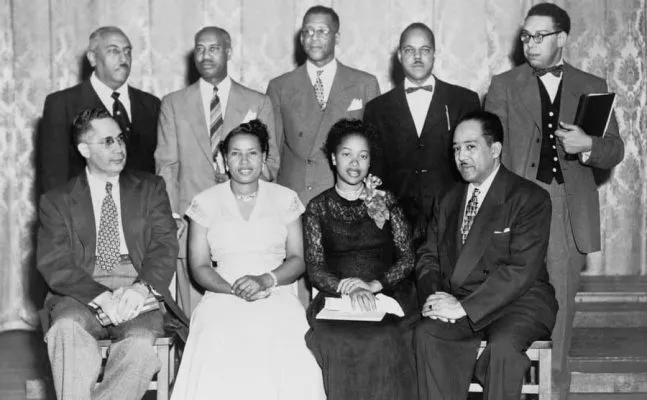 Photo: Sterling A. Brown, via samepassage.org
The Library Card That Changed Everything
Everything shifted the day Sterling discovered the town's segregated library had a back entrance for "colored folks." While other kids played marbles after school, he'd slip through that rear door and lose himself in books. The librarian, Miss Sarah — a white woman who risked her job by treating him with kindness — noticed his hunger for words and quietly began setting aside books she thought he'd enjoy.
One autumn afternoon, she handed him a slim volume of Paul Laurence Dunbar's poetry. Sterling had never seen words arranged like that before — words that sounded like his grandmother's voice, that captured the rhythm of field songs and the cadence of Sunday sermons. For the first time, he saw that literature could sound like home.
"I read that book until the binding came apart," Brown would later recall. "Then I read it some more."
Against All Odds
When Sterling announced his intention to attend college, the reaction in his community was mixed. Some folks thought he was getting above himself; others worried about the financial burden on his family. But Miss Sarah had been quietly corresponding with Williams College in Massachusetts, and somehow — through a combination of scholarships, work-study programs, and sheer determination — Sterling found himself on a train heading north in 1918.
 Photo: Williams College, via www.millworkone.com
Williams College was a shock. Sterling was often the only Black student in his classes, sometimes the only one on campus. Professors who had never taught a Black student didn't know what to make of this soft-spoken young man from Mississippi who could quote Shakespeare and spirituals with equal fluency. Some dismissed him; others were intrigued.
But Sterling had learned patience in those graveyards. He knew how to dig deep and wait for results.
Finding His Voice
After Williams, Sterling earned a master's degree from Harvard, but the real education came from his travels through the South, collecting folk songs, stories, and the everyday poetry of Black life. He rode buses through Georgia, walked dirt roads in Alabama, sat on front porches in Louisiana, listening.
What he heard became the foundation for a new kind of American poetry — one that didn't apologize for its roots or try to sound like something it wasn't. His poems captured the voice of the Black South with unprecedented authenticity, from the blues-soaked streets of Memphis to the cotton fields of the Delta.
The Professor Who Rewrote the Rules
In 1929, Sterling joined the faculty at Howard University, where he would spend the next four decades reshaping how America understood its own literary heritage. His classes became legendary — part literature course, part cultural awakening, part revolution.
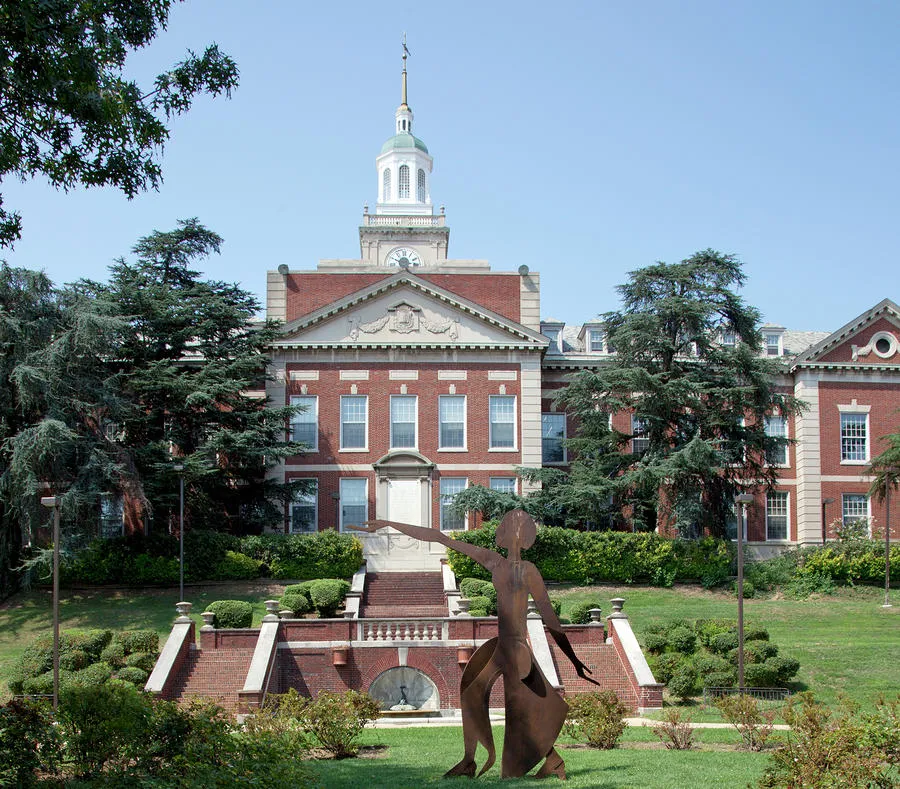 Photo: Howard University, via images.fineartamerica.com
Students like Langston Hughes, Zora Neale Hurston, and Toni Morrison would later credit Brown with teaching them that their own experiences were worthy of great art. He showed them that the stories their grandmothers told, the songs their fathers hummed, the rhythms of their neighborhoods — all of it was literature waiting to happen.
Legacy Written in Clay and Verse
"The strong men keep coming," Brown wrote in one of his most famous poems, and he was talking about more than survival — he was talking about the power to transform pain into beauty, silence into song, endings into beginnings.
Sterling A. Brown never forgot those mornings in the Mississippi clay. In fact, he credited them with teaching him the most important lesson a poet can learn: that every ending is also a beginning, that in the space between grief and hope, extraordinary things can grow.
By the time he died in 1989, Sterling had become known as the "Dean of American Negro Poetry," but perhaps more importantly, he had proven that the most authentic voices often emerge from the most unlikely places. The boy who started by digging graves ended up excavating the buried treasures of American culture, showing the world that poetry — like hope — can rise from anywhere.