The Magnificent Five: When America's Greatest Minds Were Too Broken for Battle
When the System Says No, Sometimes It's Wrong
The Selective Service System of the 20th century was designed to identify America's finest physical specimens—young men who could march twenty miles, shoot straight, and endure the rigors of combat. It was a system built on the assumption that the most valuable Americans were the strongest, fastest, and most physically capable.
Sometimes systems get it spectacularly wrong.
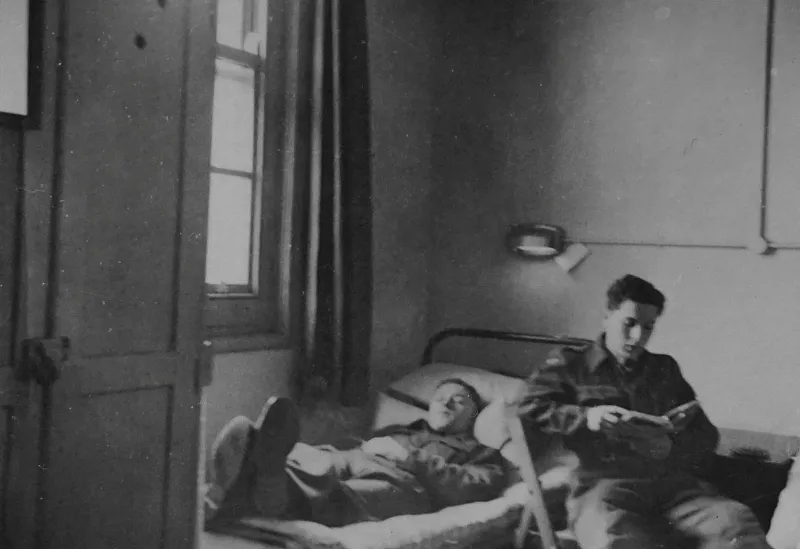
Between 1940 and 1973, millions of American men stood in line at draft boards across the country, stripped to their underwear, and submitted to physical examinations that would determine their fitness for military service. Most were classified as 1-A: available for service. Others received deferments for college, essential work, or family obligations.
But a significant number—nearly 40% during World War II—were classified as 4-F: physically, mentally, or morally unfit for military duty. Flat feet. Poor eyesight. Heart murmurs. Hearing loss. Psychological instability. The reasons varied, but the message was consistent: America didn't need them.
History would prove that assessment catastrophically wrong. Some of the men turned away by draft boards would go on to reshape American society in ways no battlefield victory ever could. Here are five whose rejections became the country's unexpected gain.
Frank Sinatra: The Voice They Didn't Want to Hear
In 1943, at the height of World War II, a skinny kid from Hoboken, New Jersey, stood before a draft board in Newark and was promptly classified as 4-F. The reason: a perforated eardrum that had plagued him since childhood. Frank Sinatra, already gaining recognition as a singer with Tommy Dorsey's orchestra, was deemed unfit for military service.
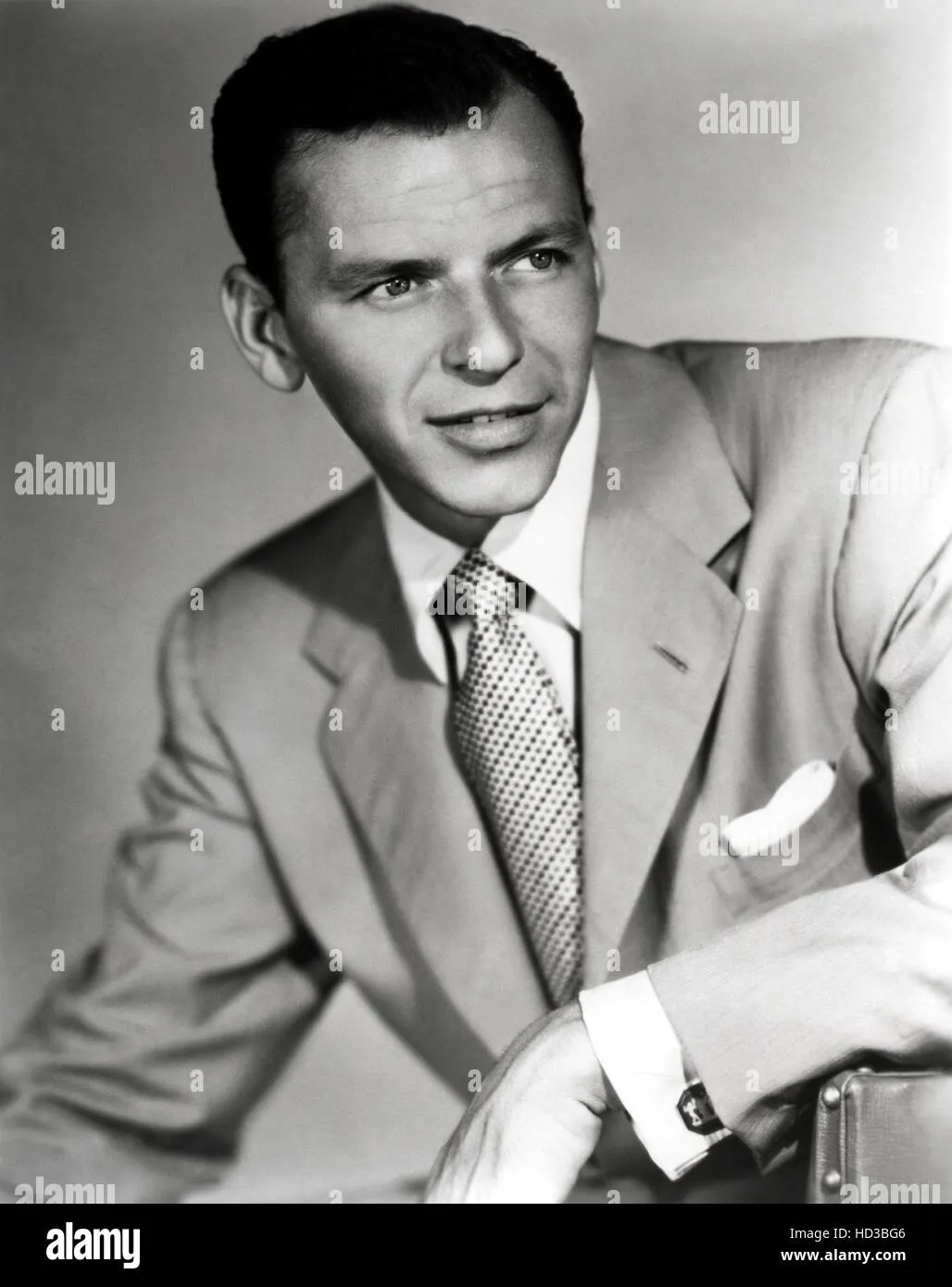 Photo: Frank Sinatra, via c8.alamy.com
The rejection stung. While his contemporaries shipped off to Europe and the Pacific, Sinatra faced accusations of cowardice and draft dodging. FBI Director J. Edgar Hoover, convinced that Sinatra's deferment was the result of mob connections rather than medical issues, launched an investigation that would shadow the singer for decades.
But America's loss was America's gain in disguise. Unable to serve overseas, Sinatra threw himself into entertaining troops at home and selling war bonds. More importantly, he used his growing fame to challenge racial segregation in ways that would have been impossible if he'd spent the war years in a foxhole.
In 1945, Sinatra starred in "The House I Live In," a short film promoting racial tolerance that won an Academy Award. He refused to perform at venues that excluded Black audiences, famously walking out of the Copacabana when management tried to enforce a whites-only policy. When a group of teenagers in Gary, Indiana, rioted over school integration in 1945, Sinatra flew there at his own expense and gave a speech that helped calm tensions.
By the time he died in 1998, Sinatra had sold more than 150 million records, won eleven Grammy Awards, and used his platform to advance civil rights in ways that few entertainers of his era dared. The voice that was too damaged for military service became one of the most influential in American culture.
Thurgood Marshall: Too Smart for His Own Good
Thurgood Marshall's rejection from military service during World War II had nothing to do with physical defects. The future Supreme Court Justice was turned away because of something far more threatening to the military establishment of the 1940s: his legal expertise in civil rights.
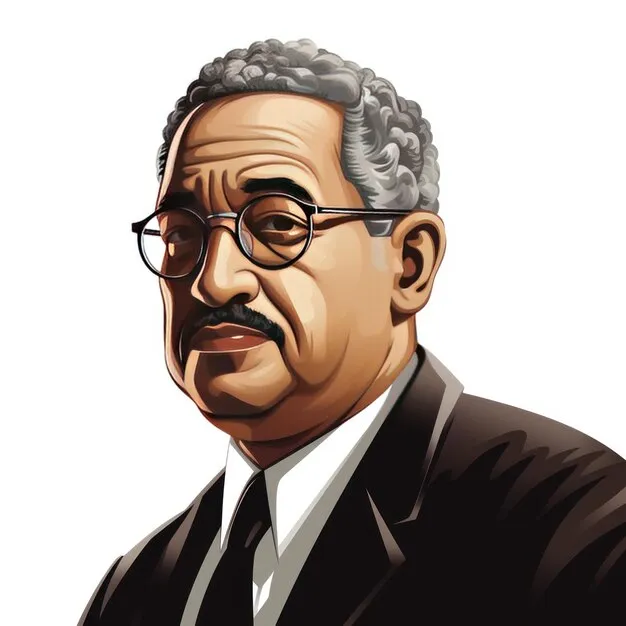 Photo: Thurgood Marshall, via img.freepik.com
Marshall, already working as a lawyer for the NAACP, attempted to enlist as an officer in the Judge Advocate General's Corps. The military's response was swift and unequivocal: no. Marshall's work challenging segregation and defending Black soldiers in court martial proceedings made him, in the eyes of military leadership, a troublemaker rather than an asset.
The rejection was particularly galling because the military desperately needed qualified lawyers. But Marshall's commitment to racial equality made him persona non grata in an institution that was itself rigidly segregated.
So Marshall stayed home and waged a different kind of war. Between 1940 and 1961, he argued 32 cases before the Supreme Court and won 29 of them, including Brown v. Board of Education, the landmark decision that declared school segregation unconstitutional. His legal victories dismantled Jim Crow more thoroughly than any military campaign could have.
When President Lyndon Johnson nominated Marshall to the Supreme Court in 1967, the man who had been deemed unfit for military service became the first African American to serve on the nation's highest court. His 24-year tenure on the Court continued his lifelong mission of expanding civil rights and equal protection under law.
The military's loss was the Constitution's gain.
Walt Disney: The Dreamer They Couldn't Use
Walt Disney's rejection from military service during World War I was both humiliating and formative. At age 16, Disney tried to enlist in the Army but was turned away for being underage. When he attempted to join the Navy by lying about his birth date, military doctors discovered the deception and rejected him again.
Determined to serve in some capacity, Disney finally found acceptance with the Red Cross, which sent him to France as an ambulance driver. But even there, he spent more time drawing cartoon characters on his ambulance than focusing on his duties. His commanding officers noted his tendency toward "excessive daydreaming" and "lack of military bearing."
The military's assessment wasn't wrong—Disney was a terrible soldier. But he was a visionary artist whose imagination would reshape American entertainment and culture. Freed from military constraints, Disney poured his creativity into animation, founding the studio that would produce Mickey Mouse, Snow White, and dozens of other characters that became global icons.
During World War II, Disney's studio produced training films for the military that were far more effective than anything he could have contributed as a soldier. His cartoon characters sold war bonds, promoted conservation, and boosted morale on the home front. After the war, Disneyland became a symbol of American optimism and innovation that attracted millions of visitors from around the world.
The boy who was too young and too dreamy for military service grew up to create entertainment that defined American childhood for generations.
Jonas Salk: The Healer Who Couldn't Carry a Gun
Jonas Salk's classification as 4-F during World War II was based on a minor heart murmur detected during his physical examination. Military doctors deemed the condition insignificant for civilian life but disqualifying for military service. Salk, already in medical school at New York University, was told that his country didn't need him in uniform.
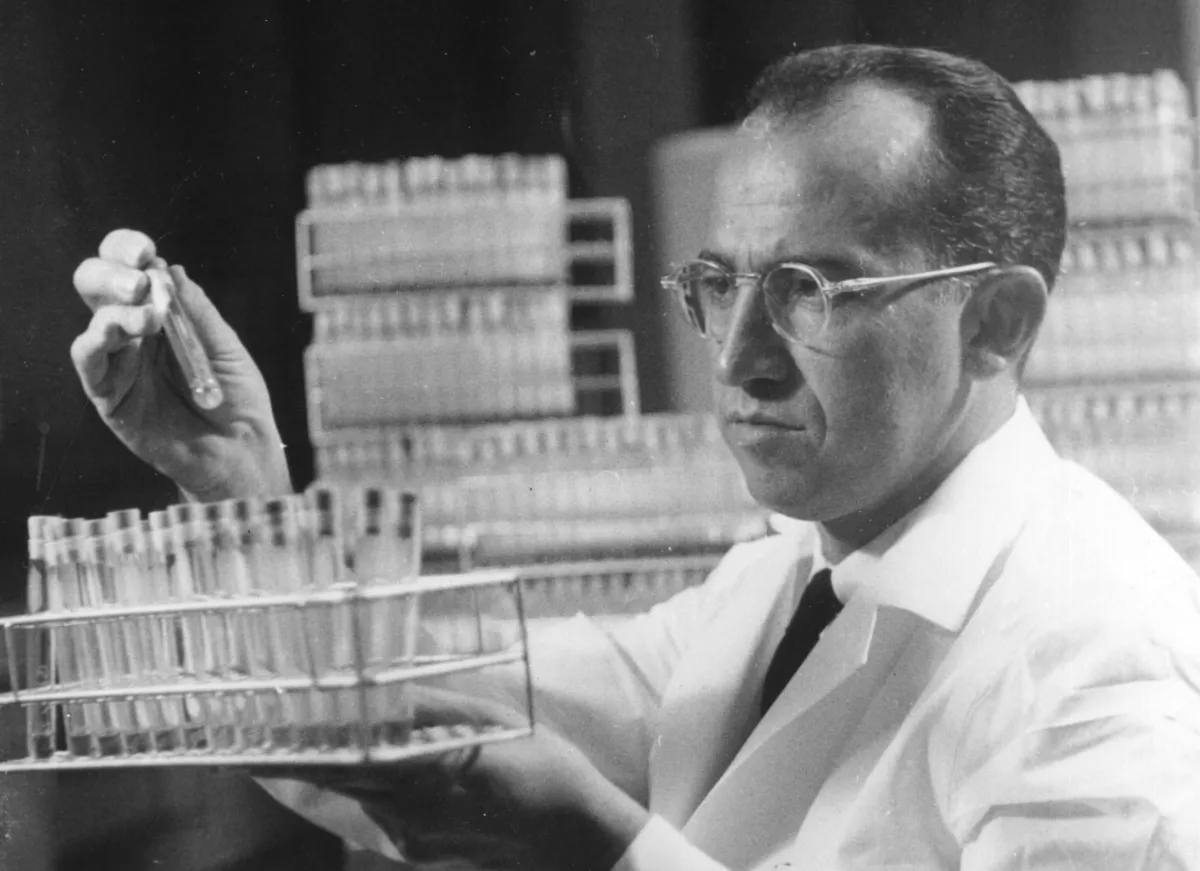 Photo: Jonas Salk, via www.thoughtco.com
The rejection was devastating for a young man who desperately wanted to serve. But it also freed Salk to pursue medical research at a time when the country desperately needed scientific breakthroughs. While his classmates served as combat medics, Salk focused on virology and immunology, fields that seemed peripheral to the war effort but would prove crucial to peacetime prosperity.
In 1955, Salk announced the successful development of a vaccine against poliomyelitis, a disease that had terrorized American families for decades. The vaccine's success was so complete that polio, once one of the most feared diseases in America, was virtually eliminated within a generation.
Salk's refusal to patent the vaccine—forgoing potential profits of billions of dollars—made him a folk hero. When asked who owned the patent, he famously replied, "Well, the people, I would say. There is no patent. Could you patent the sun?"
The man with the supposedly weak heart saved more lives than any soldier who served in World War II.
Andy Warhol: Too Strange for Service
Andy Warhol's draft classification during the Korean War was 4-F, based on what military psychiatrists described as "homosexual tendencies" and "psychological instability." In the 1950s, both conditions were considered incompatible with military service.
The rejection was probably a relief for Warhol, who had shown no interest in military life and was already establishing himself as a commercial artist in New York City. But it also reinforced his sense of being an outsider in American society—a perspective that would prove invaluable to his artistic development.
Unable to serve his country in uniform, Warhol served it in ways the military never could have imagined. His pop art challenged traditional notions of high and low culture, making fine art accessible to ordinary Americans. His Factory became a gathering place for artists, musicians, and writers who were reshaping American culture in the 1960s.
Warhol's portraits of Campbell's soup cans, Marilyn Monroe, and Elvis Presley captured the spirit of American consumer culture with an insight that no war correspondent could match. His films, music production, and magazine publishing helped define the counterculture movement that would transform American society.
The man who was too strange for military service became one of the most influential artists of the 20th century.
The Magnificent Irony
The stories of these five men illustrate a profound irony about American society: sometimes our greatest contributions come not from those the system selects, but from those it rejects. The draft boards of the 20th century were designed to identify physical fitness and conformity—qualities essential for military service but not necessarily for innovation, creativity, or social progress.
Sinatra's damaged ear gave him a distinctive vocal quality that became his trademark. Marshall's exclusion from military service freed him to wage a more important battle in courtrooms. Disney's unsuitability for military discipline allowed his imagination to flourish. Salk's heart murmur kept him in laboratories where he could save millions of lives. Warhol's outsider status gave him the perspective to revolutionize American art.
Their rejections weren't failures of the system—they were features of a democracy diverse enough to value different kinds of service and strong enough to benefit from multiple forms of excellence. Sometimes the people who can't march in formation are the ones who lead society in entirely new directions.
Sometimes being unfit for one kind of service makes you perfectly suited for another. And sometimes, the greatest victory is discovering that there are many ways to serve your country—most of which don't require a uniform.