The Bootlegger's Son Who Became America's Conscience: How a Louisiana Backwater Produced Its Greatest Investigative Journalist

The Boy Who Asked Too Many Questions
In the swamplands of Louisiana, where moonshine flowed as freely as the Mississippi's muddy waters, young Isidor Feinstein Stone learned his first lesson about authority: it was usually lying. His father ran a small-time bootlegging operation during Prohibition, and Stone watched federal agents come and go, making deals with the very people they were supposed to arrest. The hypocrisy left a mark on the boy who would grow up to become America's most relentless truth-teller.
Stone's family scraped by on the margins of respectability. His father's business kept food on the table but also kept the family one step ahead of trouble. In this environment, Stone developed what would become his greatest journalistic asset: an instinctive distrust of official stories and an unshakeable belief that the real story was always hiding in plain sight.
Building Truth from Scraps
After bouncing between small newspapers and watching editors kill his most important stories, Stone made a decision that seemed like professional suicide. In 1953, he launched I.F. Stone's Weekly from his tiny Washington apartment, armed with nothing but a typewriter, his wife's secretarial skills, and 5,000 subscribers who paid five dollars each for the privilege of reading what mainstream media wouldn't print.
The operation was laughably small by Washington standards. Stone had no sources in high places, no access to classified briefings, no invitations to power lunches. What he had was something far more dangerous: the patience to read every word of public documents that politicians assumed no one would ever examine.
While other journalists chased scoops at cocktail parties, Stone haunted government reading rooms. He discovered that the most explosive revelations were often buried in congressional hearing transcripts, budget documents, and bureaucratic reports. Officials lied in private conversations, but they told the truth in footnotes, assuming no one would notice.
The Blacklist That Made Him Free
When McCarthyism swept through Washington in the 1950s, Stone found himself persona non grata at every major publication. The blacklist that destroyed other careers became his liberation. With nothing left to lose, he could ask the questions that polite journalists avoided.
His newsletter became required reading for anyone who wanted to understand what was really happening in Washington. Stone exposed the lies that led America into Vietnam years before other journalists caught on. He documented government surveillance programs that wouldn't be officially acknowledged for decades. He revealed how defense contractors manipulated Pentagon spending and how politicians enriched themselves through insider deals.
The FBI opened a file on Stone that eventually grew to 30,000 pages. They tapped his phones, followed his movements, and tried to intimidate his subscribers. But Stone had learned something from his bootlegger father: when the authorities are watching you that closely, you must be doing something right.
The Scholar Who Started at Seventy
In 1971, at age 63, Stone retired his newsletter and did something that stunned his admirers: he enrolled in ancient Greek classes at George Washington University. His goal was to read Plato's account of Socrates' trial in the original language, convinced that something had been lost in translation.
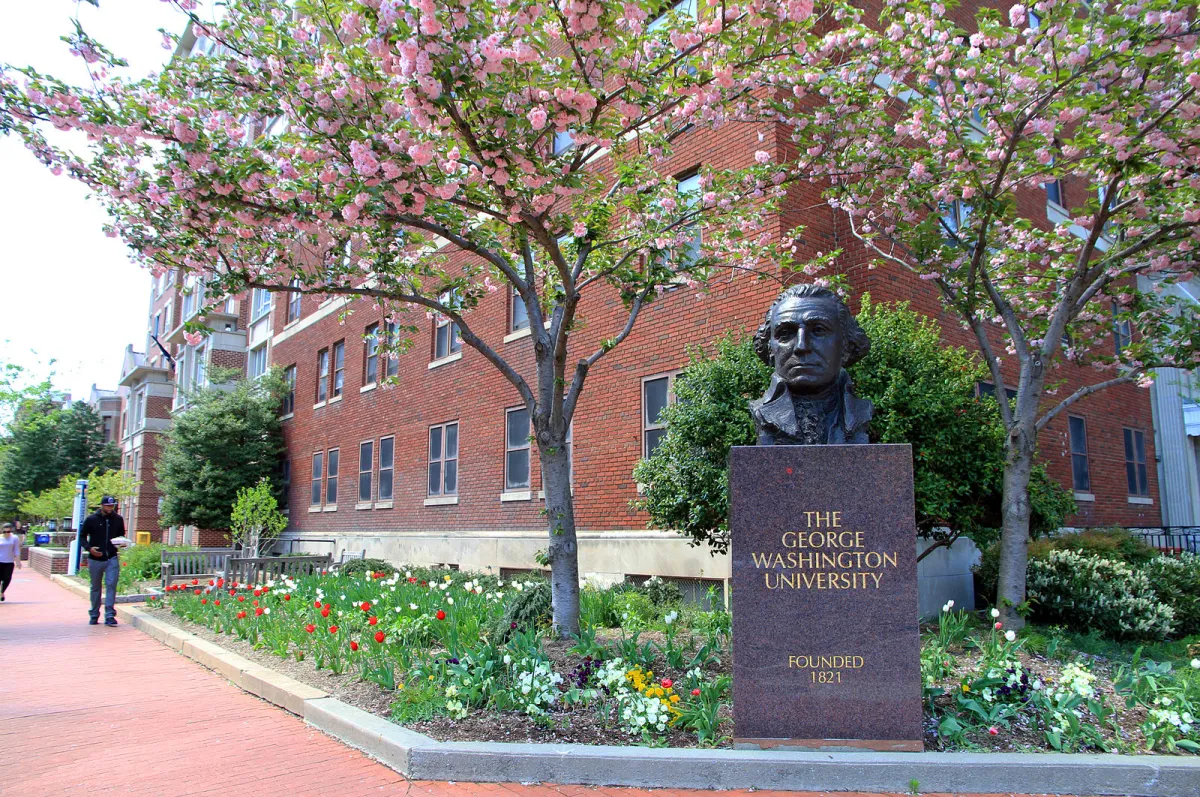 Photo: George Washington University, via nextgenadmit.com
For seven years, Stone immersed himself in classical texts with the same obsessive attention he'd once devoted to Pentagon papers. His wife found him at his kitchen table before dawn, conjugating verbs and parsing ancient arguments. At age 70, when most people are settling into retirement, Stone was teaching himself one of the world's most difficult languages.
His efforts culminated in The Trial of Socrates, a book that challenged 2,400 years of accepted wisdom about the philosopher's death. Stone argued that Socrates had been far more politically dangerous than traditional accounts suggested, and that his trial represented a genuine conflict between democracy and intellectual elitism. The book became a bestseller and proved that Stone's investigative instincts worked as well on ancient Athens as modern Washington.
The Outsider's Advantage
Stone's greatest strength was also his supposed weakness: he never belonged to the club. While other journalists worried about maintaining access to sources, Stone worried only about maintaining access to the truth. His outsider status freed him from the unwritten rules that kept mainstream media in line.
He understood that real journalism wasn't about getting invited to the right parties or maintaining relationships with powerful people. It was about serving readers who deserved to know what their government was doing in their name. Stone's subscribers didn't pay for gossip or insider speculation—they paid for facts that no one else was willing to dig up.
Legacy of the Loner
When Stone died in 1989, he left behind a model of journalism that seems almost impossible to replicate in today's media landscape. His success came from refusing to play by rules designed to keep outsiders outside. He proved that one person with a typewriter and an uncompromising commitment to truth could hold the most powerful government in history accountable.
The bootlegger's son who became America's conscience understood something that his more credentialed colleagues missed: the best journalism often comes from the margins, where the pressure to conform is weakest and the view of power is clearest. Stone's weekly newsletter may have been small, but it cast a shadow that reached all the way to the White House.
In an era when trust in media has never been lower, Stone's example offers a different path forward. He showed that credibility comes not from institutional backing or insider access, but from an unwavering commitment to following facts wherever they lead, no matter how uncomfortable the destination.