The Map Said Nothing Was There. History Disagreed.
There's a story America tells itself about success — that it flows outward from its great cities, from its elite universities, from the ZIP codes where the right people already live. It's a compelling story. It's also, the historical record suggests, frequently wrong.
Some of the most consequential Americans in history came from places that barely registered on any map. Not just modest towns, but genuinely tiny communities — the kind where everybody knew everybody, where ambition had nowhere to hide, where the nearest library might be twenty miles away and the nearest mentor might not exist at all. And yet, something in those overlooked places produced people who changed medicine, literature, science, business, and the way the country understood itself.
Here are five of them.
1. Sinclair Lewis — Sauk Centre, Minnesota (Population: Roughly 2,800)
When Sinclair Lewis published Main Street in 1920, he aimed it like a dart at the smug insularity of small-town American life — and the country recognized itself immediately. The novel was a sensation. It was also, unmistakably, a portrait of Sauk Centre, the tiny Minnesota town where Lewis grew up as a gangly, awkward kid who didn't fit in and knew it.
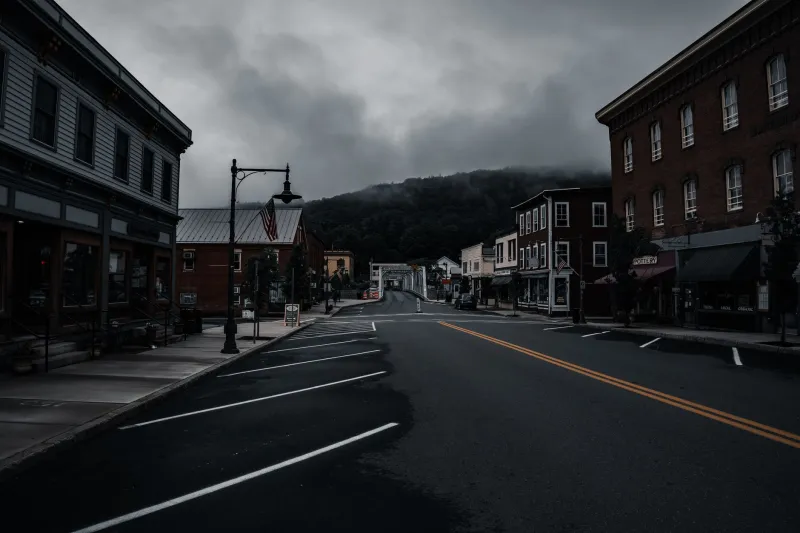
 Photo: Sauk Centre, Minnesota, via i.ytimg.com
Sauk Centre was not, by any measure, a nurturing environment for a future Nobel laureate. Lewis was bookish and socially maladroit in a community that valued neither quality particularly. He was teased, isolated, and deeply unhappy for much of his childhood. He left as soon as he could.
But Sauk Centre gave him something no city could have: a complete, close-range view of a specific kind of American life, observed from the outside by someone who never quite belonged to it. That outsider's eye — sharp, slightly wounded, unable to look away — became his greatest literary tool. He won the Nobel Prize in Literature in 1930, the first American ever to do so. The acceptance speech he gave in Stockholm was, at its core, still an argument with Sauk Centre.
The town that made him miserable made him great. He spent his whole career trying to explain it.
2. Philo Farnsworth — Rigby, Idaho (Population: Under 1,000)
In 1921, a fourteen-year-old farm boy in Rigby, Idaho, was plowing a potato field when he looked at the rows of turned earth and thought: that's how you could transmit a picture electronically. Row by row. Line by line.
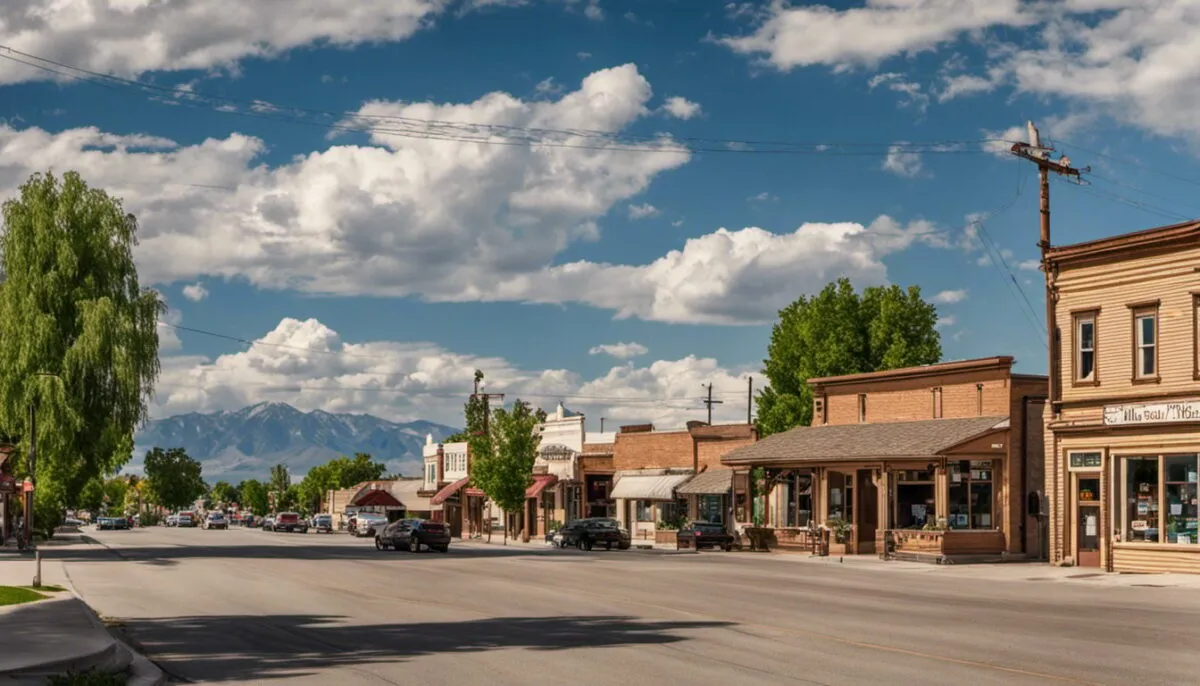 Photo: Rigby, Idaho, via wondrousdrifter.com
That boy was Philo Farnsworth, and that moment in the field — as origin stories go — is almost too perfect to believe, except that Farnsworth himself told it repeatedly and the historical evidence supports it. By the time he was twenty-one, he had produced the first working electronic television transmission in history. The big corporations that had been racing toward the same goal — RCA chief among them — found themselves staring at a patent held by a kid from a town with no traffic lights.
Rigby gave Farnsworth something the corporate labs couldn't replicate: isolation and necessity. There was no one to tell him his ideas were impossible. There was no institutional orthodoxy to absorb and obey. There was just a curious mind, a farm, and a lot of time to think. He read everything he could find about electricity. He pestered his schoolteacher with questions until the teacher ran out of answers. He worked in the margins of the known world because the margins were all he had.
The television in your living room — or more likely, the streaming device connected to it — traces a direct line back to a potato field in rural Idaho and a teenager who couldn't stop asking why not.
3. Katharine Johnson — White Sulphur Springs, West Virginia (Population: Around 2,500)
Katharine Johnson — known to most people now as Katherine Johnson, the NASA mathematician whose calculations helped put Americans on the moon — grew up in White Sulphur Springs, West Virginia, a small resort and railroad town in the Allegheny Mountains. It was a place of real beauty and real limitation: segregated schools, limited resources, and a ceiling so low on Black professional ambition that it was nearly invisible.
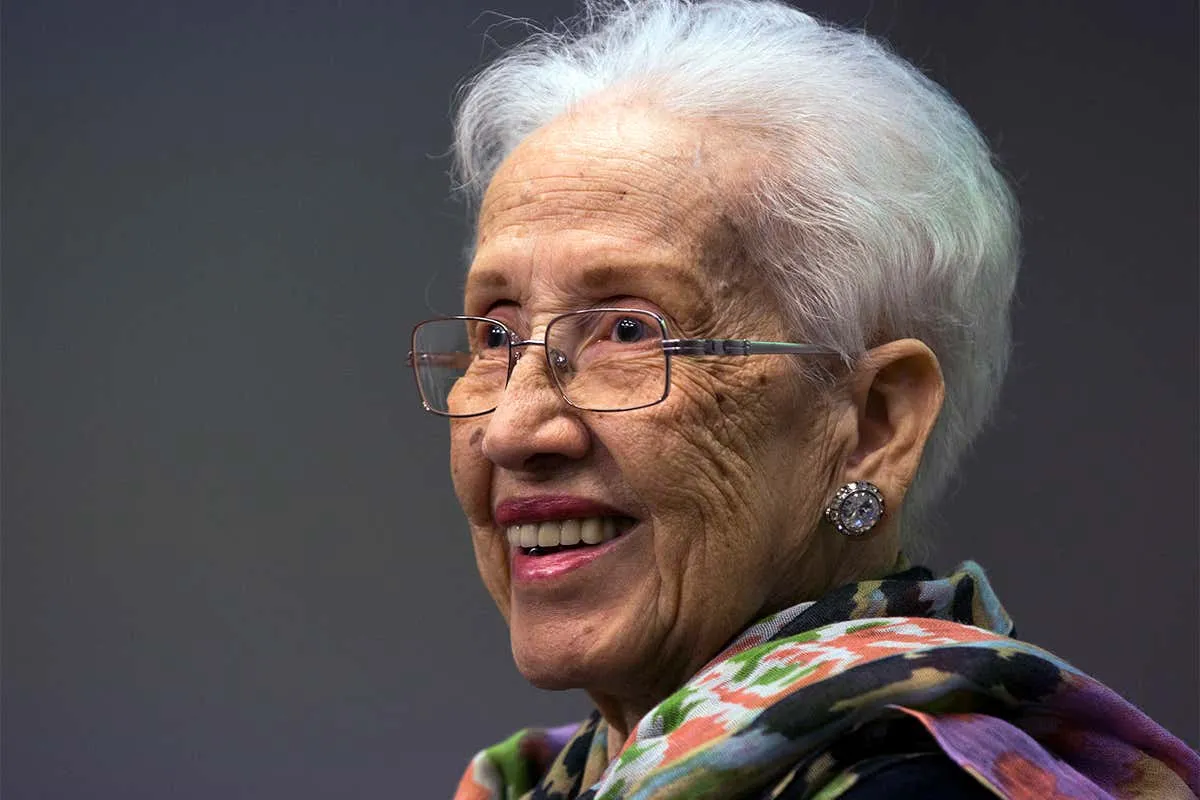 Photo: Katharine Johnson, via images.newscientist.com
What White Sulphur Springs had, though, was a father who believed his daughter's mind was worth fighting for. When the local school system stopped offering education for Black students after eighth grade, he moved the family 120 miles so Katharine could keep learning. That's the kind of sacrifice that small, tight communities sometimes produce — not institutional support, but fierce, personal investment from the people immediately around you.
Johnson entered college at fifteen. She graduated at eighteen with degrees in mathematics and French. She eventually joined NASA's predecessor agency and became, in the words of her colleagues, the person you brought your most impossible calculations to when you needed to be certain. John Glenn, before his orbital flight, reportedly refused to launch until Johnson personally verified the computer's numbers.
She grew up in a place that barely acknowledged her potential. She spent her career proving exactly what that potential was.
4. Sam Walton — Kingfisher, Oklahoma (Population: Around 3,000)
Sam Walton was born in Kingfisher, Oklahoma, in 1918, and grew up moving around the rural Midwest during the Depression — a childhood defined by scarcity, practicality, and the particular resourcefulness that comes from having very little margin for error. His father traded farms and worked for an insurance company. The family was not poor by Depression standards, but they were never far from the edge.
What Walton absorbed in those small towns — the economics of them, the social fabric of them, the way people made purchasing decisions when every dollar counted — became the foundation of the most successful retail operation in human history. Walmart didn't succeed in spite of its small-town origins. It succeeded because of them. Walton understood rural and small-town American consumers with a precision that East Coast retailers never approached, because he was one of them.
He opened his first store in Newport, Arkansas (population: around 7,000). He opened his second in Bentonville, Arkansas (population: smaller). He built an empire by betting, correctly, that the America the big chains were ignoring was actually most of America.
The map said nothing was there. Walton looked at the same map and saw everything.
5. Zora Neale Hurston — Notasulga, Alabama (Population: A Few Hundred)
Zora Neale Hurston was born in Notasulga, Alabama, in 1891, but her formative years were spent in Eatonville, Florida — one of the first incorporated all-Black municipalities in the United States, with a population that never exceeded a few hundred people. It was, by almost any conventional measure, a place of profound limitation. It was also, for Hurston, a place of profound freedom.
Eatonville gave her something rare: a childhood in which Black life was not defined by its relationship to white scrutiny. The town had its own mayor, its own institutions, its own stories told on its own terms. Hurston grew up surrounded by the oral traditions, the folk tales, and the vernacular richness of a community that existed entirely on its own authority. That experience became the raw material for some of the most important American literature of the twentieth century.
Their Eyes Were Watching God, published in 1937, drew directly on the language and landscape of Eatonville. It was largely ignored at the time and rediscovered decades later — now it's considered a cornerstone of American literature. The smallness of Hurston's hometown wasn't an obstacle to her literary vision. It was the vision.
What the Small Towns Knew
These five stories don't argue that small towns are better than cities, or that elite institutions don't matter, or that disadvantage is secretly an advantage. They argue something more specific: that the conditions greatness requires are not always the conditions we assume.
Isolation can sharpen curiosity. Necessity can build resilience. Tight communities can produce the kind of deep, specific knowledge that broad environments never generate. And sometimes, being overlooked by the world means you spend your formative years developing your own internal compass — one that points somewhere the map didn't know existed.
The ZIP code doesn't make the person. The person makes the ZIP code worth remembering.