Blueprint Behind Bars: The Self-Taught Architect Who Built Homes That Outlasted His Sentence

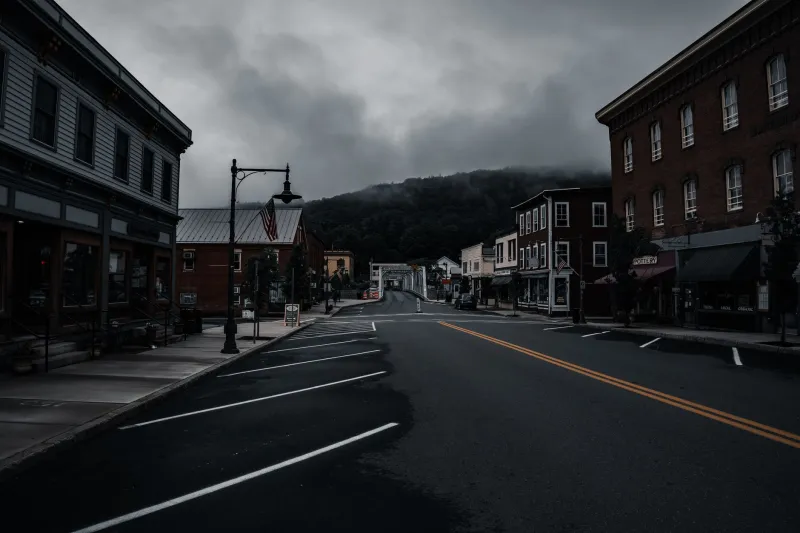
Photo by Photo by Jane Sorensen on Unsplash on Unsplash
The house on Delmar Street doesn't look like a monument. It's a modest single-story structure in a mid-sized Southern city — two bedrooms, a covered porch, practical windows positioned to catch the prevailing breeze in summer. The family inside has lived there for over thirty years. The roof doesn't leak. The foundation hasn't shifted. The neighbors have similar houses, built the same way, by the same set of plans.
 Photo: Delmar Street, via i.ytimg.com
What most people in that neighborhood don't know is where those plans came from.
They came from a man who drew them in a prison cell.
A Life That Took a Wrong Turn Early
James Elroy Whitfield grew up in rural Mississippi in the 1930s, the son of a sharecropper, in circumstances where formal education was neither free nor guaranteed. He reached his teens with a partial elementary education and a practical knowledge of carpentry — the kind you pick up when you're building and repairing things because there's no one else to do it.
 Photo: James Elroy Whitfield, via cdn.sanity.io
In his early twenties, a series of decisions — some his, some made for him by poverty and circumstance — led to a conviction for armed robbery. He was sentenced to a federal penitentiary in the mid-1950s and entered the system with no diploma, no trade certification, and, by his own later account, very little sense of what came next.
What came next was a library cart.
The Education That Happened Anyway
Federal prisons in mid-century America were not exactly flush with educational resources, but they weren't entirely empty of them either. Whitfield's facility had a modest library — heavy on legal texts and light on everything else — but it received periodic donations from civic organizations, and among those donations, over several years, arrived a small but consequential collection of technical books.
Whitfield started with a basic drafting manual. He had no ruler, so he improvised one. He had no proper drafting paper, so he used the backs of envelopes and the margins of newspapers until he could request proper materials through the institution's supply system. He read the manual until he could recite sections from memory, then moved on to a foundational structural engineering text that had been donated by a local university's overflow collection.
He wrote letters — dozens of them — to architecture schools, public libraries, and professional organizations, requesting materials. Most went unanswered. Some didn't.
"A few people wrote back," he said in a recorded interview conducted decades later by a regional historical preservation group. "A professor in Tennessee sent me three textbooks. I don't know why he did it. I wrote him a letter explaining what I was trying to do, and he just sent them. I've never forgotten that."
Over the course of roughly eight years of incarceration, Whitfield accumulated a working education in structural principles, site planning, load-bearing calculations, and the particular demands of building in hot, humid climates. He also found a mentor of sorts in a fellow inmate — an older man who had worked as a construction foreman before his conviction — who could translate theory into practice and catch errors that the books alone wouldn't reveal.
From Cell to Construction Site
Whitfield was released in the early 1960s, into a South that was both changing and stubbornly resistant to change. He was a Black man with a criminal record in a region where neither of those facts made life easy. Formal employment in architecture or construction was not available to him through conventional channels.
So he went around the conventional channels.
He connected with a network of Black community organizations — churches, civic groups, and informal neighborhood associations — that were desperately trying to address a shortage of decent, affordable housing in their communities. These organizations couldn't afford licensed architects. They couldn't always navigate the bureaucratic machinery of federal housing programs. But they needed someone who understood how to put a structure together safely and efficiently on a minimal budget.
Whitfield was that person.
His designs were practical above all else. He worked with local materials, prioritized natural ventilation in an era before air conditioning was standard, and built structures that could be maintained and repaired by people without specialized skills. He wasn't building showpieces. He was building homes that would still be standing in fifty years.
He was right.
What His Buildings Say About What We Waste
The preservation group that recorded Whitfield's oral history eventually commissioned a structural survey of the homes he designed. The results were striking — not because the buildings were architecturally innovative in the ways that win awards, but because they were so durably, stubbornly functional. Decades of Southern weather, deferred maintenance, and hard use had left them largely intact.
The survey architect who led the project described Whitfield's work as reflecting "an almost intuitive grasp of how buildings actually behave over time" — a quality she attributed to the gap between his theoretical education and the real-world feedback he received as his designs were built and lived in.
That gap, paradoxically, may have been an advantage. Without formal schooling's tendency to teach convention, Whitfield approached structural problems from first principles, asking what a building actually needed to do rather than what it was supposed to look like.
His story raises questions that aren't comfortable to sit with. How many people with equivalent capacity have passed through the American prison system without a library cart, without a letter from a Tennessee professor, without the particular combination of stubbornness and curiosity that kept Whitfield reading when there was no obvious reason to? How many blueprints never got drawn?
The House on Delmar Street
Whitfield died in 1991, without a professional license, without a degree, and without significant public recognition. The preservation group that documented his work has advocated for formal historical designation of several of his surviving structures, with mixed success.
But the house on Delmar Street doesn't need a historical marker to make its argument. It makes its argument every morning when the family inside wakes up in a home that's dry and solid and theirs.
James Elroy Whitfield built that. He built it from a prison cell, with borrowed textbooks and improvised tools and a mind that refused to accept that the walls around him were the outer limit of what he could reach.
That's not a story about the prison system working. It's a story about one man working despite it — and a quiet, standing reminder of what's possible when potential finds even the smallest crack of light.