Sixty-Seven Years Late to the Party — and Worth Every Minute of the Wait
There's a particular kind of stubbornness that doesn't look like stubbornness at all. It looks like a man quietly painting on his days off, stacking canvases in a rented room, submitting work to galleries that return it without comment, and then going back to the railroad the next morning and doing it all over again. For decades, that was John Kane — Scottish immigrant, manual laborer, self-taught painter, and one of the most unlikely figures ever to crash the gates of American fine art.
He didn't storm those gates, exactly. He just kept showing up until they had no choice but to open.
A Hard Life Worn Proudly
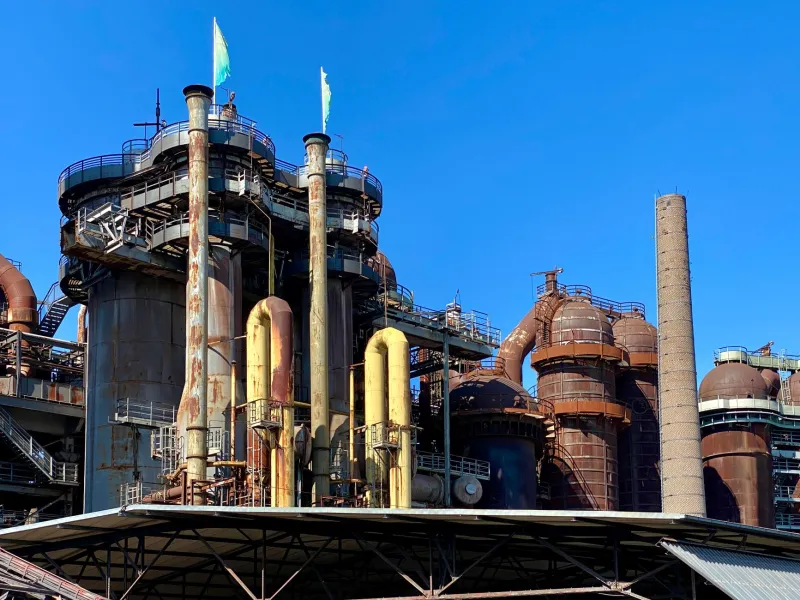
Kane arrived in the United States from Lanarkshire, Scotland, in 1879, at the age of nineteen. He came with no money, no connections, and no plan beyond finding work. What he found was Pittsburgh — or rather, Pittsburgh found him. The city was eating itself alive with industry in those years, and it needed men willing to do the brutal, unglamorous labor that built it: digging foundations, driving spikes, laying pipe, painting the hulking steel structures that defined the skyline.
Kane did all of it. For years he moved between jobs the way the rivers moved through the city — constantly, without ceremony. He worked on railroad gangs across Alabama and Tennessee. He painted railway cars and factory walls. He got hired, got laid off, got hired again. And somewhere in the middle of all that physical labor, he started painting for himself.
Then, in 1891, a train accident in Alabama cost him his right leg below the knee. He was fitted with a prosthetic and went back to work. That detail — the prosthetic leg, the return to physical labor, the refusal to let catastrophe rewrite his story — tells you almost everything you need to know about John Kane.
The Man Who Painted Pittsburgh Like He Loved It
What Kane saw in Pittsburgh was not what most people saw. Where others looked at the steel mills and saw grime and exhaustion, Kane looked and saw something almost sacred. His paintings of the city — its bridges, its hills, its rivers catching the light at dusk — have a luminous, almost dreamlike quality that shouldn't be possible given how hard those subjects were to love. He painted the landscape of industrial labor with the tenderness of a man who understood it from the inside.
His technique was entirely self-taught, which is to say it was entirely his own. He studied reproductions of paintings when he could find them. He experimented on whatever surfaces were available. His perspective was sometimes off by formal standards, his proportions occasionally unconventional — but the paintings had an emotional directness that no academic training could have produced or, frankly, would have allowed.
He submitted work to the Carnegie International Exhibition — one of the most prestigious art shows in the country — multiple times over multiple years. Each time, the jury turned him away. He wasn't trained. He wasn't credentialed. He wasn't what the art world expected a serious painter to look like.
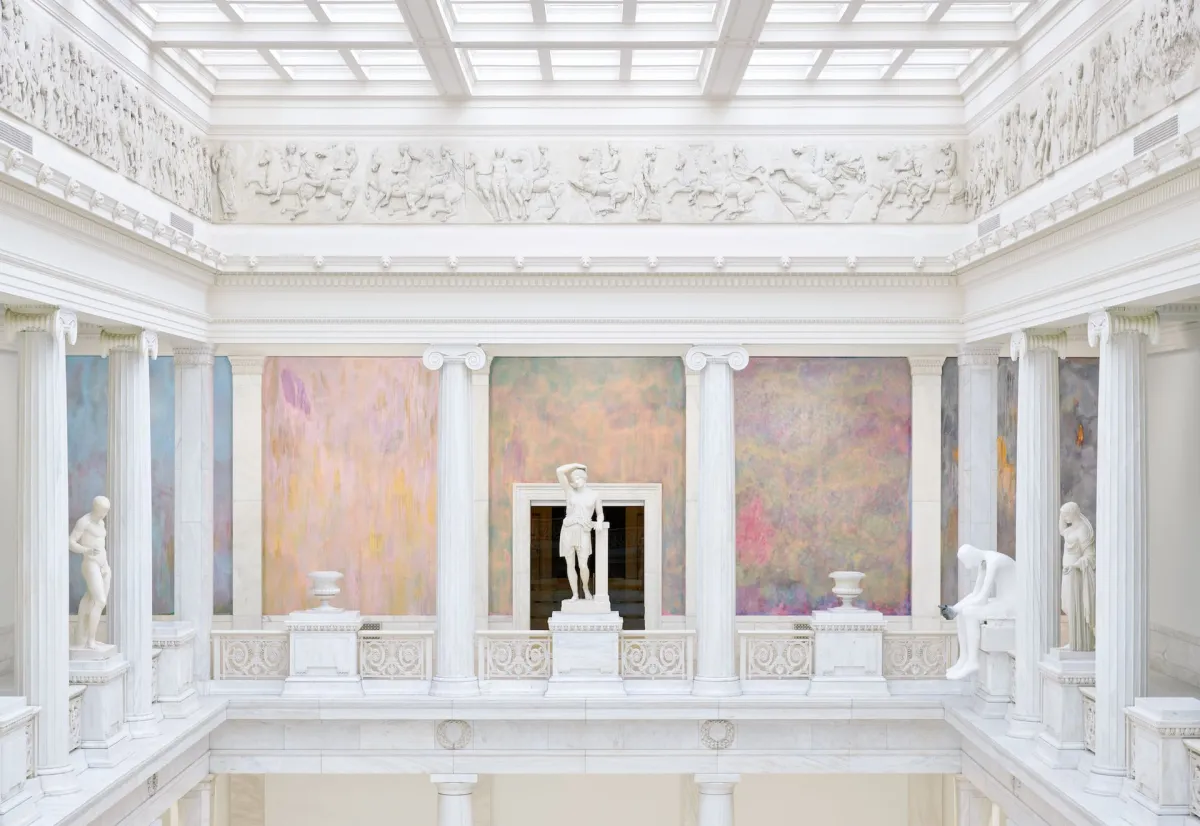 Photo: Carnegie International Exhibition, via cdn.sanity.io
He kept submitting anyway.
The Year Everything Changed
In 1927, when John Kane was sixty-seven years old, the Carnegie International accepted one of his paintings. The piece, Scene from the Scottish Highlands, stopped the jury cold. Something about it — the confidence of it, the strange beauty of it, the way it refused to apologize for what it was — couldn't be dismissed. He became the first self-taught artist ever accepted into the Carnegie International, and the American art world didn't quite know what to do with that.
The reaction was immediate and complicated. Critics were fascinated. Some were dismissive. Others were genuinely moved. The term that kept appearing in reviews was "primitive" — a word the art establishment reached for when it encountered work that didn't fit its categories, work that was too good to ignore but too unconventional to easily classify. Kane reportedly found the label more amusing than insulting.
What followed was a late-career flowering that reads almost like a fairy tale, except fairy tales don't usually feature a one-legged immigrant who spent his sixties painting between shifts. Galleries began to take notice. Collectors came calling. His work started to sell. He gave interviews with the unpolished directness of a man who had never needed anyone's approval and wasn't about to start performing for it now.
What the Gatekeepers Almost Buried
Kane died in 1934, just seven years after that breakthrough Carnegie acceptance. He was seventy-three. In the time he had left, he produced some of the most distinctive American paintings of the early twentieth century — work that now hangs in the Metropolitan Museum of Art, the Museum of Modern Art, and the Carnegie Museum of Art, among others.
It's worth sitting with the math of his story for a moment. He spent roughly forty years submitting, being rejected, and continuing anyway. He achieved his first major recognition at an age when most careers — in any field — are winding down. The paintings that now command serious critical respect and significant auction prices were made by a man who mixed house paint with artist's pigment because he couldn't always afford the good stuff.
The art world's long resistance to Kane wasn't just snobbery, though it was certainly that. It was also a failure of imagination — an inability to recognize that genius doesn't always arrive with the right credentials, the right accent, or the right biography. Kane's Pittsburgh wasn't the Pittsburgh of the industrialists who commissioned portraits. It was the Pittsburgh of the men who built the bridges and painted the factory walls and came home with their hands wrecked. That perspective was worth something. It just took the establishment a very long time to admit it.
Rising From the Railyard
There's a version of John Kane's story that frames his late recognition as a triumph over adversity, and it is that. But it's also something quieter and more interesting than that framing suggests. Kane didn't spend forty years burning with frustrated ambition. He spent forty years painting because he couldn't not paint — because the act of putting Pittsburgh on canvas was its own reward, regardless of whether anyone in a gallery was paying attention.
That's the part of the story that doesn't get told enough. The rise wasn't just from poverty or obscurity or a working-class background. It was from a deeper place — from the belief, held privately and without external reinforcement for decades, that what he was making mattered. That the steel-scarred hills and the river light and the faces of working men deserved to be rendered with care and beauty.
He was right. It just took the world a while to catch up.
Some of the best things in American life have arrived that way — carried in by someone who refused to wait for permission, who kept working in the margins until the margins couldn't contain them anymore. John Kane is one of those people. Sixty-seven years late to the party, and still the most interesting person in the room.