Shelf Stocker, Sky Painter: The Kansas Man Who Gave the Harlem Renaissance Its Face
There's a mural in Fisk University's library that stops people cold. Sweeping figures in silhouette, layered in geometric rings of color, bodies reaching upward through shadow and light. It looks like something conjured by a classically trained master — someone who studied in Paris, perhaps, or trained under the great muralists of Mexico City.
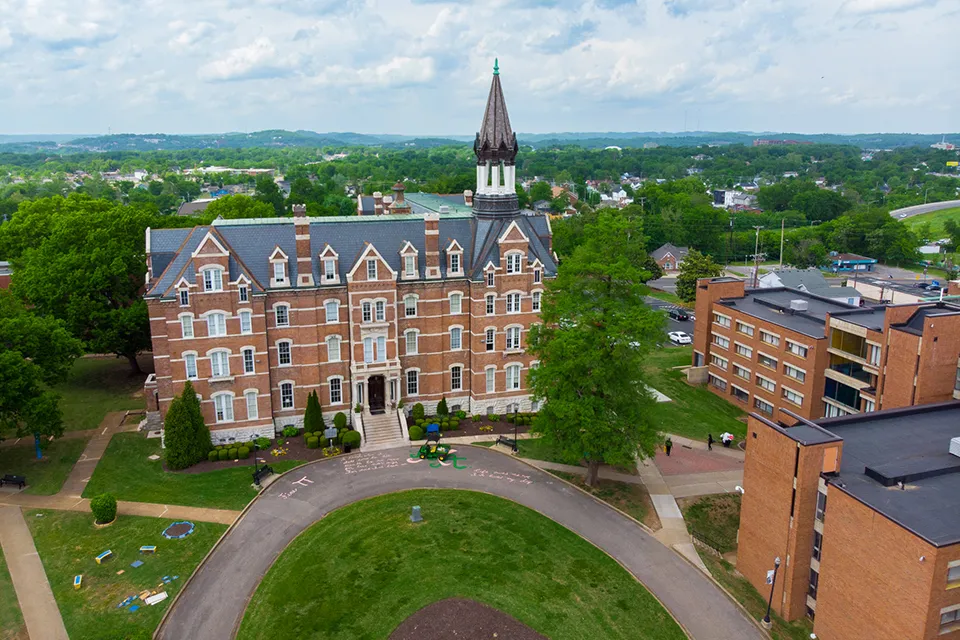 Photo: Fisk University, via www.tclf.org
It was painted by a man who used to stack canned goods in Topeka, Kansas.
Aaron Douglas didn't arrive at greatness through the front door. He came through the loading dock, hands calloused, pockets nearly empty, armed with a correspondence art course and a conviction that Black America deserved a visual identity no one had yet given it.
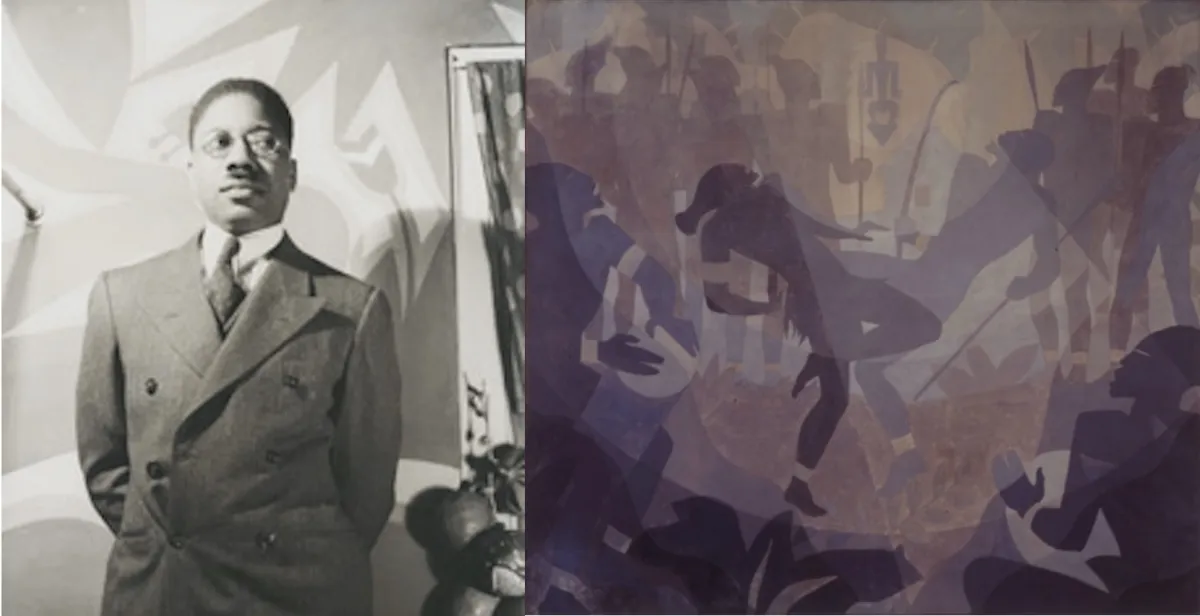 Photo: Aaron Douglas, via i0.wp.com
A Childhood Between Two Worlds
Born in 1899 in Topeka, Douglas grew up in a household that valued education in the way families do when they've seen what happens without it. His mother encouraged him to draw. His city, like most American cities at the turn of the century, gave him precious little encouragement beyond that.
Kansas wasn't the Deep South, but it wasn't free of its own particular brand of limitation either. Douglas was sharp, curious, and hungry for something he couldn't quite name. He enrolled at the University of Nebraska, graduated with a fine arts degree in 1922, and then did what a lot of Black college graduates did in that era: he went looking for work that would actually pay.
For a while, that work involved a grocery store. It wasn't glamorous. It wasn't what he'd imagined when he sat in those university lecture halls. But Douglas was the kind of person who doesn't let circumstance become conclusion.
The Letter That Changed Everything
In 1925, Douglas made a decision that would alter the course of American art history. He packed what little he had and moved to Harlem, New York, where something extraordinary was already stirring. Writers, musicians, intellectuals, and activists were converging on that stretch of upper Manhattan, collectively insisting that Black culture was not a footnote — it was a headline.
Douglas arrived almost broke. He knocked on the door of W.E.B. Du Bois's The Crisis magazine and showed his portfolio. He sought out Winold Reiss, a German immigrant artist who became one of his early mentors and who saw immediately what Douglas was reaching toward. And he caught the attention of Alain Locke, the philosopher and cultural critic who was assembling what would become The New Negro — a landmark anthology that announced the Harlem Renaissance to the wider world.
Locke wanted illustrations. Douglas delivered something more: a visual language.
Building a Style From Scratch
What made Douglas remarkable wasn't just his talent — it was his deliberate invention of an aesthetic that had never existed before. He studied African art, Egyptian iconography, and Art Deco geometry, then fused them into a signature style that felt simultaneously ancient and urgently modern. His figures were bold silhouettes, their outlines crisp against concentric halos of color that seemed to pulse with energy.
It was a style designed to say something. Douglas wasn't interested in painting Black Americans the way white American art had always depicted them — as servants, as caricatures, as afterthoughts. He painted them as mythic, as powerful, as fully human and fully present in the sweep of history.
His work began appearing everywhere: magazine covers, book illustrations, murals commissioned by institutions that were finally starting to understand what the Harlem Renaissance actually meant. He illustrated Langston Hughes. He painted for James Weldon Johnson. He became, in the words of critics who came after him, "the father of Black American art."
The Murals That Endure
Douglas's most lasting achievements are his murals — large-scale, ambitious works that transformed physical spaces into statements of cultural identity. The Aspects of Negro Life series, painted in 1934 for the 135th Street branch of the New York Public Library, remains one of the most significant works of American public art from the twentieth century. Four panels trace the journey of Black Americans from African origins through slavery, emancipation, and the Great Migration north. They are not comfortable paintings. They are not meant to be.
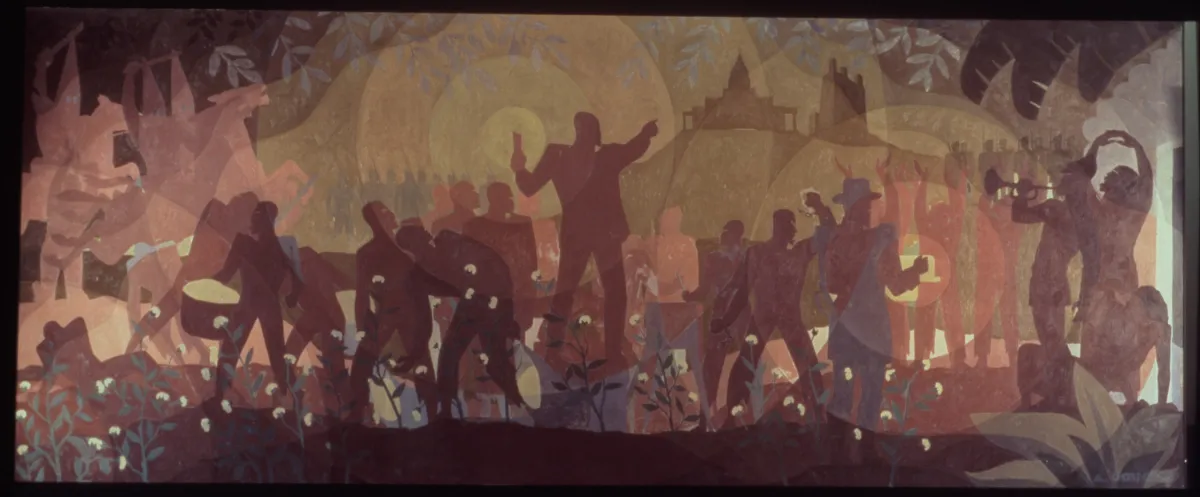 Photo: Aspects of Negro Life, via d2jf00asb0fe6y.cloudfront.net
At Fisk University in Nashville, where Douglas eventually settled as a professor and department chair, he created the mural that still makes visitors pause. He spent decades there building an art program, mentoring students, and insisting that Black artists didn't need to beg permission from the mainstream art world to matter.
What the Grocery Store Actually Taught Him
It would be easy to frame Douglas's early working years as simply a hardship he overcame. But there's something more interesting going on. The years of financial struggle, of working jobs that had nothing to do with his ambitions, shaped the way he understood his own people's story. He knew what it meant to be talented and overlooked. He knew what it felt like to be doing something entirely different from what you were built for.
That knowledge is in the paintings. The reaching figures, the upward movement, the sense of something straining toward light — it doesn't come from an art school exercise. It comes from a man who spent years knowing exactly what he was capable of and waiting for the world to catch up.
Rising From the Ordinary
Aaron Douglas died in 1979, celebrated but perhaps not as widely as he deserved. His name doesn't carry the same immediate recognition as some of his Harlem Renaissance contemporaries, which is its own kind of irony given that his images helped define what that era looked like to the rest of the world.
But his murals are still there. Still pulling people up short. Still asking the same question they always asked: What does it look like when a people refuse to be invisible?
The answer, as it turns out, looks a lot like what a grocery clerk from Kansas painted when the world finally gave him a wall large enough to work on.