Dead Men Do Tell Tales: How a Burned-Out Lawyer Let a Graveyard Speak — and Accidentally Changed American Poetry Forever
There is a particular kind of exhaustion that comes not from overwork alone, but from spending your best years doing the wrong thing. Edgar Lee Masters knew that feeling intimately. By the time he was pushing fifty, he had spent nearly two decades building a moderately successful law practice in Chicago — arguing cases, collecting fees, navigating the grinding machinery of the American legal system. He was good at it. He was also, quietly and completely, miserable.
Because what Masters actually wanted to do was write.
He had been writing since he was young — poetry, plays, essays, novels. He published pieces here and there, collected a handful of polite reviews, and then watched those efforts disappear into the indifferent silence that swallows most literary ambition. By his early forties, the dream had not died exactly, but it had shrunk to something small and private, something he kept alive the way you keep a houseplant alive in a room with bad light: out of stubbornness, not optimism.
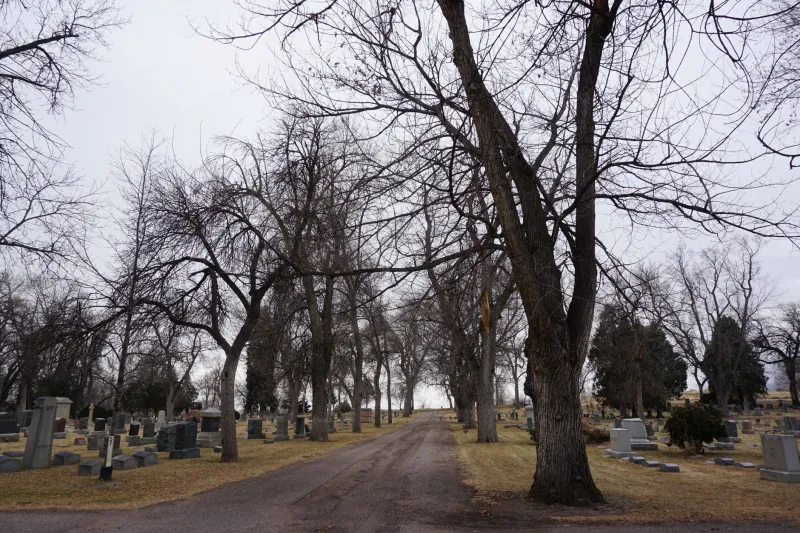
Then he went back to the cemetery.
The Town That Shaped Him and the Ground That Held It
Masters grew up in Lewistown and Petersburg, small towns in central Illinois, the kind of places where everybody knew everybody's business and the local cemetery was practically a neighborhood institution. His family had deep roots in the region. When he returned as an adult — visiting graves, walking the old grounds — something loosened in him.
These weren't famous people buried here. No generals, no senators, no titans of industry. Just ordinary men and women who had loved and struggled and envied and failed and occasionally triumphed in ways that nobody had bothered to record. Farmers. Storekeepers. Schoolteachers. Women who had married the wrong men. Men who had drunk themselves into early graves. Children who hadn't made it to adulthood. The whole untidy, honest archive of small-town American life, compressed into rows of stone markers.
Masters started to wonder what they would say if they could speak. Not the sanitized versions of themselves carved into their epitaphs — but the real version. The version with all the grievance and regret and dark humor and unexpected grace left in.
The answer, it turned out, was: quite a lot.
Writing in Secret, Publishing in Pieces
Beginning around 1914, Masters started producing short dramatic monologues — each one voiced by a fictional resident of a fictional town called Spoon River, each one delivered from beyond the grave. He wrote them fast, in white-hot bursts, often sneaking time away from his law practice to put the poems together. He published them pseudonymously in a St. Louis literary magazine called Reedy's Mirror, partly out of caution and partly because he wasn't entirely sure what he had.
What he had, as it turned out, was something genuinely new.
The poems were blunt in a way American poetry of the era almost never was. They named names — not real ones, but names that felt real. They talked about adultery and alcoholism and small cruelties and political corruption and the gap between what people showed the world and what they actually felt. They were funny and bitter and sometimes devastating, occasionally all three in the same twelve lines.
When Spoon River Anthology was published as a complete collection in 1915, the literary world did something it rarely does: it stopped and paid attention immediately.
The Overnight Success That Took Forty-Five Years
The book sold out its first printing almost instantly. Critics who had spent years ignoring Masters suddenly couldn't write about him fast enough. The New York Times called it a landmark. Readers who had never much cared for poetry found themselves devouring it. The collection went through printing after printing, eventually selling hundreds of thousands of copies — extraordinary numbers for a book of verse in any era.
Masters was forty-six years old when it came out. He had been writing seriously since his twenties. The "overnight success" had a very long runway.
What made Spoon River land so hard wasn't just its frankness, though that mattered enormously. It was the way Masters treated ordinary lives as worthy of serious literary attention. In 1915, American poetry was still largely the province of elevated subjects and elevated diction. Masters dragged it into the dirt road in front of the general store and made it sit down with people who had never expected to be the subject of a poem in their lives.
He was doing, in verse, what Sherwood Anderson would do in prose with Winesburg, Ohio a few years later — excavating the hidden interior life of small-town America and finding it far stranger and richer than the surface suggested.
The Trap of the Masterpiece
Here is the complicated part of the Masters story, the part that keeps it from being a simple triumph narrative: he never quite equaled Spoon River again. He wrote prolifically for the rest of his life — more poetry, novels, biographies, memoirs — and produced work of genuine quality. But nothing hit the way that graveyard did.
There is something almost poignant about that. The book that made him famous was the one that came from his most personal reserves of frustration and rootedness — the specific grief of a specific place, the voices of people he had grown up around, the accumulated pressure of years of literary longing finally finding its release. You can't manufacture those conditions twice.
He spent his later years in New York, somewhat estranged from his early reputation, occasionally bitter about what he saw as the literary establishment's short memory. He died in 1950, in a Pennsylvania nursing home, with his finances in rough shape and his fame considerably dimmed.
What the Graveyard Actually Taught
But here's what endures: Spoon River Anthology is still in print. It is still taught in high schools and universities across the country. Readers still pick it up and find themselves unexpectedly moved by people who never existed, in a town that never existed, speaking from a grave that is purely imaginary.
The lesson Masters left behind isn't really about poetry. It's about what happens when you stop running from your own material. He had spent decades trying to write his way out of his circumstances — out of the law, out of small-town Illinois, out of the ordinary. The moment he turned around and walked straight back into it, straight into that cemetery with its rows of unremarkable stones, was the moment everything changed.
The dead, as it happened, had been waiting patiently. They had things to say. They just needed someone exhausted enough, honest enough, and desperate enough to finally listen.
Sometimes the graveyard is the beginning.