Bouncing Back Bigger: Five Americans Who Turned Financial Ruin Into Fortune

When Failure Becomes Your Best Teacher
In America, we love a good comeback story, but we're often fuzzy on the details of how people actually bounce back from complete financial ruin. The truth is messier and more instructive than most people imagine. Real recovery from bankruptcy isn't about positive thinking or lucky breaks — it's about learning lessons that can only be taught by losing everything.
Here are five Americans who discovered that their greatest failures were actually their most valuable educations.
1. Joseph Kraft: The Cheese Maker Who Reinvented an Industry
Lost everything in: The Panic of 1893
Built back: The Kraft Foods empire
 Photo: Joseph Kraft, via yt3.googleusercontent.com
Joseph Kraft was running a small wholesale cheese business in Chicago when the economic panic of 1893 wiped him out completely. Banks foreclosed on his warehouse, creditors seized his inventory, and at age 35, he found himself starting over with nothing but debts.
Most people would have found a steady job and played it safe. Instead, Kraft spent his bankruptcy analyzing exactly where his first business had failed. The problem wasn't the product — Americans loved cheese — it was the distribution. Cheese spoiled quickly, limiting how far it could travel, which kept the market small and profits thin.
Kraft's breakthrough came from studying the railroad system during his broke years. He realized that if he could solve the preservation problem, he could ship cheese nationwide. Working out of a rented cart, he began experimenting with pasteurization and packaging techniques.
By 1915, Kraft had patented a process for making shelf-stable cheese that could travel anywhere in America. The company that emerged from his bankruptcy became Kraft Foods, one of the largest food manufacturers in the world. His financial ruin had taught him the difference between having a good product and building a scalable business.
2. Harland Sanders: The Serial Failure Who Found Success at 65
Lost everything in: Multiple business failures spanning 30 years
Built back: Kentucky Fried Chicken
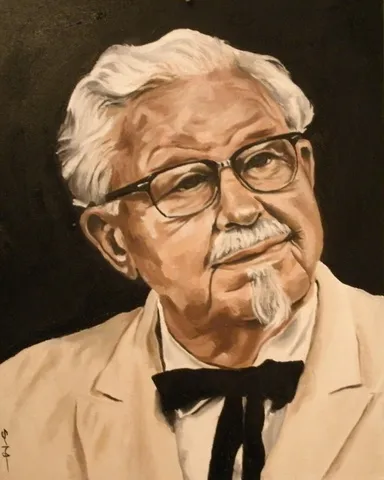 Photo: Harland Sanders, via s3.amazonaws.com
Before he was Colonel Sanders, Harland Sanders was just a guy who couldn't seem to make anything stick. He failed as a farmer, got fired from railroad jobs, flopped as an insurance salesman, and lost money on a steamboat company, a lamp manufacturing business, and a gas station.
At age 62, Sanders was running a small restaurant in Kentucky when a new interstate highway bypassed his location, destroying his customer base overnight. Forced to close, he was left with nothing but a Social Security check and a recipe for fried chicken that his customers had always praised.
What Sanders understood from his decades of failure was the difference between having a good product and having a replicable system. Instead of trying to rebuild his restaurant, he focused on franchising his recipe and cooking method. He drove around the country, sleeping in his car, offering to cook his chicken for restaurant owners in exchange for a percentage of sales.
The first Kentucky Fried Chicken franchise opened in 1952. By 1964, when Sanders sold the company for $2 million, he had more than 600 franchises across the country. His long string of failures had taught him that success wasn't about perfecting one location — it was about creating a system that others could replicate.
3. Ruth Handler: The Toy Executive Who Lost Everything and Started Over
Lost everything in: SEC fraud charges and health crisis
Built back: A revolutionary prosthetics company
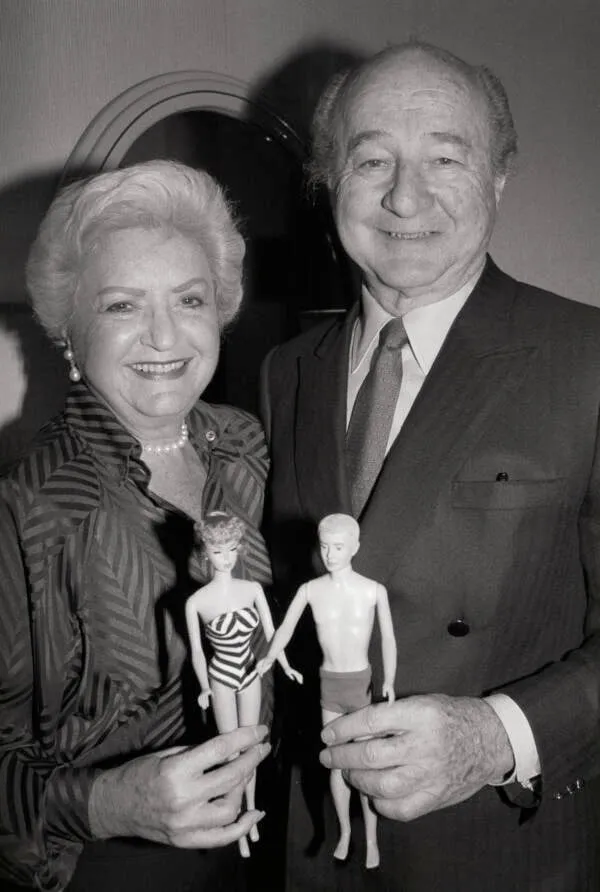 Photo: Ruth Handler, via allthatsinteresting.com
Ruth Handler co-founded Mattel and created the Barbie doll, building one of America's largest toy companies. But in the 1970s, SEC charges related to financial irregularities forced her resignation and nearly bankrupted her. Then breast cancer required a mastectomy, and Handler discovered that existing prosthetics were uncomfortable and unrealistic.
Instead of retreating, Handler used her business failure as motivation to solve a problem she now understood personally. She founded Nearly Me, a company that manufactured more comfortable and natural-looking breast prosthetics.
Handler's experience with business failure had taught her the importance of truly understanding your customer's needs. At Mattel, she had sometimes relied on market research and focus groups. With Nearly Me, she was the customer, and that intimate knowledge of the problem led to innovations that helped thousands of women.
The company became profitable within two years and remained successful for decades. Handler had learned that her greatest business asset wasn't her ability to avoid failure — it was her ability to turn personal experience into solutions for others.
4. Frank Woolworth: The Clerk Who Failed Twice Before Revolutionizing Retail
Lost everything in: Two failed five-cent stores
Built back: The F.W. Woolworth empire
Frank Woolworth's first attempt at retail was a disaster. His five-cent store in Utica, New York, failed within months. His second attempt, in Pennsylvania, lasted only slightly longer before closing. At age 27, Woolworth was deeply in debt and considered giving up on business entirely.
But his failures had taught him crucial lessons about location, inventory, and customer psychology. His first stores had failed because he'd chosen poor locations and stocked items that customers didn't actually want at those price points.
For his third attempt, Woolworth chose his location more carefully and focused obsessively on understanding what customers would actually buy for a nickel or dime. He also implemented a strict inventory turnover system he'd developed after watching his first two stores fill up with unsellable merchandise.
The third store, opened in Lancaster, Pennsylvania, was immediately successful. By 1919, Woolworth had more than 1,000 stores and was operating one of the largest retail chains in America. His early failures had taught him that retail wasn't about having good products — it was about having the right products, in the right places, at the right prices.
5. Mary Ellen Pleasant: The Entrepreneur Who Lost a Fortune and Built Another
Lost everything in: The California Gold Rush speculation
Built back: A boarding house and catering empire
Mary Ellen Pleasant arrived in San Francisco during the Gold Rush with money she'd made in business back East. Like many newcomers, she speculated heavily in mining claims and real estate, and like most speculators, she lost everything when the bubble burst.
But Pleasant had noticed something during her months of financial loss: the real money in Gold Rush California wasn't in mining — it was in feeding and housing the miners. The men flooding into California had money but no domestic skills and no time to develop them.
Using skills she'd learned growing up, Pleasant started a boarding house and catering business focused on the wealthy merchants and successful miners. She understood that these men would pay premium prices for good food and comfortable lodging after months of rough living.
Within a few years, Pleasant had rebuilt her fortune and become one of the wealthiest women in California. Her financial failure had taught her to look past the obvious opportunities to the underlying needs that weren't being met.
The Bankruptcy Education
What these five Americans understood is that bankruptcy in America has historically functioned less as a tombstone and more as a strange kind of graduate school. The experience of losing everything strips away illusions and forces a level of honesty about what actually works.
Their second acts succeeded not despite their failures, but because of them. Bankruptcy had taught them lessons about customers, markets, and business models that success never could. They learned to distinguish between what looked good and what actually worked, between having a good idea and building a sustainable business.
Most importantly, they learned that in America, failure isn't permanent — it's just expensive education for those willing to learn from it.