Sentenced to Greatness: The Prison Library That Produced One of America's Most Powerful Literary Voices

The Hustler's Dead End
Malcolm Little walked through the gates of Charlestown State Prison in February 1946 with nothing but attitude and a sixth-grade education. At twenty years old, he was already a veteran of Boston's underworld—numbers running, drug dealing, burglary—living the kind of life that promised either early death or long imprisonment. The Massachusetts court system had chosen imprisonment, handing him an eight-to-ten-year sentence that seemed like a lifetime.
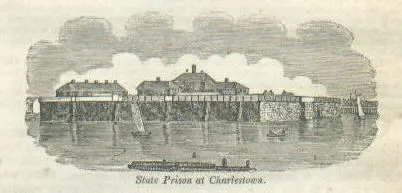 Photo: Charlestown State Prison, via upload.wikimedia.org
He was angry, profane, and convinced that the world had dealt him an impossible hand. Fellow inmates called him "Satan" for his explosive temper and constant cursing. Malcolm wore the nickname like armor, using rage to mask the deeper truth: he was lost, barely literate, and had no idea who he was supposed to become.
Then something unexpected happened. His brothers started visiting, bringing letters filled with strange ideas about Black pride and religious awakening. They talked about a man named Elijah Muhammad who taught that Black people were the original inhabitants of Earth, that white people were devils, and that salvation came through knowledge and self-discipline. Malcolm dismissed it as fantasy—until he realized his brothers had transformed themselves from street hustlers into articulate, purposeful men.
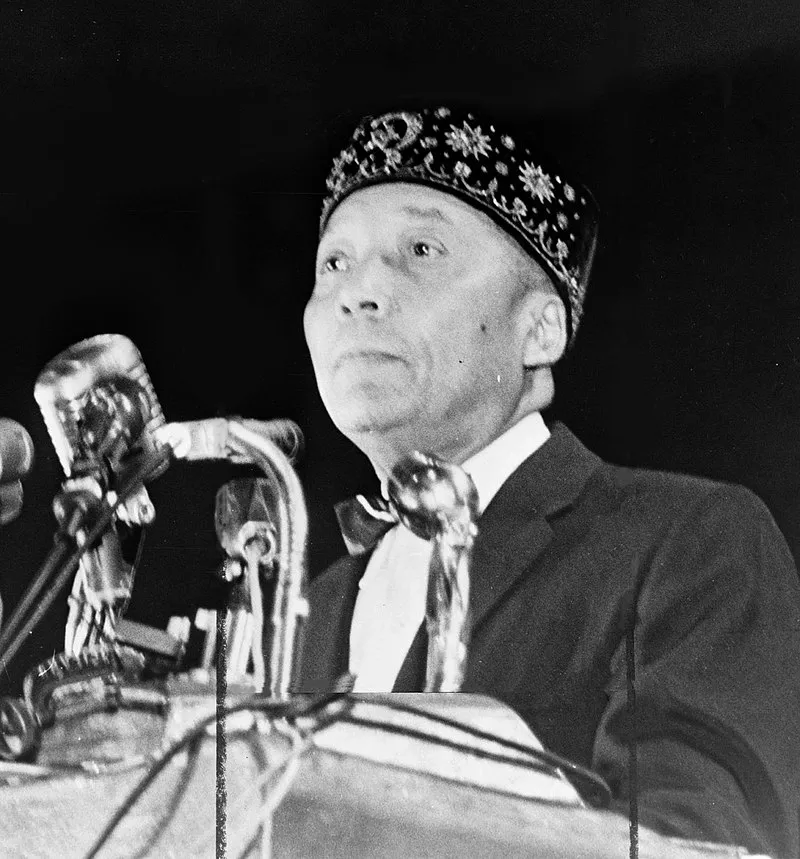 Photo: Elijah Muhammad, via upload.wikimedia.org
The Dictionary That Changed Everything
In 1948, Malcolm was transferred to Norfolk Prison Colony, an experimental facility that treated inmates more like students than criminals. Norfolk had something Charlestown lacked: a real library. Walking into that room lined with thousands of books, Malcolm felt like a man dying of thirst who had stumbled upon an oasis.
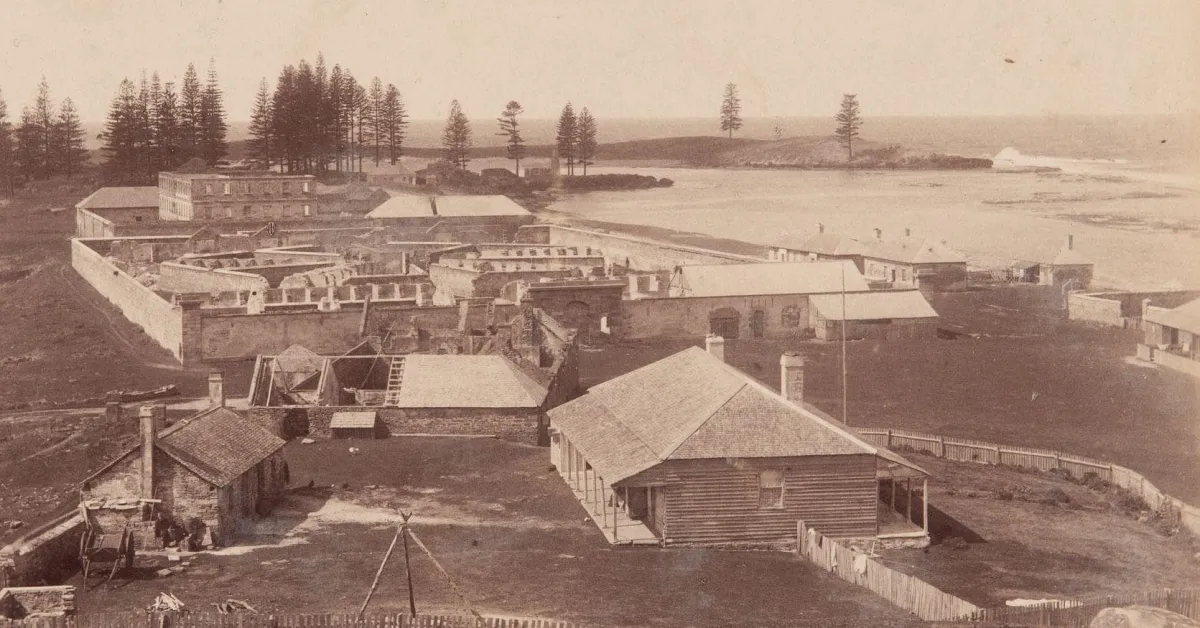 Photo: Norfolk Prison Colony, via imgix.ranker.com
But there was a problem. Malcolm could barely read beyond a elementary level. The books might as well have been written in hieroglyphics. Most inmates would have walked away discouraged. Malcolm Little decided to teach himself.
He started with a dictionary—not just reading it, but copying it. Page by page, word by word, Malcolm transcribed the entire dictionary by hand. He would copy a page, then read his own handwriting back to himself until the words stuck. It took him months to finish, but by the end, he had built himself a vocabulary from scratch.
The University Behind Bars
With his new reading skills, Malcolm devoured everything the Norfolk library contained. He read philosophy, history, religion, and literature with the hunger of someone making up for lost time. Plato's Republic taught him about justice and society. W.E.B. Du Bois showed him how scholarship could be a weapon. Carter G. Woodson's work on Black history revealed centuries of achievement that had been systematically hidden from him.
Malcolm read until the lights went out, then continued reading by the glow of the hallway lights outside his cell. Guards found him on the floor at all hours, squinting at pages in the dim light. His eyes began to fail from the strain, but he refused to stop. Books had become his addiction, replacing the street drugs that had once consumed his life.
The Norfolk library became Malcolm's Harvard, his Oxford, his Sorbonne. He studied Latin to better understand English etymology. He learned about ancient civilizations in Africa and Asia. He discovered that the history he'd been taught in school was a carefully edited version that left out most of the human story.
Debates Through Steel Bars
Norfolk encouraged intellectual discussion among inmates, and Malcolm quickly became the prison's most formidable debater. He would challenge anyone willing to argue—about religion, politics, history, philosophy. Other inmates gathered to watch Malcolm dismantle opponents with facts and logic, his vocabulary growing more sophisticated by the week.
These debates weren't just intellectual exercises. They were Malcolm's laboratory for developing the speaking skills that would later captivate millions. He learned how to structure an argument, how to anticipate objections, how to use emotion and reason in equal measure. The prison yard became his rehearsal stage for speeches that would eventually shake the nation.
Malcolm also began corresponding with Elijah Muhammad, writing letters that demonstrated his growing command of language and Islamic theology. Each exchange pushed him to think more deeply, argue more precisely, and express himself more powerfully. The man who had entered prison barely able to write his own name was becoming a scholar.
The Transformation of Identity
Somewhere between copying the dictionary and debating philosophy, Malcolm Little began to die. In his place emerged Malcolm X—the X representing the unknown African name that slavery had stolen from his ancestors. This wasn't just a change of name; it was a complete reconstruction of identity.
Malcolm X rejected everything about his former life. The hustling, the drinking, the self-hatred that had driven him to crime—all of it was discarded like old clothes. He embraced strict religious discipline, studying Islamic prayer and fasting practices. He began to see his imprisonment not as punishment but as salvation, the forced pause that allowed him to discover who he really was.
His letters home revealed the depth of his transformation. Where once he had written crude, barely coherent notes, now he crafted eloquent essays about Black history, religious philosophy, and social justice. His family could hardly believe the change. The angry young man they had known was becoming something entirely new.
The Graduate
When Malcolm X was released from prison in August 1952, he had served six and a half years of his sentence. But those years hadn't been lost time—they had been the most intensive education of his life. He emerged with the equivalent of multiple university degrees, a sophisticated understanding of world history and religion, and speaking skills that few college graduates could match.
More importantly, he had discovered his mission. Malcolm X didn't just want to improve his own life; he wanted to wake up every Black person in America to their true history and potential. The prison library had shown him that knowledge was power, and he was determined to share that power with anyone willing to listen.
His first speech after release was at a Detroit temple, and the congregation was stunned by his eloquence and passion. This man who had never attended college spoke with the authority of a scholar and the fire of a prophet. The transformation was so complete that many who had known Malcolm Little could hardly believe they were looking at the same person.
The Legacy of Self-Education
Malcolm X's prison transformation became legendary, inspiring countless inmates to pursue education behind bars. But his story resonates far beyond prison walls. It's proof that formal education, while valuable, isn't the only path to intellectual achievement. Sometimes the most powerful learning happens when someone is desperate enough to teach themselves.
The dictionary that Malcolm copied by hand became the foundation for one of the most influential voices in American history. His speeches at Harvard, Oxford, and the United Nations drew on knowledge he had gained not in lecture halls but in a prison cell. He proved that circumstances don't determine potential—determination does.
Malcolm X often said that prison had been his university, and the library his professor. In a system designed to break men down, he had built himself up. The hustler who couldn't read became the intellectual who changed how America thought about race, identity, and human potential.
His example reminds us that education is not something that happens to us—it's something we choose to pursue. And sometimes, the most unlikely classrooms produce the most extraordinary graduates.