When the Lights Went Down
Winifred Holt had everything a turn-of-the-century New York socialite was supposed to want: wealth, beauty, connections, and a calendar full of charity galas where she looked magnificent in silk gowns. But in 1903, at age 29, her world began to dim. A hereditary condition was slowly stealing her sight, and with it, everything she thought defined her life.
Most people in her position would have quietly retreated, perhaps becoming the tragic figure who once graced Manhattan ballrooms. Holt chose a different path entirely. As her vision faded, her mission came into sharp focus.
She was going to teach the world that blindness wasn't the end of seeing — it was the beginning of a different kind of vision altogether.
The Education of Touch
Holt's transformation didn't happen overnight. As her sight deteriorated, she began experiencing the world that awaited anyone who couldn't rely on their eyes. She discovered that New York City, for all its progressive reputation, was essentially unnavigable for blind residents. Public transportation was a maze of unmarked dangers. Employment opportunities were virtually nonexistent. Most devastating of all, there was no systematic way for blind people to learn the skills they needed to live independently.
 Photo: New York City, via wallpapercat.com
So Holt decided to build one.
In 1905, she founded the New York Association for the Blind, but this wasn't going to be another well-meaning charity that handed out sympathy. Holt had bigger plans. She wanted to create an entire educational ecosystem that would transform how blind people saw themselves — and how the world saw them.
Maps You Can Feel
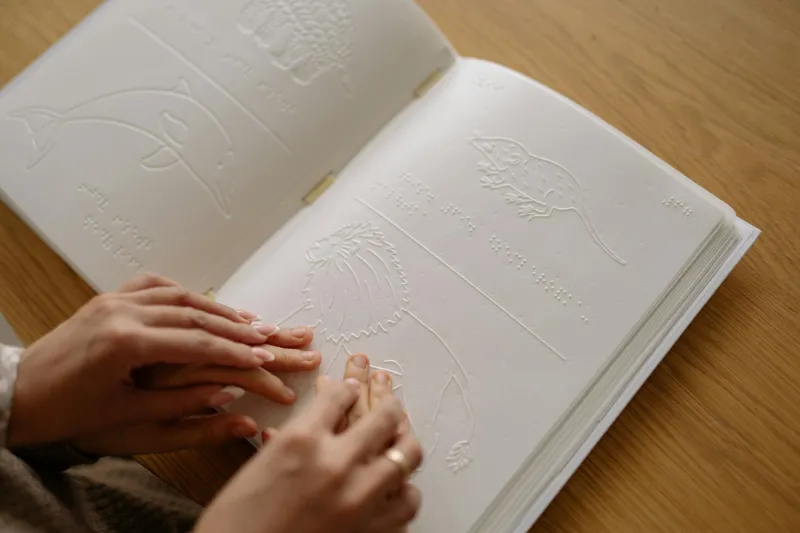
Holt's most innovative contribution came from a simple observation: if you can't see a map, you need to feel one. But the few tactile maps that existed were crude, expensive, and nearly useless for actual navigation.
Working with craftsmen and educators, Holt developed a revolutionary approach to tactile cartography. Her maps weren't just raised outlines — they were intricate, detailed guides that used different textures, materials, and elevation changes to convey information that sighted people took for granted. A rough surface indicated one type of terrain, smooth another. Metal strips marked major roads, while textured fabric showed parks and open spaces.
But Holt understood that maps were useless without the skills to read them. She developed comprehensive training programs that taught blind students not just how to interpret tactile information, but how to build mental maps of their environments. Students learned to navigate by sound, smell, and spatial relationships. They practiced until they could move through complex urban environments with the confidence of someone who had lived there for years.
The International Network
Word of Holt's work spread quickly through networks of educators and advocates. By 1910, she was consulting with organizations across Europe and America, sharing techniques and training instructors. But World War I changed everything — and gave Holt her biggest challenge yet.
Suddenly, thousands of previously sighted soldiers were returning home blind, traumatized, and completely unprepared for their new reality. Traditional rehabilitation methods weren't designed for this scale of need, and they certainly weren't designed for men who had been independent adults before their injuries.
Holt threw herself into developing rapid training programs for blinded veterans. She created intensive courses that compressed months of traditional instruction into weeks of focused learning. Her approach was practical, dignified, and ruthlessly effective. Veterans learned to navigate, work, and live independently — not as objects of pity, but as capable men adapting to changed circumstances.
Building an Empire of Independence
By 1920, Holt's organization had evolved into the Lighthouse for the Blind, one of the most influential rehabilitation centers in the world. But Holt wasn't satisfied with helping individuals — she wanted to change entire systems.
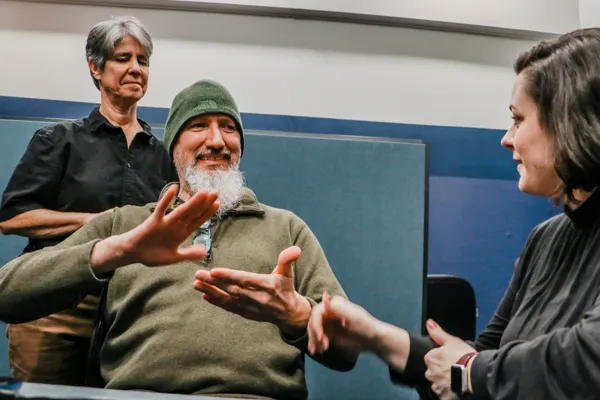 Photo: Lighthouse for the Blind, via lhblind.org
She lobbied for legislation requiring accessible public transportation. She worked with architects to develop building standards that considered blind users from the design phase. She pushed employers to recognize that blindness didn't automatically disqualify someone from productive work. Most importantly, she trained generations of instructors who carried her methods to communities across the globe.
Holt's approach was revolutionary because it flipped the entire conversation. Instead of asking what blind people couldn't do, she insisted on discovering what they could do extraordinarily well. Her students often developed spatial reasoning skills, memory capabilities, and sensory awareness that surpassed those of sighted individuals.
The Touch That Changed Everything
Holt's legacy extends far beyond the organizations she founded or the thousands of people she trained directly. She proved that losing one sense doesn't diminish human capability — it redistributes it.
Her tactile maps became the foundation for modern accessibility design. Her training methods influenced rehabilitation programs worldwide. Her advocacy work helped establish the legal framework for disability rights that wouldn't be fully realized until decades after her death.
But perhaps most importantly, Holt demonstrated that personal crisis could become public mission. When her own world went dark, she chose to light the way for others.
The Vision That Outlasted Sight
Winifred Holt died in 1945, having spent four decades building an international movement from what began as personal loss. The organizations she founded continue operating today, serving thousands of people annually. The techniques she developed remain standard practice in rehabilitation centers worldwide.
But her deepest impact might be more subtle: she helped change how society thinks about blindness itself. Before Holt, blindness was primarily seen as tragedy. After her work, it began to be understood as difference — a different way of experiencing and navigating the world, but not necessarily a diminished one.
She proved that when one door closes, you don't just wait for another to open. Sometimes you have to build the door yourself, design the handle, and then teach others how to use it. And sometimes, the door you build becomes the entrance to possibilities no one had imagined before.