When Freedom Was Just a Word: The Slave Who Made It Law
The Moment Everything Changed
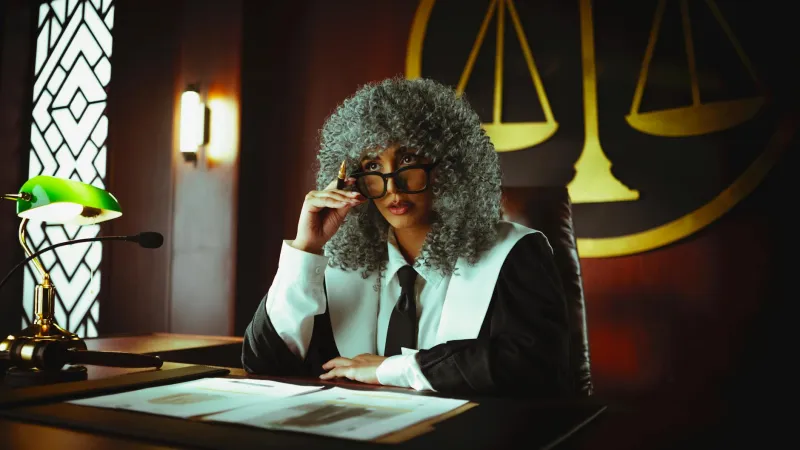
Picture this: It's 1781, and the American Revolution is still raging. The Constitution hasn't been written yet. The Bill of Rights is just a glimmer in some founders' minds. And in a small Massachusetts courtroom, a Black man named Quock Walker is about to do something that would have been unthinkable just years earlier — he's suing his white owner for his freedom.
Not asking. Not pleading. Suing.
Walker had every reason to keep his head down and accept his circumstances. Born into slavery around 1748, he'd spent his entire life as property. But when his owner died and left him to a man named Nathaniel Jennison, something inside Walker refused to accept that this was just how things had to be.
The Crack in the System
What Walker understood — what made him extraordinary — was that Massachusetts had just adopted a new state constitution in 1780. And buried in its opening lines was a phrase that would change everything: "All men are born free and equal."
Most people, enslaved and free alike, probably saw those words as pretty rhetoric. Nice ideas that didn't apply to the real world. But Walker saw something else: a legal argument waiting to happen.
He wasn't a lawyer. He couldn't read or write. But he had something more powerful than formal education — he had an unshakeable belief that those words meant what they said. All men. Not some men. Not white men. All men.
The Unlikely Alliance
Walker couldn't fight this battle alone. He needed legal representation, and in 1781 Massachusetts, finding a white lawyer willing to represent a slave against his owner was like finding a unicorn. But Walker found his unicorn in Levi Lincoln, a young attorney who would later become Thomas Jefferson's Attorney General.
Lincoln saw what Walker saw — that the Massachusetts constitution had created a logical contradiction. How could the state declare that all men are born free and equal while simultaneously allowing some men to own other men? The math didn't add up.
Together, this unlikely pair — the enslaved man and the idealistic lawyer — prepared to take on not just Nathaniel Jennison, but the entire institution of slavery.
David Meets Goliath in Court
The case that would be known as Commonwealth v. Jennison began with a simple premise: If Walker was beating up Jennison's property, then Jennison could sue for damages. But if Walker was a free man defending himself from assault, then Jennison was the criminal.
Everything hinged on one question: Was Quock Walker property or a person?
Chief Justice William Cushing, presiding over the case, faced a decision that would echo through history. He could have taken the easy path — ruled narrowly, found some technical grounds to decide the case without addressing the bigger question. Instead, he chose to confront the contradiction head-on.
In his jury instructions, Cushing declared that slavery was "inconsistent with our own conduct and Constitution." Those words didn't just free Quock Walker — they effectively ended legal slavery in Massachusetts.
The Ripple Effect
Walker's victory sent shockwaves through the state. Suddenly, every enslaved person in Massachusetts had a legal precedent to point to. They didn't need to wait for gradual emancipation laws or hope for their owners' goodwill. They could walk into court and demand their freedom as a constitutional right.
Within a few years, slavery had essentially disappeared from Massachusetts — not through legislation, not through war, but through the courts. One man's refusal to accept his circumstances had dismantled an entire system of oppression.
The Man Behind the Movement
What made Walker extraordinary wasn't just his legal victory — it was his willingness to risk everything for a principle. Remember, this was 1781. Enslaved people who challenged their owners faced brutal punishment, sale to harsher masters, or worse. Walker could have lived out his days in relative safety, keeping his head down and his dreams to himself.
Instead, he chose to bet his life on six words in a constitution: "All men are born free and equal."
After winning his freedom, Walker disappeared from the historical record. We don't know how he spent his remaining years, where he lived, or how he died. But his legacy lived on in every enslaved person who followed his example, every lawyer who cited his case, every judge who grappled with the contradictions he exposed.
When Words Become Weapons
Walker's story reminds us that extraordinary change often begins with ordinary people who refuse to accept that "this is just how things are." He didn't have wealth, education, or political connections. What he had was something more powerful — the audacity to believe that the law meant what it said.
In a time when freedom was just a word for most people who looked like him, Quock Walker made it a legal reality. He proved that sometimes the most unlikely beginnings can produce the most extraordinary endings — and that rising from anywhere isn't just possible, it's revolutionary.