The Voice That Couldn't Speak Straight Talked the World Into Peace
When Franklin Roosevelt needed someone to convince suspicious world leaders that America could be trusted, he made a choice that baffled Washington insiders. He didn't pick a seasoned diplomat or a smooth-talking politician. Instead, he chose the man who had just lost the presidency to him — a corporate lawyer from Indiana whose stutter made every public speech an act of courage, and whose blunt manner had earned him more enemies than friends in the capital.
Wendell Willkie's journey from small-town outsider to global peacemaker proves that sometimes the very things that seem to disqualify us become our most unexpected assets.
The Boy Who Fought for Every Word
Growing up in Elwood, Indiana, Wendell Lewis Willkie learned early that words didn't come easily. Born in 1892 to German immigrant parents who ran the town's law practice, he inherited his father's sharp mind but struggled with a stutter that turned simple conversations into battles. While other children spoke freely, Wendell had to calculate each sentence, knowing that certain sounds might betray him at crucial moments.
The stutter shaped more than just his speech — it forged his character. Unable to rely on smooth talk, he developed an almost aggressive honesty that some found refreshing and others found abrasive. He couldn't charm his way through arguments, so he learned to win them with facts and passion instead.
At Indiana University, professors noticed something unusual about this awkward young man who stumbled over words but never over ideas. He devoured books on history, politics, and law, building an intellectual foundation that would eventually make him one of America's most formidable debaters — despite the impediment that made debate physically painful.
The Lawyer Who Took on Everyone
After law school, Willkie returned to Elwood to join his father's practice, but small-town law couldn't contain his ambitions. He moved to Akron, Ohio, where he built a reputation as a lawyer who would take on anyone — labor unions, corporations, government bureaucrats. His stutter remained, but clients learned that his halting delivery often preceded devastating arguments.
The defining moment of his legal career came when he joined Commonwealth & Southern, a utility holding company, eventually becoming its president. When Franklin Roosevelt's New Deal targeted private utilities, Willkie found himself in an unlikely role: the face of corporate resistance to government expansion. Here was a stuttering lawyer from Indiana taking on the most popular president in American history.
Their battles were legendary. In congressional hearings, Willkie would struggle with certain words but never with his convictions, arguing that government-run utilities would stifle innovation and competition. Roosevelt, the master of smooth radio rhetoric, met his match in this stammering corporate executive who refused to be intimidated.
The Accidental Candidate
By 1940, Willkie had become something unprecedented: a corporate CEO with genuine grassroots support. Republican voters, tired of traditional politicians, rallied behind this plainspoken outsider who looked like he'd be more comfortable fixing a car than kissing babies. The GOP convention, in one of the biggest upsets in political history, nominated the man who had never held elected office.
The presidential campaign revealed both Willkie's strengths and limitations. His stutter made radio appearances challenging in an era when smooth delivery was everything. While Roosevelt's fireside chats flowed like warm honey, Willkie's speeches felt like controlled explosions — passionate but unpredictable. He often abandoned prepared remarks mid-sentence, following his thoughts wherever they led.
Yet this authenticity connected with voters tired of political polish. Willkie's crowds were enormous, his message compelling: America needed fresh leadership, not another four years of big government solutions. He lost the election but won something more valuable — the respect of his opponent and the attention of the world.
The Unlikely Ambassador
What happened next shocked everyone, including Willkie himself. In January 1941, Roosevelt invited his former opponent to the White House with an extraordinary proposal. America wasn't yet in the war, but FDR knew that victory would require unprecedented cooperation among the Allied powers. Traditional diplomats weren't breaking through to skeptical foreign leaders who questioned American commitment.
Roosevelt's insight was brilliant: who better to represent American sincerity than a man who couldn't hide behind smooth talk? Willkie's stutter, his bluntness, his obvious discomfort with diplomatic niceties — these weren't bugs in the system, they were features. Foreign leaders might doubt a polished ambassador's promises, but they could trust a man who struggled to say words he didn't mean.
Around the World in 49 Days
Willkie's 1942 journey became the stuff of legend. In 49 days, he visited Britain, the Middle East, Russia, and China, covering 31,000 miles and meeting with Churchill, Stalin, and Chiang Kai-shek. At each stop, his unconventional approach broke through diplomatic ice that had frustrated career professionals.
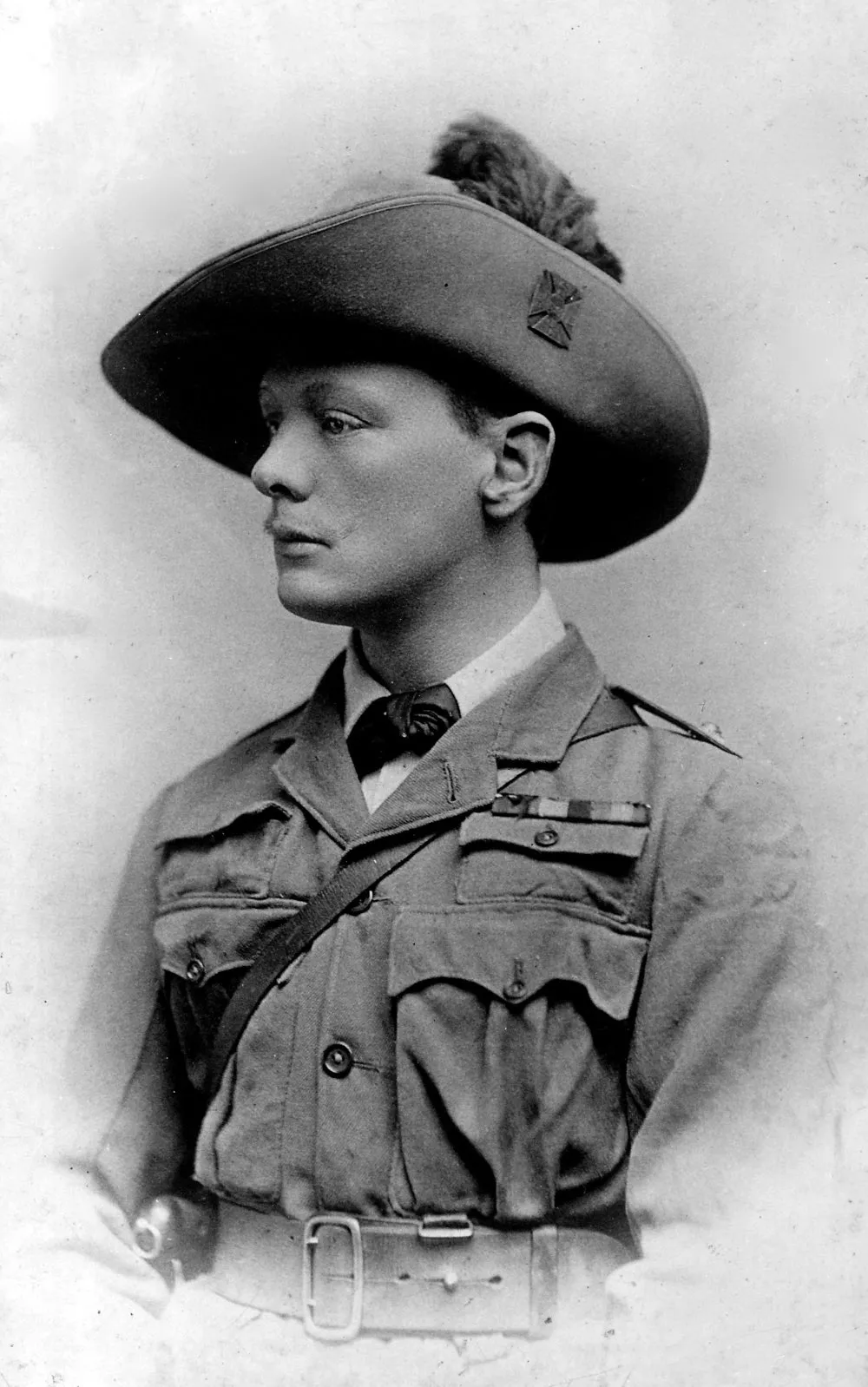 Photo: Winston Churchill, via ww2gravestone.com
In London, Churchill initially viewed this American amateur with suspicion. But Willkie's obvious struggles with formal protocol, combined with his passionate arguments for Allied unity, won over the Prime Minister. "He says what he thinks," Churchill observed, "even when it hurts him to say it."
The meeting with Stalin was even more remarkable. The Soviet dictator, accustomed to calculating diplomats who parsed every word, found himself disarmed by Willkie's directness. When Willkie struggled through a toast praising Soviet courage, Stalin reportedly said, "This man speaks from his heart, not from his script."
The Book That Changed America
Willkie returned from his journey with a message that would reshape American foreign policy. His book "One World" argued that isolationism was dead, that America's future depended on international cooperation and understanding. The book became a phenomenon, selling over one million copies and spending months atop bestseller lists.
What made "One World" powerful wasn't just its message but its messenger. Here was a Republican corporate executive, Roosevelt's former opponent, arguing for the kind of international engagement that many in his own party opposed. His stutter hadn't prevented him from becoming one of America's most persuasive voices for global leadership.
The Price of Honesty
Willkie's influence came at a cost. His support for Roosevelt's foreign policy alienated many Republicans, while his criticism of some New Deal domestic policies frustrated Democrats. He occupied a lonely middle ground, trusted by foreign leaders but increasingly isolated at home.
When he sought the Republican nomination again in 1944, his own party rejected him. The man who had brought Churchill and Stalin to the negotiating table couldn't convince Wisconsin primary voters to support him. His political career was over, but his impact on American diplomacy was just beginning.
The Voice That Echoes
Wendell Willkie died suddenly in 1944, just as the world he had helped unite was achieving victory. His legacy lived on in the international institutions he had championed and the bipartisan foreign policy consensus he had helped create.
More importantly, Willkie proved that authenticity trumps polish in the most important conversations. His stutter, which might have ended a political career in different circumstances, became the foundation of his diplomatic success. Foreign leaders trusted him precisely because his struggles with words made his sincerity unmistakable.
In our age of carefully crafted messages and focus-grouped speeches, Willkie's story offers a different model of leadership. Sometimes the most powerful voice belongs not to the person who speaks most smoothly, but to the one who fights hardest to be heard. Sometimes our greatest weaknesses, faced with courage, become our most compelling strengths.
The boy from Indiana who battled for every word ultimately found words that helped save the world. His stutter didn't stop him from speaking truth to power — it made that truth impossible to ignore.