The Voice in the Dark: How a Typewriter and Fierce Curiosity Brought Down America's Untouchables
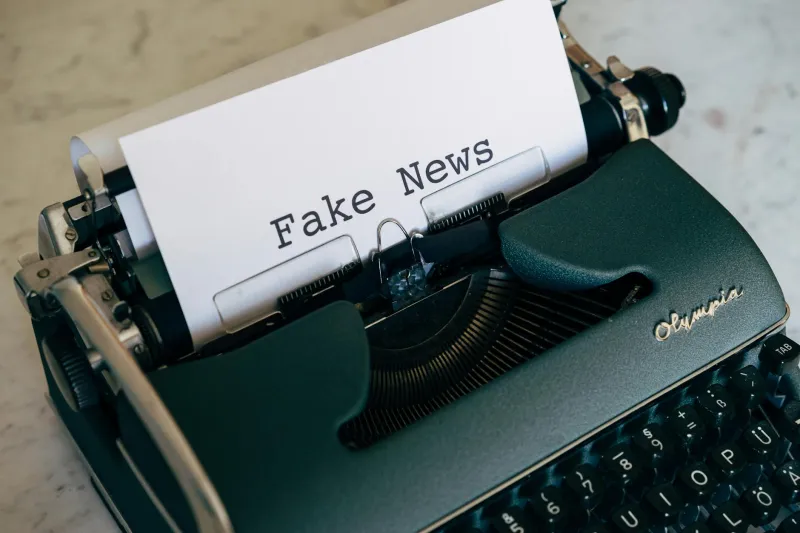
When the Light Went Out
The telegram arrived on a Tuesday morning in 1923. "Regret to inform you... position no longer available... best wishes for your future." Winifred Holt ran her fingers across the raised dots of the Braille translation, each word a small defeat. At twenty-eight, the promising young reporter had just lost her sight to a rare degenerative condition—and with it, according to everyone around her, her career.
The newspaper editor who'd fired her put it bluntly: "How can a blind person investigate anything? You can't see what's happening. You can't read documents. You can't follow leads." He wasn't being cruel, just practical. In 1920s America, losing your sight meant losing your livelihood, especially in a profession built on observation.
Holt had other plans.
The Sound of Truth
What her former colleagues didn't understand was that Holt had been listening long before she lost her sight. Growing up in a working-class Chicago neighborhood, she'd learned that the most important conversations happened in whispers—in the spaces between what people said and what they meant.
Now, sitting in her cramped apartment with a secondhand typewriter, she realized something profound: corruption made noise. It rustled in the shuffle of unmarked envelopes. It clinked in the sound of coins changing hands. It stammered in the voices of politicians caught off guard by unexpected questions.
"I may not be able to see their faces," she wrote to a friend, "but I can hear their lies."
Building a Different Kind of Newsroom
Holt's first breakthrough came six months after losing her job. She'd been cultivating sources in Chicago's city hall—janitors, secretaries, security guards, the invisible army of people who saw everything because no one noticed them watching. One evening, a maintenance worker mentioned something odd: late-night meetings in the mayor's office, always on the same day contracts were awarded.
While other reporters chased obvious leads, Holt sat in coffee shops and diners near city hall, listening. She memorized voices, catalogued speech patterns, built mental maps of who talked to whom and when. Her typewriter became an extension of her thoughts, fingers flying across keys as she transcribed not just conversations, but the silences between words.
The story she eventually published—detailing a kickback scheme involving millions in public works contracts—sent three city officials to prison and established Holt as Chicago's most feared investigative reporter.
The Memory Palace of Justice
What set Holt apart wasn't just her ability to listen, but her extraordinary memory. Unable to rely on traditional note-taking, she'd developed what she called her "archive of voices"—a mental filing system that could store and cross-reference years of conversations, phone calls, and interviews.
"She could remember not just what someone said three months ago, but how they said it," recalled Thomas Mitchell, a fellow journalist who often collaborated with Holt. "She'd catch politicians in contradictions they'd forgotten they'd made. It was like having a human lie detector with perfect recall."
This mental database became Holt's secret weapon. While other reporters struggled with paper trails that could be destroyed or hidden, Holt's evidence lived in her mind—accessible, incorruptible, and devastatingly accurate.
Taking Down the Untouchables
By 1928, Holt had moved beyond local corruption to national stories. Her investigation into illegal gambling operations led to the downfall of a crime syndicate with connections reaching into Congress. Her exposé of a fraudulent veterans' charity resulted in federal legislation protecting military families from exploitation.
But her most significant work came in 1931, when she began investigating what she called "the invisible empire"—a network of businessmen, judges, and politicians who had carved up Chicago's economy like a Thanksgiving turkey. The story took two years to research and nearly cost her life when unknown assailants broke into her apartment, presumably looking for evidence that existed only in her memory.
The resulting series, published over six months, detailed systematic corruption involving over forty public officials and led to the largest political scandal in Chicago's history. Twelve men went to prison, including a federal judge and two congressmen.
The Ripple Effect
Holt's success opened doors for other journalists with disabilities and challenged newsrooms across America to reconsider their assumptions about who could do the job. She mentored dozens of young reporters, teaching them that observation was about more than sight—it was about attention, patience, and the willingness to listen to voices others ignored.
"Winifred taught us that disability wasn't the absence of ability," wrote Sarah Chen, one of Holt's protégés who later became editor of the San Francisco Chronicle. "It was the presence of different abilities. She didn't overcome her blindness to become a great reporter—her blindness helped make her great."
Legacy in the Dark
When Holt retired in 1952, she'd published over 3,000 articles and helped send more than 200 corrupt officials to prison. Her techniques—building networks of overlooked sources, using memory as a primary research tool, focusing on audio cues that revealed deception—became standard practices in investigative journalism.
More importantly, she proved that extraordinary careers could rise from the most unlikely circumstances. In a profession built on seeing, she succeeded by listening. In a world that told her to accept limitations, she chose to discover possibilities.
The last line of her autobiography, published shortly before her death in 1967, captured the essence of her unlikely journey: "They said I couldn't see the story. They were right. I could hear it instead, and that made all the difference."
Today, the Winifred Holt Award recognizes journalists who demonstrate that the most powerful investigations often come from the most unexpected places—and that sometimes, the clearest vision comes from learning to see in the dark.