
The Boy Who Chose Silence
For most of his childhood, James Earl Jones lived in a world of enforced quiet. The stutter that gripped him was so severe, so humiliating, that around age six he simply stopped talking altogether. While other kids chattered and laughed, Jones communicated through gestures, nods, and hastily scribbled notes passed to teachers and classmates.
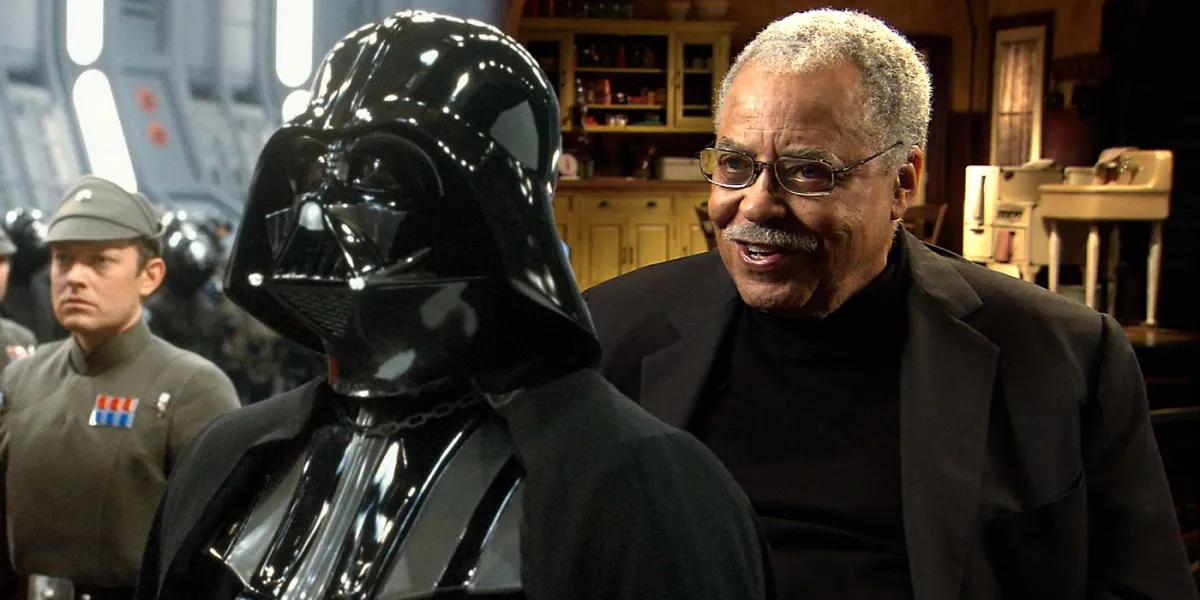 Photo: James Earl Jones, via static1.srcdn.com
It wasn't just shyness — it was strategic survival. Every attempted word was a potential minefield of stuck consonants and elongated vowels that would trigger snickers from classmates and pitying looks from adults. Better to say nothing than to reveal the chaos happening inside his mouth every time he tried to speak.
Growing up on his grandparents' farm in rural Michigan, Jones found refuge in books and solitude. He could read fluently, his mind racing through stories and ideas, but when it came time to share those thoughts aloud, the words would tangle themselves into knots before they could escape.
The Teacher Who Heard Something Different
Everything changed during Jones's freshman year at Brethren High School when he encountered Donald Crouch, an English teacher who refused to accept his student's silence as permanent. Crouch had noticed that Jones was writing poetry — good poetry — and he suspected that someone with such command of written language might have more to offer verbally than his silence suggested.
One day, Crouch handed Jones back a poem he'd written and made a simple but life-altering challenge: "This is so good, I don't think you wrote it. Prove to me you did by reading it aloud."
It was a brilliant psychological maneuver. Crouch had framed the reading not as therapy or encouragement, but as a test of authorship. Jones's pride in his writing overcame his fear of speaking, and he began to recite his own words.
Something remarkable happened. When Jones read poetry — especially poetry he had written himself — the stutter seemed to disappear. The rhythm and meter of verse provided a structure that his fractured speech could follow. For the first time in years, words flowed smoothly from his mouth.
From Poems to Plays
Encouraged by this breakthrough, Crouch pushed further. He introduced Jones to the poetry of others — Shakespeare, Frost, Langston Hughes — and discovered that the young man had an extraordinary ear for rhythm and meaning. When Jones read these works aloud, his voice carried a depth and resonance that seemed to come from somewhere much older and wiser than a teenage farm boy.
Crouch then made another crucial move: he cast Jones in the school's drama productions. If poetry could unlock Jones's voice, perhaps theater could give it a permanent home. The strategy worked. On stage, inhabiting other characters and speaking other people's words, Jones found a freedom from his stutter that gradually began to extend into his everyday speech.
By his senior year, Jones was not just speaking regularly — he was commanding attention. His voice, when it finally emerged from years of silence, proved to be something extraordinary: deep, rich, and capable of conveying both thunderous power and intimate vulnerability.
The Long Road to Recognition
Jones's path from high school stages to professional success wasn't immediate or easy. After a stint in the Army and some false starts in college, he eventually made his way to New York to pursue acting seriously. But even there, his background worked against him in unexpected ways.
In the 1950s and 60s, the entertainment industry had very specific ideas about what African American actors could and should do. Jones's classical training and Shakespearean ambitions didn't fit neatly into the limited roles typically available to Black performers. He spent years taking whatever work he could find while fighting for opportunities to show his full range.
The breakthrough came gradually, through a combination of stage work, television appearances, and eventually film roles. But it was Jones's voice — that instrument he'd spent so many years hiding — that ultimately became his signature.
The Voice That Launched a Thousand Ships
By the 1970s, Jones had established himself as a serious dramatic actor, but it was his work as a voice artist that made him truly iconic. When George Lucas was casting the voice of Darth Vader for the original Star Wars film, he needed someone who could convey both menace and nobility, power and pain. Jones's voice, shaped by years of overcoming his own struggles with speech, was perfect.
The irony was delicious: the boy who had been too frightened to speak had become the voice of one of cinema's most memorable characters. And Vader was just the beginning. Jones went on to voice Mufasa in The Lion King, serve as the narrator for countless documentaries, and become the voice of CNN ("This is CNN") — roles that made his voice one of the most recognized in the world.
The Business of Becoming Yourself
Jones's transformation from mute child to voice-over legend illustrates several crucial principles about turning obstacles into opportunities. First, he learned to see his difference not as a disability but as a distinctive characteristic that could become an asset. The very depth and control that came from years of struggling with speech gave his voice qualities that conventionally trained speakers couldn't match.
Second, he understood the importance of finding the right mentors and advocates. Donald Crouch's intervention was crucial, but Jones also sought out other teachers and directors who could help him develop his craft. He was strategic about building relationships with people who could see his potential and help him realize it.
Third, Jones learned to be patient with his own development. His success didn't come overnight — it took decades of consistent work to build the career he wanted. He was willing to take smaller roles and less glamorous work while he developed his skills and waited for the right opportunities.
The Empire of Voice
Today, Jones's voice work alone represents a business empire. His various voice-over roles have earned him millions of dollars and made him one of the most sought-after narrators in the industry. But beyond the financial success, he's created something more valuable: a brand built on authenticity and excellence.
Jones's story has become a powerful example for other performers and entrepreneurs who are dealing with their own challenges and setbacks. He's shown that what seems like a fatal flaw can become a unique selling proposition — if you're willing to do the work to transform it.
Lessons from the Long Silence
Jones's journey from silence to stardom offers several key insights for anyone trying to build something meaningful from difficult circumstances. First, sometimes the thing that's holding you back is also the thing that will ultimately set you apart. Jones's struggle with stuttering gave him a relationship with language and rhythm that conventionally fluent speakers never develop.
Second, the right mentor at the right moment can change everything. Crouch's intervention came at a crucial time and was perfectly calibrated to Jones's specific needs and psychology. Finding people who can see your potential and push you toward it is often more valuable than any amount of formal training.
Finally, Jones's story demonstrates the power of persistence and patience. He didn't overcome his stutter quickly or easily — it took years of work and practice. But he stayed committed to the process, even when progress seemed slow or uncertain.
The Voice That Echoes
James Earl Jones's transformation from a silent, stuttering farm boy to one of America's most recognizable voices is more than just a personal triumph — it's a master class in turning your deepest vulnerability into your greatest strength. His story reminds us that the things we're most ashamed of often contain the seeds of what will make us most valuable to the world.
In a culture that often demands immediate results and overnight success, Jones's decades-long journey from silence to stardom offers a different model: one based on patience, practice, and the willingness to let your authentic self emerge slowly, one word at a time. His voice became iconic not despite his early struggles with speech, but because of them. The boy who once chose silence grew up to give voice to our dreams, our fears, and our highest aspirations — proving that sometimes the longest journey is the one from your throat to your heart.