He Never Got the Degree. He Got the Ocean Instead.
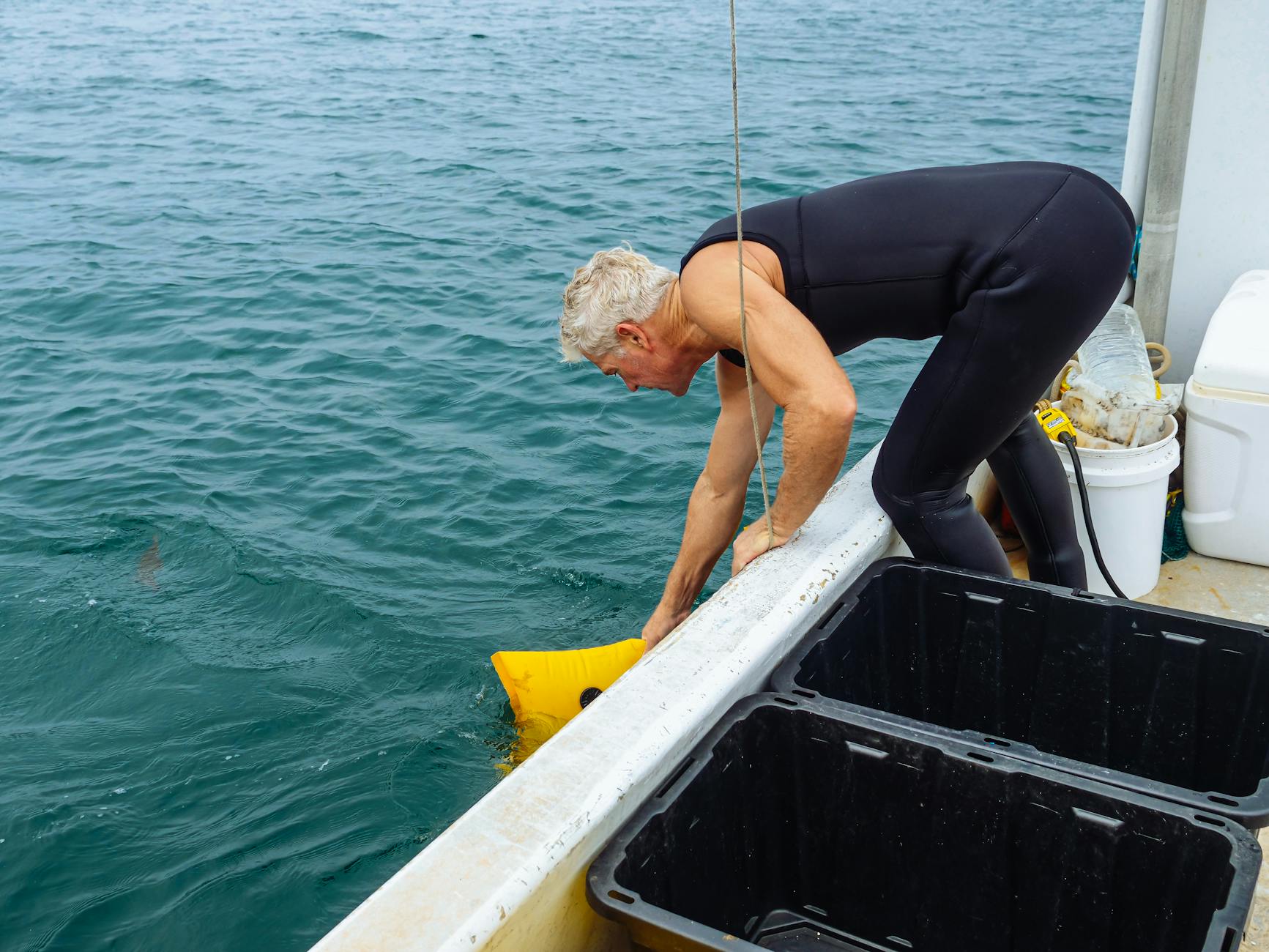
He Never Got the Degree. He Got the Ocean Instead.
The ocean keeps secrets the way mountains keep altitude — patiently, indifferently, waiting for someone stubborn enough to come looking. For most of human history, the deep sea floor was simply unknown. Not mysterious in the romantic sense. Unknown in the literal sense, the way a blank page is unknown, the way a room with no windows is unknown. We knew it was there. We had no idea what it looked like.
The men who eventually mapped it were, in the official story, credentialed scientists working with institutional support and government funding. And some of them were. But some of the most foundational observations about what lies beneath the world's oceans came from a man who dropped out of school at sixteen, built his instruments from salvage and intuition, and spent the better part of forty years being dismissed by the very institutions that would eventually build on his work.
His name was William Beaty Morris, and almost nobody has heard of him. That's the first thing wrong with the way we tell the history of science.
The Boy Who Couldn't Stop Asking Questions
Morris grew up in coastal Maine in the 1890s, the son of a fishing boat captain who died when Morris was eleven. The family had no money. School was a luxury that ended early. By the time he was sixteen, Morris was working the docks in Portland, loading cargo and listening to fishermen talk about the water the way other people talk about weather — as something alive, temperamental, full of patterns if you knew how to read them.
He became obsessed with those patterns. Not in the way a hobbyist gets interested in something, but in the way some people are simply constitutionally incapable of leaving a question alone. He wanted to know what the bottom of the ocean looked like. He wanted to know why certain fishing grounds produced and others didn't, why currents behaved the way they did, why the temperature of the water changed in ways that didn't match the simple explanations he found in the few science books he could get his hands on.
He wrote letters to universities. Most didn't write back. One professor at MIT sent a polite note explaining that oceanography was a rigorous scientific discipline requiring formal training and that Morris would be better served pursuing his interests through approved educational channels. Morris was thirty-one at the time. He had been reading every scientific paper he could find for fifteen years.
He wrote back once, thanked the professor, and kept going.
The Tools He Shouldn't Have Been Able to Build
Here is where Morris's story becomes something genuinely extraordinary.
With no formal engineering training, he began designing and building his own measurement instruments. Early depth-sounding equipment in the late nineteenth and early twentieth centuries was crude — essentially weighted lines that took forever to deploy and retrieved only a single data point at a time. Morris, working in a shed behind his sister's house in Portland, began experimenting with ways to get multiple readings faster and more accurately.
He developed a modified sounding apparatus using surplus telegraph wire and a braking mechanism he adapted from a fishing reel. It was not elegant. It worked better than almost anything else being used at the time. He took it out on fishing boats — whose captains were willing to let him tag along in exchange for his labor — and began systematically recording depth measurements across sections of the Gulf of Maine.
Over fifteen years of these trips, he accumulated something remarkable: a partial chart of the Gulf of Maine sea floor that was, in several key respects, more accurate than the official US Coast Survey maps of the same region. He didn't know that at the time. He was just recording what he found.
He also began noticing something that formal oceanographers would not formally describe for another two decades: evidence of what we now call submarine canyons — dramatic, valley-like formations cut into the continental shelf. His notebooks from 1908 describe formations off the Maine coast in language that, when oceanographers finally began mapping the area properly in the 1930s, turned out to be startlingly accurate.
The Establishment and the Ignored
Morris tried, several times, to share what he'd found. He attended a public lecture at Bowdoin College in 1911 and raised his hand during the question period to describe his observations. The professor giving the lecture — a credentialed marine geologist — listened politely and then explained, in front of an auditorium full of people, that the formations Morris was describing were not consistent with current scientific understanding and that amateur observations, however enthusiastically gathered, required rigorous verification before they could be taken seriously.
The auditorium laughed. Morris sat down.
He kept going anyway. This is the part of the story that matters most — not the dismissal, but the response to it. He didn't stop because the room laughed. He didn't stop because no institution would credential him or fund him or publish him. He went back to his shed, refined his instruments, went back out on the boats, and kept recording.
By the time he died in 1941, Morris had accumulated forty years of sea floor observations across the Gulf of Maine and parts of the North Atlantic. His notebooks — seventeen volumes, meticulously organized — were donated to a small maritime library in Portland, where they sat largely unread for over a decade.
The Reckoning That Came Too Late
In the 1950s, as oceanography exploded into a serious funded discipline and institutions like the Woods Hole Oceanographic Institution began systematic deep-sea mapping, researchers occasionally stumbled across Morris's notebooks. What they found stopped them cold.
A geologist named Patricia Vance, reviewing the collection in 1956 while researching the history of Gulf of Maine surveys, wrote in her own notes that Morris's depth charts were "of a quality and consistency that would be remarkable from a trained researcher with full institutional support" and "frankly astonishing from someone working alone with self-built equipment."
Several of Morris's observations about sea floor formations were quietly incorporated into the scientific literature without attribution — a common enough practice with historical sources, but one that effectively erased him from the record a second time.
He was never famous. He never received a degree. No institution ever formally recognized what he had done.
But the ocean he mapped is still there. The formations he described are still there, named now with the official terminology of a science that caught up to him eventually. The data he gathered in a fishing boat in the North Atlantic, with instruments built from spare parts and stubbornness, turned out to be real.
That's the thing about the truth. It doesn't care who found it. It just waits to be confirmed.
Morris rose from a dock in Portland with no credentials, no funding, and no permission — and he mapped the deep anyway.