The Man Behind the Movement
In 1955, when Rosa Parks refused to give up her seat on a Montgomery city bus, the world witnessed what seemed like a spontaneous act of defiance that sparked the civil rights movement. But those who knew the real story understood that Parks' courage was backed by years of careful organizing—much of it orchestrated by a humble shoemaker named Rufus Lewis, working from a cramped repair shop on Montgomery's west side.
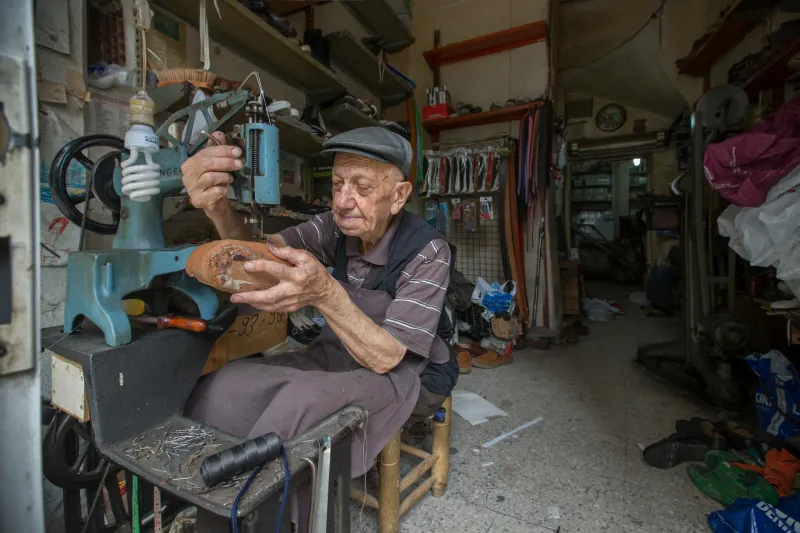
Lewis never sought the spotlight. While other civil rights leaders commanded podiums and newspaper headlines, he preferred the steady rhythm of his cobbler's hammer and the quiet conversations that happened across his workbench. Yet this unassuming tradesman built the infrastructure that would sustain the Montgomery Bus Boycott for 381 days and launch Martin Luther King Jr. into history.
From Leather to Leadership
Rufus Lewis hadn't planned on becoming a revolutionary. Born in rural Alabama in 1906, he learned the cobbler's trade from his father and opened his own shop in Montgomery during the 1930s. The work was honest but unremarkable—resoling shoes, mending boots, keeping the community walking. But Lewis possessed something that would prove more valuable than any formal education: an intuitive understanding of how power actually worked.
While other Black professionals focused on integration through legal challenges, Lewis recognized that real change required something more fundamental—economic and political power. He began using his shop as an informal community center, where customers waiting for their shoes could register to vote, discuss local politics, and organize carpools for those working in white neighborhoods.
By the 1940s, Lewis had transformed his modest business into something unprecedented: a Black-owned establishment that served as both economic anchor and political headquarters for Montgomery's growing civil rights network.
The Nightclub Strategy
Lewis understood that lasting change required more than protest—it needed sustainable institutions. In 1952, he opened the Citizens Club, a nightclub that quickly became the social hub of Montgomery's Black middle class. But this wasn't just entertainment; it was strategy. The club provided a space where teachers, ministers, and business owners could meet regularly, away from the scrutiny of white authorities.
Every Friday night, while couples danced to live jazz, Lewis worked the room like a political operative. He identified potential leaders, built coalitions, and slowly assembled the network that would later coordinate the bus boycott. The Citizens Club wasn't just funding civil rights organizing—it was creating the social bonds that would hold the movement together during its darkest moments.
What made Lewis's approach revolutionary was its sustainability. Unlike protests that flared and faded, his institutions generated ongoing revenue while building lasting political power. The cobbler shop provided daily community contact, while the nightclub created the financial resources to support full-time organizing.
The Boycott Blueprint
When Rosa Parks was arrested on December 1, 1955, the Montgomery Improvement Association needed more than moral outrage to sustain a city-wide boycott. They needed logistics, communication networks, and alternative transportation systems. Lewis had been building exactly these capabilities for over a decade.
His cobbler shop became a communications hub, with customers spreading information throughout Montgomery's Black neighborhoods. The Citizens Club provided meeting space and funding. Most importantly, Lewis's years of relationship-building had created the trust networks necessary to coordinate thousands of people across months of economic hardship.
While Martin Luther King Jr. provided the movement's moral voice, Lewis provided its operational backbone. He helped organize the carpool system that kept Montgomery's Black workers mobile during the boycott. He coordinated with Black taxi companies to provide discounted rides. He even used his cobbler shop to distribute walking shoes donated by supporters nationwide.
The Legacy of Quiet Power
The Montgomery Bus Boycott succeeded on December 20, 1956, when the Supreme Court ruled segregated buses unconstitutional. But Lewis's real victory was proving that sustainable social change required more than charismatic leadership—it needed patient institution-building by ordinary people willing to work without recognition.
After Montgomery, Lewis continued operating his businesses while supporting civil rights organizing across the South. He never wrote a memoir or sought historical credit. When journalists came looking for the story behind the boycott, they interviewed the preachers and lawyers, not the cobbler.
Yet Lewis's model—using Black-owned businesses as platforms for political organizing—became a template replicated throughout the civil rights movement. Beauty salons, barbershops, funeral homes, and restaurants all served as unofficial headquarters for voter registration drives and protest planning.
The Workbench Wisdom
Rufus Lewis died in 1976, twenty years after his greatest triumph. His obituary in the Montgomery Advertiser was brief—a few paragraphs about a local businessman who had supported civil rights causes. There was no mention of his role in changing American history.
But perhaps that's exactly how Lewis would have wanted it. Throughout his life, he demonstrated that the most profound revolutions often happen not through grand gestures, but through the accumulated weight of countless small acts of courage and community building.
From behind his cobbler's bench, Lewis proved that you don't need a PhD or a pulpit to change the world. Sometimes you just need a trade, a vision, and the patience to stitch together a movement one relationship at a time. In a country built on the mythology of individual heroes, Rufus Lewis showed us something more powerful: the quiet revolution that happens when ordinary people organize extraordinary change.