The Mule Driver Who Outpaced Harvard: How America's Most Unlikely Astronomer Discovered the Universe Was Growing
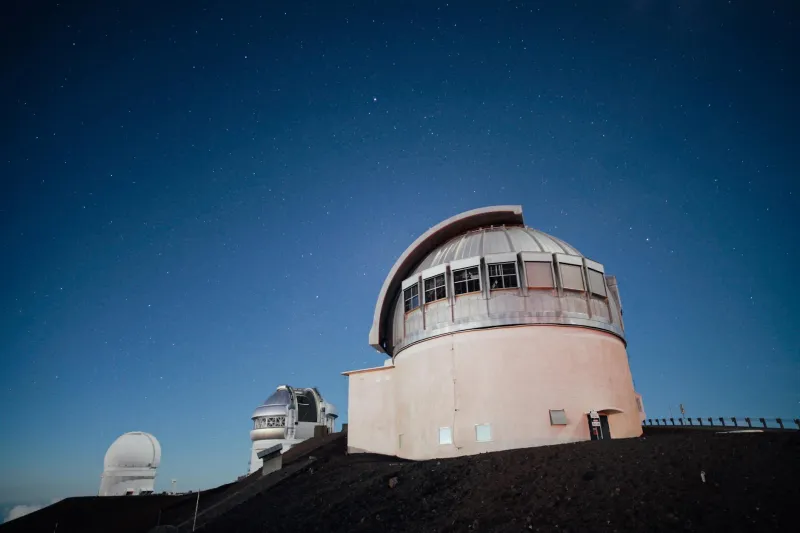
The Mountain That Changed Everything
In 1917, a 25-year-old mule driver named Milton Humason was hauling supplies up the winding trails of Mount Wilson in California. He'd been doing this job for years — loading pack animals with everything from construction materials to scientific equipment, navigating the treacherous mountain paths that connected the valley below to the observatory being built at the summit.
Humason had dropped out of school at 14. He'd worked as a bellhop, a hotel janitor, and now spent his days with stubborn mules and heavy loads. By any reasonable measure, he was about as far from the world of academic astronomy as a person could get.
Yet within a decade, this same man would be co-authoring papers with Edwin Hubble and fundamentally reshaping our understanding of the universe itself.
When Curiosity Meets Opportunity
The Mount Wilson Observatory was becoming America's premier astronomical facility, home to what was then the world's largest telescope. As Humason made his deliveries, he couldn't help but notice the strange equipment being hauled up the mountain alongside the usual supplies. The astronomers working there fascinated him — not because of their credentials, but because of what they were trying to do.
While other delivery workers came and went, Humason lingered. He asked questions. He watched the night shift workers setting up their observations. And slowly, almost accidentally, he began to understand what they were doing.
The observatory staff noticed him too. Here was someone who showed up reliably, worked without complaint, and seemed genuinely interested in their work. When a janitorial position opened up in 1919, they offered it to Humason. It meant steady work, and more importantly, it meant being inside the building where the real science happened.
The Art of Seeing in the Dark
What happened next reveals something crucial about how scientific breakthroughs actually occur. While credentialed astronomers struggled with the technical demands of the new equipment, Humason had advantages they didn't recognize.
He'd spent years working in all weather conditions, developing an intuitive feel for how atmospheric changes affected visibility. His hands-on experience with mechanical systems — from mule harnesses to hotel equipment — gave him an instinctive understanding of how delicate instruments behaved under stress.
Most importantly, he had patience. The kind of bone-deep patience that comes from years of coaxing stubborn mules up mountain trails, or waiting for exactly the right moment to make a difficult delivery.
When Edwin Hubble arrived at Mount Wilson in 1919, he needed someone who could operate the observatory's photographic equipment for long-exposure observations. The work required sitting motionless for hours in freezing temperatures, making minute adjustments to keep distant galaxies perfectly centered in the telescope's view.
The PhD astronomers found this work tedious and uncomfortable. Humason found it natural.
Rewriting the Rules of the Universe
By 1925, Humason had become Hubble's primary collaborator. Together, they were making observations that would revolutionize cosmology. But it was Humason's particular skills that made their most famous discovery possible.
To prove that distant galaxies were moving away from us — evidence of an expanding universe — they needed incredibly precise measurements of galactic redshift. This required photographic exposures that sometimes lasted 40 hours, spread across multiple nights, with the telescope tracking objects so faint they were barely visible.
Humason excelled at this work in ways that baffled his academically trained colleagues. He could sense when atmospheric conditions were shifting before instruments detected the change. He knew exactly how to adjust the equipment to compensate for minute variations in temperature or humidity.
The man who'd never graduated high school was collecting data that would earn Hubble international fame and fundamentally change our understanding of the cosmos.
The Price of Being Overlooked
Here's where the story becomes both inspiring and infuriating. While Hubble received Nobel Prize consideration and worldwide recognition, Humason remained largely unknown outside astronomical circles. The scientific establishment of the 1920s and 1930s had clear ideas about who deserved credit for major discoveries.
A mule driver turned janitor didn't fit their narrative, regardless of his actual contributions.
Humason himself seemed remarkably unbothered by this. In later interviews, he spoke about his work with quiet satisfaction, focusing on the discoveries themselves rather than the recognition. But his story reveals how many potential scientific breakthroughs we might have missed because of rigid ideas about credentials and background.
What We Can Learn from the Mountain
Milton Humason's journey from mule driver to cosmic pioneer offers lessons that extend far beyond astronomy. His story demonstrates that expertise often develops in unexpected places, through unconventional combinations of curiosity, opportunity, and persistence.
The hands-on skills he developed in "ordinary" jobs — mechanical intuition, environmental awareness, infinite patience — turned out to be exactly what cutting-edge science needed. His outsider perspective allowed him to approach problems without preconceptions about what was "supposed" to work.
Most importantly, Humason's story reminds us that scientific progress depends not just on brilliant theorists, but on skilled practitioners who can turn theoretical possibilities into observable reality.
The View from Here
Today, as we continue to study the expanding universe that Humason helped discover, it's worth remembering that some of our most fundamental knowledge about the cosmos came from someone who started his career hauling supplies up a mountain.
Every time we look at images from modern space telescopes, we're building on observations made possible by a man who never forgot that the most important qualification for understanding the universe isn't a degree — it's the willingness to look up at the night sky and ask what's really out there.
Sometimes the most extraordinary discoveries come from the most ordinary beginnings. You just have to be willing to make the climb.