The Myth of the Early Bird
America worships youth. We celebrate twenty-something tech founders, marvel at teenage prodigies, and treat thirty as the unofficial deadline for changing the world. But what if we've got it all wrong? What if the most extraordinary transformations happen not when life is just beginning, but when everyone assumes it's winding down?
The stories that follow aren't just feel-good tales about late bloomers—they're proof that reinvention doesn't have an expiration date. These five individuals didn't just find success after fifty; they redefined entire industries, changed millions of lives, and showed that sometimes your greatest achievement is the one nobody sees coming.
The Colonel Who Franchised the American Dream
Harland Sanders - Age 65
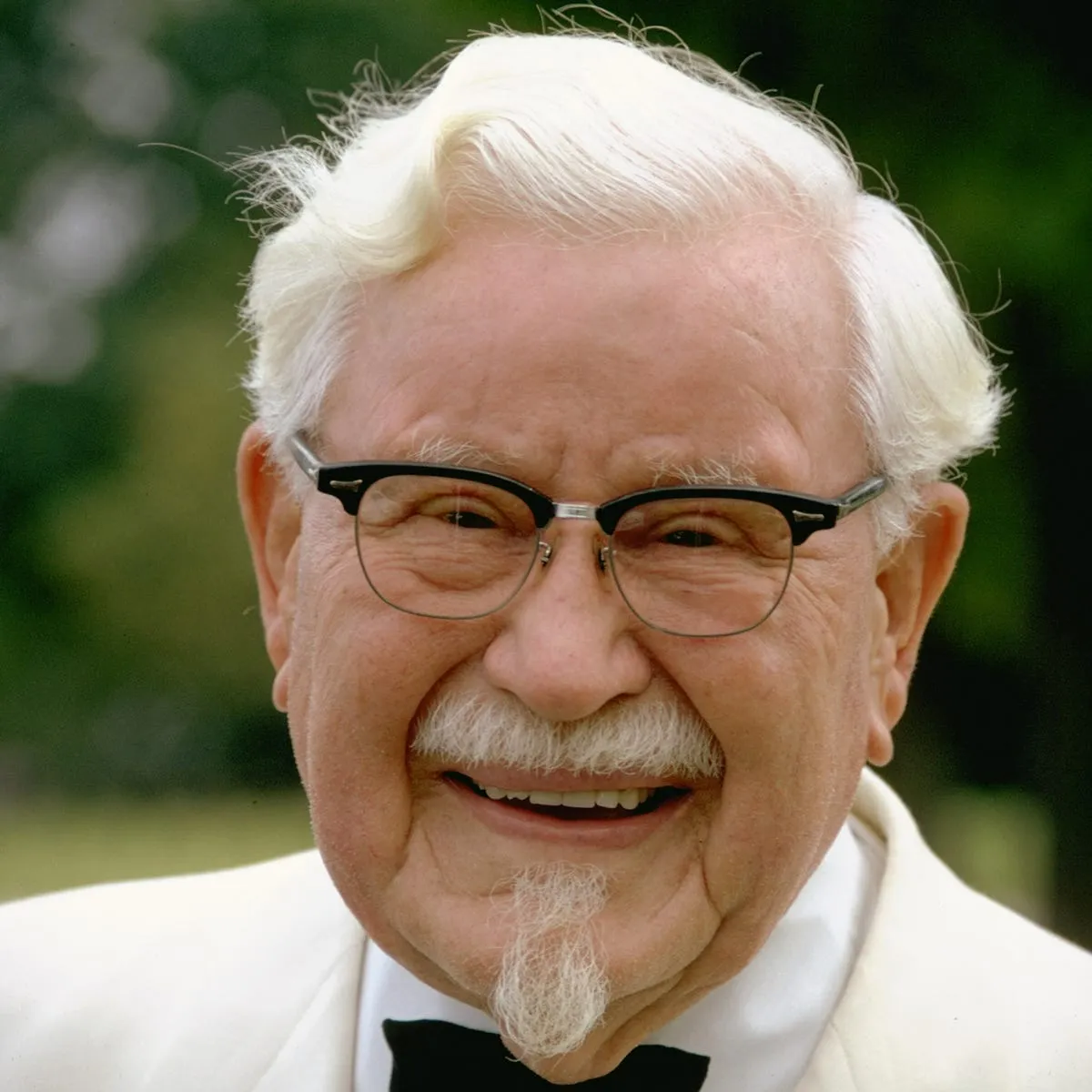 Photo: Harland Sanders, via hips.hearstapps.com
By most measures, Harland Sanders was a failure at 65. He'd lost his restaurant when the interstate bypassed his town, his wife was fed up with his schemes, and he was living on Social Security checks that barely covered the bills. Most people his age were settling into retirement, maybe taking up gardening or shuffling around shopping malls.
Sanders had a different plan. He loaded his 1946 Ford with pressure cookers, spice mixes, and an unshakeable belief that his fried chicken recipe could change everything. For two years, he drove across America, sleeping in his car and cooking for restaurant owners who thought he was crazy.
The first 1,009 restaurants he visited said no. But Sanders had learned something that younger entrepreneurs often miss: rejection isn't personal, it's just information. At restaurant number 1,010, someone finally tasted his chicken and agreed to pay him a nickel for every piece sold using his recipe.
That handshake deal became Kentucky Fried Chicken. By the time Sanders died, his face was more recognizable than most movie stars, and his recipe was feeding millions of people worldwide. He proved that sometimes you need decades of failure to prepare you for the success that really matters.
The Teacher Who Became Nature's Fiercest Defender
Marjory Stoneman Douglas - Age 79
 Photo: Marjory Stoneman Douglas, via parklandtalk.com
Marjory Stoneman Douglas spent most of her career as a quiet Miami journalist, writing about local politics and social issues. She published a book about the Everglades in 1947, calling it "River of Grass," but few people paid attention. For thirty years, the book sat on shelves while developers continued draining wetlands and politicians ignored environmental concerns.
Then, at 79, Douglas witnessed something that changed everything: bulldozers preparing to drain the last wild section of the Everglades for an airport runway. Instead of shaking her head and walking away like most people her age might have done, Douglas got angry.
She founded Friends of the Everglades from her living room, armed with nothing but a typewriter, a telephone, and seven decades of accumulated wisdom about how to get things done. Douglas understood something that younger activists often missed: politicians listen to grandmothers in ways they never listen to college students.
For the next twenty years, she became the Everglades' most effective advocate, testifying before Congress, organizing protests, and outlasting opponents half her age. When she died at 108, she had saved millions of acres of wetlands and inspired a generation of environmental activists who learned that passion doesn't diminish with age—it just gets more focused.
The Grandmother Who Painted Her Way Into Art History
Grandma Moses - Age 78
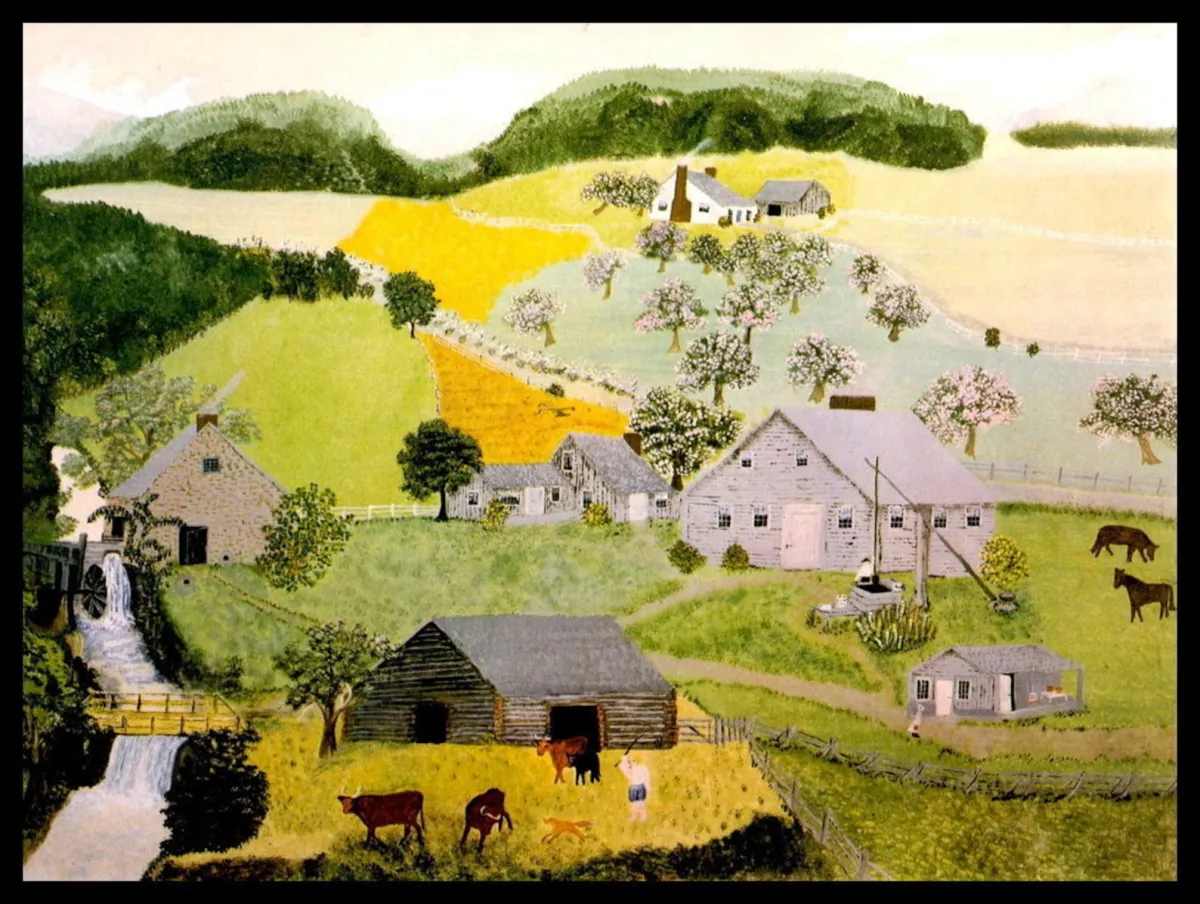 Photo: Grandma Moses, via i.etsystatic.com
Anna Mary Robertson Moses spent seven decades as a farmer's wife in rural New York, raising five children and helping run the family farm. Art was something she did occasionally—a bit of embroidery, some painted fireboard decorations—but never seriously.
When arthritis made embroidery too painful at 78, Moses picked up a paintbrush instead. She started painting scenes from her childhood and farm life, working on whatever surfaces she could find: old pieces of wood, cardboard, canvas scraps.
A New York art collector discovered her paintings in a drugstore window and was stunned by their primitive beauty and emotional honesty. Within five years, "Grandma Moses" was exhibiting in major galleries and her paintings were selling for thousands of dollars.
Moses painted over 1,500 works between ages 78 and 101, proving that artistic vision doesn't require formal training or early recognition. She showed America that folk art could be as powerful as anything hanging in major museums, and that sometimes the most authentic voice is the one that's been quietly observing life for eight decades.
The Salesman Who Revolutionized Retirement
Ray Kroc - Age 52
Ray Kroc had spent thirty years as a traveling milkshake machine salesman, watching younger men get promoted while he remained stuck in middle management. At 52, divorced and struggling financially, he seemed destined for the kind of quiet obscurity that claims most middle-aged salesmen.
Then he visited a small hamburger stand in San Bernardino, California, run by two brothers named McDonald. What Kroc saw there—speed, efficiency, consistency—sparked something that had been dormant for decades. He convinced the McDonald brothers to let him franchise their concept, mortgaging everything he owned to open the first McDonald's franchise in Illinois.
Kroc understood something that the McDonald brothers didn't: Americans weren't just buying hamburgers, they were buying reliability and convenience. He created systems that could replicate that experience anywhere in the country, turning a single restaurant into a global empire.
By the time Kroc died, McDonald's was serving millions of customers daily in dozens of countries. He had revolutionized not just fast food, but the entire concept of franchising, proving that sometimes it takes decades of experience to recognize a truly transformative idea.
The Secretary Who Became a Publishing Powerhouse
Laura Ingalls Wilder - Age 65
Laura Ingalls Wilder spent most of her life as a farmer's wife and occasional freelance writer, contributing articles to local newspapers and farm journals. She had always planned to write about her pioneer childhood, but raising a daughter and helping run the family farm left little time for serious writing.
At 65, encouraged by her daughter Rose (herself a successful writer), Wilder finally began work on what would become "Little House on the Prairie." Drawing on memories from sixty years earlier, she crafted stories that captured the essence of American frontier life with unprecedented authenticity.
The first "Little House" book was published when Wilder was 65. Over the next seventeen years, she wrote eight more books that would become classics of American children's literature. Her stories introduced millions of readers to pioneer life and became the foundation for one of television's most beloved series.
Wilder proved that sometimes the most important stories are the ones that simmer for decades before they're ready to be told. Her late-life literary career showed that experience and perspective can be more valuable than youthful energy when it comes to creating work that endures.
The Timeline That Never Expires
These five stories share something crucial: each person brought decades of accumulated knowledge, relationships, and perspective to their late-life achievements. They succeeded not despite their age, but because of it.
Sanders understood failure in ways that younger entrepreneurs couldn't. Douglas had the credibility and patience that comes from seven decades of civic engagement. Moses painted with the emotional honesty that only comes from a lifetime of close observation. Kroc recognized opportunity because he'd seen so many businesses fail. Wilder wrote with the narrative authority that only comes from having lived the stories you're telling.
In a culture obsessed with early achievement, these stories remind us that some of life's most important work happens when everyone assumes you're done working. They prove that reinvention isn't just possible after fifty—sometimes it's when you finally have everything you need to change the world.
Your timeline isn't expired. It's just getting to the good part.