The Boy Who Knew Hunger
In the rolling hills of northeastern Iowa, where Norwegian immigrants carved farms from prairie grass, hunger wasn't an abstract concept. Norman Borlaug learned its weight early, watching his grandfather Nels carefully ration seed corn through lean winters, understanding that one bad harvest could mean everything.
Born in 1914 in a cramped farmhouse outside Cresco, Norman spent his childhood wrestling with the kind of agricultural realities that most scientists would only encounter in textbooks. While his future peers were memorizing Latin declensions, he was learning why certain wheat varieties withered in Iowa's unpredictable climate and how soil composition could make or break a family's survival.
His path to college happened almost by accident. A high school wrestling coach noticed Norman's determination and helped him secure a small scholarship to the University of Minnesota. Without that intervention, the boy who would revolutionize world agriculture might have spent his life farming forty acres in Iowa.
The Education of Dirt and Dreams
At Minnesota, Borlaug initially struggled. His rural education had gaps that his urban classmates didn't share, but it had given him something they lacked: an intuitive understanding of how plants actually behaved in real conditions, not laboratory perfection.
He gravitated toward plant pathology, drawn by professors who shared his fascination with why crops failed and how they might be made stronger. While other students memorized theories, Borlaug asked different questions: What if we could breed wheat that thrived in harsh conditions? What if plants could be taught to resist the diseases that devastated harvests?
After earning his PhD, he might have settled into comfortable academic research. Instead, in 1944, he accepted an invitation that would change everything: join a small agricultural program in Mexico, funded by the Rockefeller Foundation, aimed at helping the country achieve food self-sufficiency.
Mexico's Impossible Mission
Mexico in the 1940s imported half its wheat, despite having vast agricultural regions. The problem wasn't land or climate—it was that traditional wheat varieties couldn't handle local conditions. They fell to rust diseases, produced low yields, and required growing conditions that didn't exist outside research stations.
Borlaug arrived to find a challenge that university training hadn't prepared him for. He needed to develop wheat varieties that could survive in multiple climates, resist local diseases, and produce enough grain to feed a growing population. Most experts considered it impossible.
What they didn't account for was Borlaug's farm-bred stubbornness. Instead of working in controlled environments, he planted experimental plots across Mexico, from sea level to mountain valleys, exposing his developing wheat varieties to every possible stress. He cross-bred thousands of plants, selecting for traits that laboratory scientists often ignored: durability, adaptability, and sheer productive power.
The Breakthrough That Fed the World
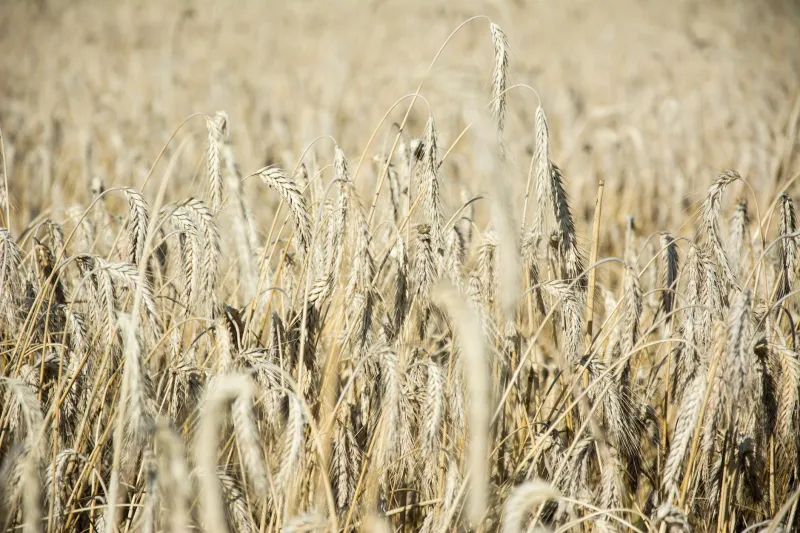
By the 1960s, Borlaug's wheat varieties were producing yields that seemed impossible. His semi-dwarf wheat could support heavy grain heads without falling over, resisted multiple diseases, and thrived in diverse climates. Mexico went from importing wheat to becoming a net exporter.
But the real test came when famine threatened India and Pakistan in the mid-1960s. Traditional aid—shipping food from surplus countries—couldn't meet the scale of need. Borlaug proposed something different: ship seeds instead of grain.
The logistics were staggering. Borlaug personally supervised the transport of 35 truckloads of wheat seeds from Mexico to Los Angeles, then by ship to Bombay. He spent months in Indian fields, teaching farmers how to cultivate varieties that had never grown in their soil.
The results defied every prediction. India's wheat production doubled within five years. Pakistan achieved similar gains. The Green Revolution had begun, and at its center was a farmer's son from Iowa who understood that feeding people required more than laboratory brilliance—it required plants tough enough for the real world.
The Forgotten Revolutionary
Borlaug won the Nobel Peace Prize in 1970, yet today few Americans could identify him. His legacy lives in statistics that seem abstract: an estimated billion lives saved from famine, wheat yields that increased sixfold in developing nations, agricultural techniques that spread across continents.
But perhaps his most important contribution was proving that transformative innovation often comes from unexpected places. While agricultural establishments debated theory, a man who had spent his childhood hauling water to livestock was quietly rewriting the rules of how food gets grown.
Borlaug continued working into his nineties, developing crops for African conditions and training new generations of plant breeders. He never lost the perspective that made him revolutionary: hunger was real, solutions needed to work in actual fields, and the best innovations came from understanding problems at ground level.
Seeds of Possibility
Norman Borlaug's story suggests that the most crucial discoveries often emerge from the intersection of deep knowledge and lived experience. His childhood on an Iowa farm didn't just prepare him for agricultural research—it gave him insights that no amount of formal education could provide.
In a world facing new agricultural challenges, from climate change to population growth, Borlaug's approach remains relevant. The solutions that matter most come not from isolated laboratories, but from scientists who understand that innovation must work where people actually live, farm, and eat.
The boy who learned about hunger in an Iowa farmhouse grew up to ensure that fewer children would know that weight. Sometimes the most extraordinary achievements really do rise from the most ordinary soil.